The updated Volvo XC60 and XC90 feature new long-range hybrids offering exceptional electric ranges, making them strong contenders in the segment.
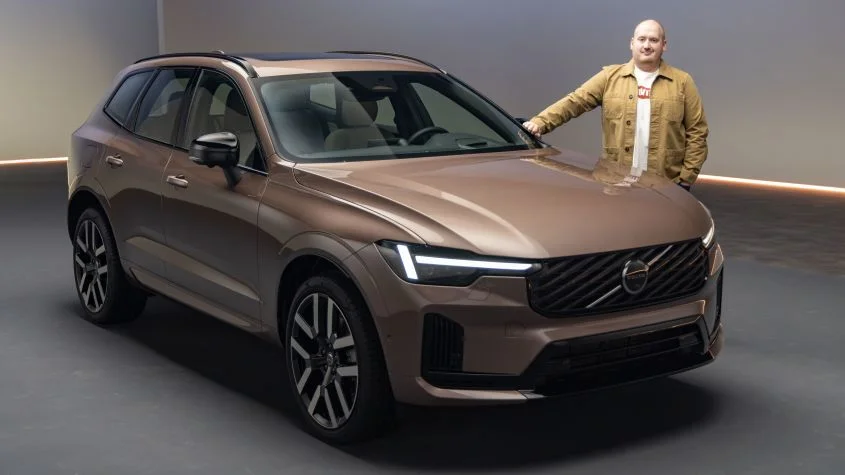
The latest iterations of the Volvo XC60 and Volvo XC90 now present some of the most extensive electric ranges available in the plug-in hybrid market, significantly elevating their commute capabilities. The newly introduced powertrains are designed to cater to those aiming to minimize their reliance on petrol.
The headline feature of these updated models is the 'long-range plug-in hybrid' powertrain, which allows the XC60 to achieve an impressive 124 miles of all-electric driving and the XC90 a solid 99 miles. This is a considerable enhancement, with the new range being approximately two-and-a-half times greater than what the previous hybrid systems provided for these vehicles. However, while this advancement stands out, competitors like the Lotus Eletre X boast even longer electric ranges, exceeding 200 miles.
Volvo claims that the XC60 can cover up to 770 miles combining both a full tank and a fully charged battery, while the XC90 reaches beyond 680 miles. At the heart of this expanded range is a newly developed 41.2kWh battery (with 37.9kWh usable capacity), which is more than double the previous battery size and surpasses even the Range Rover Sport’s 38.2kWh battery.
In comparison, other plug-in hybrids, like the BMW X3 and Audi Q7, utilize smaller batteries—19.7kWh and 25.8kWh respectively—yielding far less electric-only range.
Remarkably, this larger battery has been engineered to occupy the same space as its predecessor, fitting snugly beneath the vehicle's floor, similar to electric vehicle designs. This positioning not only preserves luggage space but additionally lowers the center of gravity, enhancing overall handling.
Charging times have also been considered; Volvo states that a complete recharge can be completed in about four hours using a home wallbox. Nonetheless, the XC60 and XC90 models lack rapid-charging capabilities, which might surprise given their substantial battery sizes.
The powertrain now combines a more powerful electric motor, rated at 177bhp and 390Nm torque, with a 2.0-litre turbocharged petrol engine. This results in a total power output of 351bhp for the XC60's 'T6 long-range PHEV' configuration, while the XC90's 'T8 long-range PHEV' variant pushes that figure to 456bhp. The XC90, albeit weighing 2.5 tons, can sprint from 0 to 62 mph in just 5.2 seconds, eclipsing even sporty models like the VW Golf GTI, while the XC60 achieves this in as low as 4.8 seconds.
Volvo's approach has focused on maintaining a familiar driving experience, avoiding the complexity related to range-extending options. Darrel Pugh, Volvo’s commercial product lead, emphasized that the driving dynamics should feel as good as those of the previous models, with improved electric range being the focal enhancement.
For buyers preferring a more traditional setup without the need for charging, both the XC60 and XC90 will continue to offer the 'B5' mild-hybrid petrol engine option. Regardless of your choice, every version comes equipped with an eight-speed automatic transmission and all-wheel drive.
Though the XC60 underwent a refresh just last year, it has received another update alongside the new hybrid powertrains, featuring a completely redesigned front end. Enhancements include a new bonnet, wings, and a more dynamic bumper and grille design. The signature 'Thor’s Hammer' headlights now sport a sleeker dual-piece layout complemented by matrix LED technology, mirroring style elements from the revised Volvo XC40.
Other exterior updates include redesigned tail lights, a new rear bumper for an overall wider stance, and fresh alloy wheel designs, including a 20-inch aero-optimized version aimed at improving range. An eye-catching Heather Bronze paint option shifts color based on lighting conditions, adding a touch of flair.
While Volvo has intentionally avoided making the XC60 resemble its all-electric EX60 sibling, designer Alain Snoodijk expressed the need for each model to maintain its distinctive character, emphasizing the essence of Scandinavian design.
Inside, the vehicle features an 11.2-inch portrait touchscreen running the latest user interface designed for improved intuitiveness, requiring fewer navigational taps and enhanced through Google's AI assistant Gemini. Interior enhancements include a redesigned instrument panel, dashboard, and door trims, with options for wood and premium leather finishes alongside upgraded ambient lighting for a luxurious feel.
Safety and driver assistance have been fortified with new radars, cameras, and sensors enhancing functionalities like automatic emergency braking and lane-change assists, along with a new 360-degree camera system.
The XC90, along with receiving updated onboard tech, has not seen major styling or interior changes, still benefiting from improved Gemini AI for more conversational route assistance.
With the introduction of a larger battery and advanced technologies, it’s reasonable to anticipate a price increase for both the XC60 and XC90. Currently, the base versions start around £57,000 and £74,000, but details on specific price adjustments remain forthcoming as the models are slated for a late-year release.

Discussion
Sign in to join the discussion.