Tesla's Roadster unveiling on October 1 raises concerns over design tweaks instead of fulfilling long-awaited production commitments.
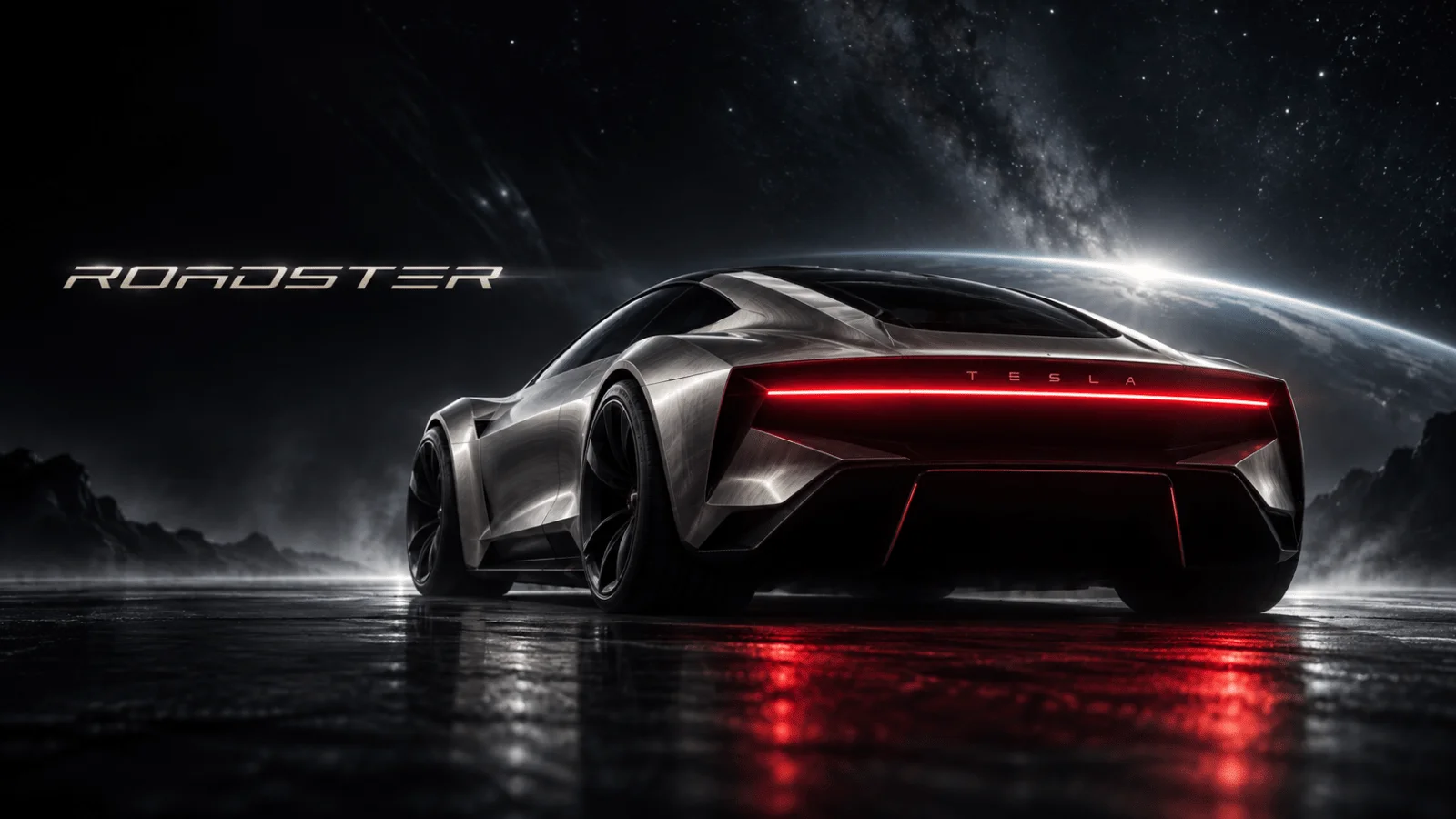
Tesla is gearing up to unveil its much-anticipated Roadster on October 1, a full eight years after its initial reveal in 2017. A recent teaser suggests that the production model may incorporate Tesla’s “Cyber” design elements, which has sparked a mixed response.
The teaser included visuals of SpaceX-inspired cold gas thrusters, while Elon Musk has hinted at “radical design changes.” However, many industry observers believe the Roadster’s main issue isn’t a need for redesign, but rather its ongoing delays in production.
Tesla's Design Dilemma
The original 2017 Roadster captured imaginations with its sleek form and impressive specifications. Nearly a decade later, its classic design still turns heads, which raises the question: why the need for a redesign? While the Model Y has emerged as a best-seller, it’s essentially an elevated Model 3 with few aesthetic upgrades. Simply put, Tesla hasn't delivered a noteworthy design evolution since then.
Since the introduction of the Cybertruck, Tesla appears to have adopted a singular aesthetic approach—characterized by angular lines and a robust industrial look. This has extended to its lineup, evident in designs for products like the Cybercab and Robovan. The suggestion that the Roadster is also jumping on the Cyber bandwagon raises eyebrows.
A Car with Flying Aspirations
Tesla's upcoming reveal near Waco, Texas, aims to highlight the “flying” capabilities of the Roadster, supported by the integration of SpaceX’s cold gas thrusters. According to Musk, the vehicle will achieve astonishing acceleration, hitting 0-60 mph in under two seconds without thrusters and under one second with them. This kind of performance, while impressive on paper, seems more suited for a race track than real-world driving scenarios.
However, the promise of it being a “flying car” has already shifted from predictions of actual flight to mere hovering capabilities. Reports indicate that the demo vehicle will not meet street-legal standards and will require remote piloting due to safety concerns regarding noise pollution. This raises further questions about the practicality of utilizing thrusters in everyday driving. The reliance on these thrusters adds complexity and cost to a vehicle that’s already expected to carry a hefty price tag.
Ultimately, the addition of thrusters could be perceived as a marketing gimmick, designed to generate buzz rather than offer real-world utility.
Addressing Customer Expectations
The original unveiling of the Roadster set high expectations, showcasing a 620-mile range, a claimed 0-60 time of 1.9 seconds, a top speed over 250 mph, and a base price of $200,000, prompting many eager consumers to place significant deposits. Unfortunately, production timelines have slipped at least eight times since 2020, leading prominent reservation holders like Marques Brownlee and Sam Altman to cancel their orders.
Adding to the skepticism, a former Tesla president recently suggested that the continuing delays might relate to aligning the Roadster experience with SpaceX’s aspirations, rather than focusing on production realities. Tesla has previously drawn criticism for reintroducing outdated concepts under fresh marketing narratives.
The Case for Returning to Basics
Tesla’s ideal plan for the upcoming reveal should be straightforward: deliver the car everyone has been waiting to buy. The baseline model should reflect the specifications that captivated the public in 2017—an updated version that retains the original's essence. This includes 600-plus miles of range, sub-two-second acceleration, four-seat capacity, and built-in Full Self-Driving (FSD) features—all at or near the promised base price.
The original design still stands out against most modern supercars, and it’s abundantly clear that there’s a rabid demand for it—an enthusiasm evidenced by the deposits received from eager customers.
Tesla seems to confuse the notion of “new” with “better.” The allure of the Roadster in 2017 stemmed from its blend of beauty and performance, offering an electric alternative that made supercars seem obsolete. No need for advanced thrusters or radical design overhauls; what’s truly needed is a return to focus on fulfilling existing commitments.
As Tesla moves closer to the Roadster's unveiling, the message should be clear: prioritize production and customer satisfaction over design revisions. The market awaits a compelling, ready-to-deliver vehicle, not another ambitious promise with extravagant features.
Discussion
Sign in to join the discussion.