McLaren is set to invest heavily in its future, confirming a new SUV and in-house powertrain production while gearing up for major job creation.
Ownership Shift and Strategic Vision
After a significant shift in ownership to CYVN Holdings and a merger with electric vehicle startup Forseven, McLaren has revealed a strategic vision that prioritizes new model development and job creation. This transformation comes at a critical time for McLaren, a brand steeped in motorsport heritage but now looking to adapt to changing market dynamics. The automotive sector is increasingly focused on sustainable technologies and SUVs, a far cry from McLaren’s traditional sports car roots. Among its notable plans is the introduction of a performance-focused SUV, a move that has stirred mixed reactions among sports car enthusiasts. While some see this as a necessary evolution to reach a broader audience, others worry it might dilute the brand's storied legacy.
Financial Backing and Manufacturing Improvements
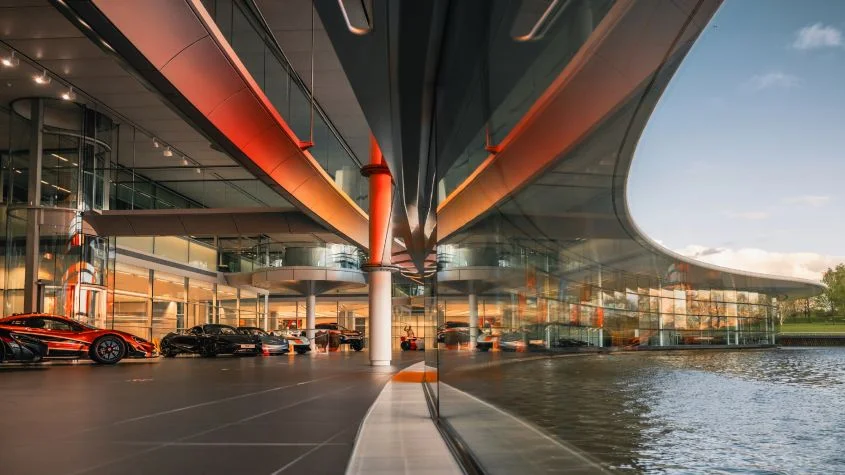
Investment leader L’IMAD has committed £500 million—the largest single investment in McLaren's history—to enhance the company's manufacturing capabilities. This investment will see upgrades to the McLaren Technology Centre (MTC) in Woking and the construction of a new vehicle assembly facility in the UK. The decision to focus on manufacturing improvements is particularly strategic. With the industry rapidly moving toward electric and hybrid vehicles, bolstering production capacity is vital. Additionally, the carbon fibre facility in Sheffield is set to double in size, further streamlining production efforts. This is more significant than it looks; carbon fibre is crucial for performance cars, offering lightweight durability that can enhance both speed and fuel efficiency. While the funding for the SUV, slated for a late-decade launch, is secured separately, this financial boost marks a significant turning point for the brand. The backing also creates a platform for innovation in future models.
Autonomy in Engine Manufacturing
Importantly, McLaren is taking a decisive step towards autonomy in its engine manufacturing. For the first time, it plans to design and build powertrains in-house, confirming the development of two new hybrid engines and accompanying transmissions. This initiative signifies a notable shift from their previous reliance on external suppliers like Ricardo for engine manufacturing. To compete effectively in a rapidly evolving marketplace, developing proprietary technology will provide McLaren with better control over performance and efficiency standards.
Expanding the Supercar Lineup
The enhanced production capabilities, combined with the new hybrid engines, will enable McLaren to offer a wider range of vehicles in its supercar lineup. The brand aims to create a carefully segmented portfolio, expanding upon successful models like the 750S and W1 hypercar while confirming the long-discussed SUV for production. This strategic move reflects a broader trend in the luxury automotive market, where diverse offerings are becoming increasingly necessary to attract varying consumer interests. Competitors in this segment, particularly Lamborghini's Urus and Aston Martin's DBX, will be pivotal benchmarks for McLaren's SUV endeavor, although the brand considers Ferrari's Purosangue outside its competitive scope. There's a sense of urgency: securing a foothold in this lucrative market is imperative, particularly as other brands are already reaping the rewards.
Design Leadership and Vision
While specifics about the SUV remain under wraps, COO Michael Straughan OBE indicated it will utilize a carbon fibre platform, aligning with McLaren's commitment to a low power-to-weight ratio. Future iterations may explore all-electric options, but achieving that vision would necessitate additional R&D and platform adaptation. The potential for new models doesn't stop with the SUV. Discussions around introducing a front-engined GT car or possibly a four-door GT-coupe have emerged, yet the feasibility of these projects is uncertain. Historical context informs us that the extensive development costs, as seen in Aston Martin's £300m investment for the DBX, underscore the challenges McLaren faces if it aims to expand beyond its current portfolio and innovatively update existing models. Here’s the thing: while ambitious, the challenge lies in managing expectations and not overextending itself financially.
Leadership Changes in Design
In terms of design leadership, Chief Designer Kemal Curić, who spearheaded the McL 6GT concept, is set to define the visual direction of McLaren’s upcoming models from the company's new creative studio in Bicester. This is significant, especially considering the industry trend toward bold and dynamic design statements that break from tradition. Alongside him is David Woodhouse, the recently appointed Chief Creative Officer from Nissan America, tasked with infusing fresh design perspectives across McLaren's offerings. This leadership duo brings a mix of vision and industry experience to a brand that must balance legacy with modernity.
Job Creation and Economic Impact
The new product strategy, which will unfold gradually in the coming months, is expected to rely heavily on Gordon Murray’s iStream chassis technology, recently acquired by CYVN. Investments are also flowing into McLaren’s Car Creation Centre in Bicester and a new vehicle development facility at MIRA in the Midlands. The planned expansion will see the creation of at least 1,000 new jobs by 2032, with the potential for up to 3,000 additional roles in the supply chain—a laudable move as McLaren currently employs approximately 2,500 people in the UK. It's a tangible commitment to local employment and the UK manufacturing sector, which has faced challenges in recent years.
Future Outlook and Implications
With these ambitious plans, McLaren is charting a course that balances heritage with innovation, bringing new products to market while reinforcing its commitment to job growth and local production. But the success of this strategy hinges on execution and market reception. There are inherent risks involved in venturing into new vehicle segments, particularly when consumer preferences can shift overnight. If you're working in this space, the developments at McLaren are certainly ones to watch, not just for their potential impact on the brand, but also on the broader trends in the automotive industry as it evolves toward electrification and sustainability.
Discussion
Sign in to join the discussion.