The Audi A6 Sportback e-tron has set a new record, traveling 1,338 kilometers on a single charge, showcasing the potential for EV efficiency.
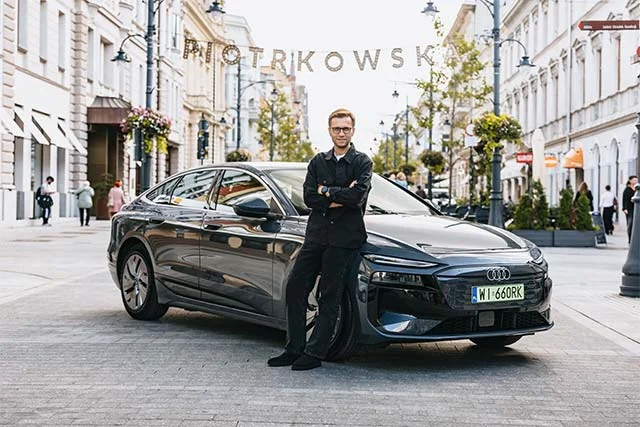
The Audi A6 Sportback e-tron recently made headlines by setting a Guinness World Record for the longest distance traveled by an electric vehicle on a single charge, reaching a staggering 1,338 kilometers (831 miles) in real-world driving conditions. This record was established by European Rally Champion Miko Marczyk, who undertook the challenge in a standard Audi A6 Sportback e-tron Performance model.
Record-Breaking Journey Details
Marczyk embarked on his record-setting drive at 1:55 a.m. on September 11, departing from southern Poland and following a scenic route along the Vistula River. He maneuvered through several major cities including Kraków, Sandomierz, Warsaw, Toruń, and Grudziądz, before reaching the picturesque Baltic town of Hel and then returning back to the start point.
Over the course of more than 45 hours and under typical traffic conditions—including rush-hour scenarios—Marczyk's vehicle completed the journey without a single recharge. The average energy consumption during this record-setting trip was notably low at just 7.09 kWh per 100 kilometers, underscoring how meticulous driving strategies can significantly extend EV range.
Efficiency Over Speed
This record attempt diverged from standard driving norms; the primary focus was not on speed but on maximizing energy efficiency. Marczyk maintained a steady pace, anticipated road conditions, and employed techniques such as gradual acceleration and regenerative braking—all factors that contributed to the car’s extraordinary energy efficiency.
Equipped with a 94.9-kWh usable battery, the A6 Sportback e-tron’s recorded consumption allowed it to surpass its official WLTP rating of 777 kilometers (483 miles) by an impressive 561 kilometers. While this feat is remarkable, it's essential to acknowledge that regular drivers won't typically replicate such range under everyday driving circumstances, where factors like highway speeds and climate control significantly increase energy use.
Aerodynamics Play a Key Role
A major contributor to the Audi A6 Sportback e-tron's efficiency is its aerodynamic design, boasting a drag coefficient of merely 0.21. This figure positions it as Audi’s most aerodynamic production vehicle to date. Lowering aerodynamic drag is crucial, especially at higher speeds, as it allows more battery energy to be used for propulsion rather than battling air resistance. Audi estimates that approximately 40% of the car’s energy consumption during the WLTP test cycle stems from aerodynamic drag.
The vehicle features an 800-volt electrical architecture and can recuperate up to 220 kW during regenerative braking, allowing it to utilize energy effectively during deceleration. According to Audi, routine braking can often be handled almost entirely through regenerative mechanisms, minimizing reliance on traditional brakes.
Performance Specifications
Interestingly, the Audi used for this record was not a specialized low-power prototype; rather, it is a production model capable of producing 367 horsepower and sprinting from 0 to 62 mph in about 5.4 seconds. This performance capability demonstrates that high efficiency does not necessitate sacrificing power or speed.
Marczyk expressed his astonishment, stating, “Even for me, a result of 1,338 kilometers was a pleasant surprise,” crediting the vehicle’s design and technology synergy for this achievement.
The Context of the Record
Despite its impressive nature, the 1,338 km record should be seen in context. It reflects a controlled attempt primarily aimed at maximizing efficiency rather than representing everyday driving conditions. A driver maintaining typical highway speeds with climate control on would experience significantly different energy consumption rates.
This distinction is vital when comparing claims of electric vehicle range. Such benchmarks showcase the vehicle's maximum efficiency potential rather than depicting standard, everyday use scenarios. The achievement of 7.09 kWh/100 km offers valuable insights into the real-world energy consumption of electric vehicles, revealing the significant effects of driving behavior, aerodynamic resistance, and other operational factors on overall efficiency.
Potential for Future EV Efficiency
Miko Marczyk’s achievement isn’t his first dive into extreme efficiency; previously, he set a record by covering 2,831 kilometers on a single tank of diesel with a standard Škoda. This Audi challenge mirrors that focus, shifting the goal from maximizing kilometers per liter to maximizing kilometers per kilowatt-hour.
This recent accomplishment serves as another testament to the range that can be realized through improved efficiency, highlighting how aerodynamic design, effective energy management, and a comprehensive understanding of vehicle technology can play significant roles, sometimes even more than simply increasing battery size.
While an 800-mile journey on a single charge remains out of reach for most consumers, the record illustrates the considerable potential for efficiency enhancements in electric vehicles. It reaffirms that, alongside battery capacity, factors like aerodynamics and driving tactics hold the keys to unlocked range potential.

Discussion
Sign in to join the discussion.