The 2026 Dodge Charger merges classic American muscle with modern performance options and practicality, making its UK debut with significant offerings.
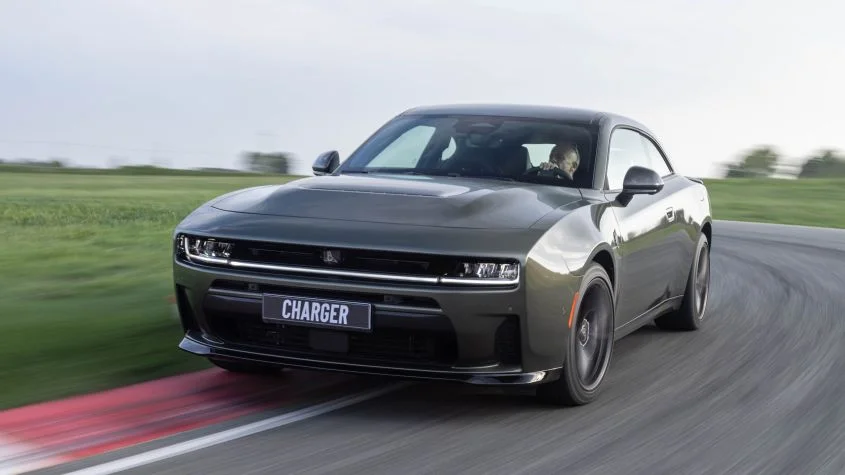
The Dodge Charger has cemented its status as one of the most iconic American muscle cars, and the 2026 model continues this legacy. As it makes its official debut in the UK, it aligns itself against the only other direct rival, the Ford Mustang. However, the Charger distinguishes itself with more space and a versatile range of powertrains, including petrol and fully electric options.
This latest iteration, introducing its eighth generation, coincides with the Charger’s 60th anniversary, highlighting its historical significance. The variety of choices available, particularly in the UK market, includes models that cater to diverse preferences: it comes in two-door and four-door configurations, featuring both petrol and electric powertrains. Customers will find four distinct variants at launch, with two powered by internal combustion engines and two as electric models.
Starting the petrol lineup is the 3.0-liter twin-turbo Charger R/T, delivering an impressive 420bhp paired with an eight-speed auto transmission. There's also the Scat Pack variant, which retains the same engine but adds performance tweaks to elevate output to 550bhp. On the electric side, both versions are branded as Daytona. The Daytona R/T boasts 536bhp while the Daytona Scat Pack delivers a jaw-dropping 670bhp, positioning it as the most powerful muscle car on the market today.
Despite its impressive performance figures, traditional muscle car enthusiasts have been slow to embrace these new models, particularly the electric variants which have not seen substantial sales in the U.S. market since their launch two years ago. There’s a new take on the petrol option in the form of the Sixpack, which, while sharing a platform and components with the Jeep and RAM line, introduces a new inline-six engine that echoes the sound of a V8.
The in-line six engine is more efficient and cleaner than previous V8s, adhering to strict emissions standards. Dodge has gone to great lengths to imbue this engine with similar character, enhancing its sound through interior speakers and tuning the power delivery to ensure ample torque is available at low revs, maintaining that familiar muscle car feel.
All variants feature all-wheel drive, which can switch to a rear-wheel-drive mode akin to certain BMW M models, adding to the driving dynamics. Testing the Charger on Stellantis's Balocco track in Italy showcased its quick handling and impressive straight-line speed. While its significant weight—around 2,100 kg—demands attention, the well-distributed weight and long wheelbase afford it a composed driving experience.
Handling the Charger on standard roads reveals its comfort and smoothness, although its large dimensions may pose challenges on narrower routes. The muscular form, wider than 2 meters and stretching over 5.2 meters in length, ensures a strong road presence, supported by tech features like a large central touchscreen that aids in parking.
Inside, European models receive upgraded digital instrument displays, which are larger than those typically found in U.S. versions. Interior customization includes 64 configurable lighting options, and while there's noticeable improvement in quality compared to previous iterations, the presence of hard plastics suggests that it may still fall short of the standards set by luxury competitors.
Space is ample, with the new Charger offering considerably more rear seat room, effectively replacing the discontinued Challenger. Its trunk, designed with a hatchback-style opening dubbed the ‘hidden hatch,’ allows for generous storage—folding the rear seats flat provides up to 1,064 liters of cargo space.
Interestingly, even the electric Daytona version replicates the classic V8 rumble through a system known as the Fratzonic Chambered Exhaust, which employs speakers and passive radiators to create an engaging sound experience. While this artificial sound can become overwhelming, it does serve to inform the driver about speed without sacrificing performance.
On track, the Charger reveals its capabilities through features like Drag Strip and Drift Modes, highlighting an engaging and intuitive experience that stands apart from its petrol counterparts. The driving dynamics are seamless on the road, steering clear of the aggressive acceleration quirks often associated with other electric performance vehicles.
Unlike traditional Stellantis sales channels, the Charger will be available through KW Automotive in the UK, with two designated retailers located in Essex and Oxford. Unfortunately, no right-hand-drive version will be offered, which may limit its appeal to some UK buyers.
Pricing reflects the Charger’s premium positioning, starting at approximately £62,688 for the two-door Sixpack R/T and escalating to around £77,067 for the electric Daytona variant. The Scat Pack trims will carry an additional cost of about £4,000, with four-door models priced slightly higher as well.
With its blend of historical attributes and modern performance specifications, the 2026 Dodge Charger seems poised to carve out its niche in the UK market, even if it remains an unusual choice for local buyers.

Discussion
Sign in to join the discussion.