McLaren is set to launch a high-performance hybrid SUV by 2030, emphasizing lightweight design and in-house manufacturing capabilities.
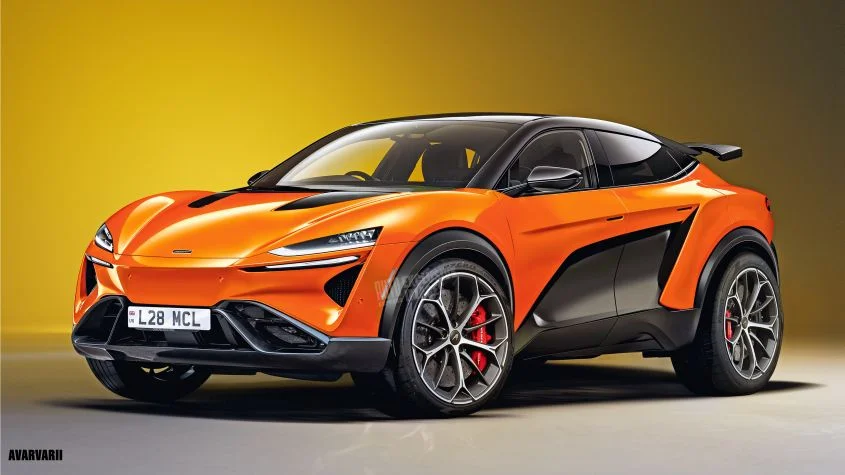
McLaren has officially announced its plans to introduce a high-performance SUV by 2030, aligning with its lightweight philosophy while incorporating hybrid technology. This move marks a significant shift for the British automotive brand, which aims to capitalize on the lucrative SUV market.
To facilitate this ambitious design, McLaren is undertaking a £500 million expansion that includes bringing engine manufacturing in-house, establishing a second assembly line, and enhancing its carbon-fiber production facilities in South Yorkshire. The decision to develop a new SUV is viewed as a comprehensive company transformation to position McLaren favorably in the global market.
The upcoming SUV will feature a clean-sheet design spearheaded by McLaren’s new chief design officer, Kemal Curic. This model will be the brand's first to offer two conventional rows of seats accessed through four doors, aiming to compete with established luxury rivals like the Lamborghini Urus and Aston Martin DBX. Unlike Ferrari’s Purosangue, which touts a more sports car-like approach, McLaren’s SUV is expected to blend practicality with luxury.
In a statement, Michael Straughan, McLaren’s chief operating officer, emphasized that the SUV must embody the brand's ethos. "Whatever we do with an SUV, it clearly needs to be a McLaren and it will be," he remarked. This underscores McLaren’s commitment to maintaining a performance-oriented identity, even within the SUV segment.
Carbon fiber remains central to McLaren's design philosophy, as the company has utilized this lightweight material in Formula 1 since 1981. Straughan acknowledged the challenges of employing carbon fiber in a larger vehicle like an SUV, suggesting that if difficulties arise, alternatives such as aluminum could be explored. “It would be aluminum if we couldn’t make [carbon] work,” he noted, highlighting the importance of weight management and performance.
When questioned about potential partnerships for the SUV's platform, Straughan made it clear that McLaren intends to develop the vehicle independently. There was a history of discussions with BMW under previous management; however, the current leadership emphasizes a unique McLaren approach. "It has to be ours," Straughan asserted, underlining their desire for a bespoke vehicle not simply conforming to existing competitor models.
The drivetrain will be a hybrid configuration, integrating new engines and transmissions that will succeed the existing twin-turbo V8 and hybrid V6 units. While some future models may still utilize traditional internal combustion engines, the leadership team is keeping the door open for different configurations beyond just a V6 or V8.
Power delivery is a priority, especially with competitors like the Urus and DBX S achieving impressive acceleration figures, such as 0-62 mph in under 3.6 seconds. Straughan reiterated the significance of the power-to-weight ratio in maintaining McLaren's performance credentials, even as the SUV introduces different demands.
To accommodate SUV production, McLaren's Woking facility will require additional space, prompting the search for a secondary manufacturing location within the UK. This development aligns with the company’s broader restructuring strategy following the acquisition by Abu Dhabi's CYVN Holdings, aimed at stabilizing McLaren’s financial footing after a tumultuous period of ownership.
The previous aspirations under former CEO Michael Leiters envisioned a more conventional, high-priced SUV. However, this direction shifted with new leadership emphasizing a distinctive product that is in harmony with the brand's racing legacy. Uniquely powered by a detuned version of the W1 hypercar’s drivetrain, the upcoming SUV marks a departure from past strategies, particularly with the growing importance of hybrid systems.
Nick Collins, CEO of McLaren Group Holdings, noted the importance of diversifying powertrains while not committing to a fully electric model at this stage. "Are we going to make McLaren an all-electric brand? Absolutely not," Collins stated, reinforcing the brand's stance in favor of hybrid technology while acknowledging the shifting demands of the market.
The focus will remain on offering a hybrid vehicle, with engineers maintaining the anticipation of pure electric capability as consumer readiness evolves. The SUV's architecture is designed to ensure that a switch to all-electric power could be plausible in the future, albeit not in the immediate agenda.
McLaren’s leadership is also prioritizing a revitalization of its marketing strategy, intending to resonate more with consumers through narratives that celebrate the brand’s storied racing heritage. Collins reflected on the immense enthusiasm surrounding McLaren’s racing presence, describing it as a vital part of rekindling interest and pride in the marque.
In sum, McLaren’s forthcoming hybrid SUV is set to redefine the brand’s offerings by integrating performance principles deep within its luxury SUV. With expansion plans underway and a commitment to maintaining its unique identity, McLaren looks poised to take a significant step into the competitive world of luxury SUVs, continuing to align itself with the principles of speed, precision, and cutting-edge technology.
Discussion
Sign in to join the discussion.