Tesla's Accordion Supercharger aims to streamline installation and address recent deployment slowdowns, providing a cost-efficient way to expand its network.
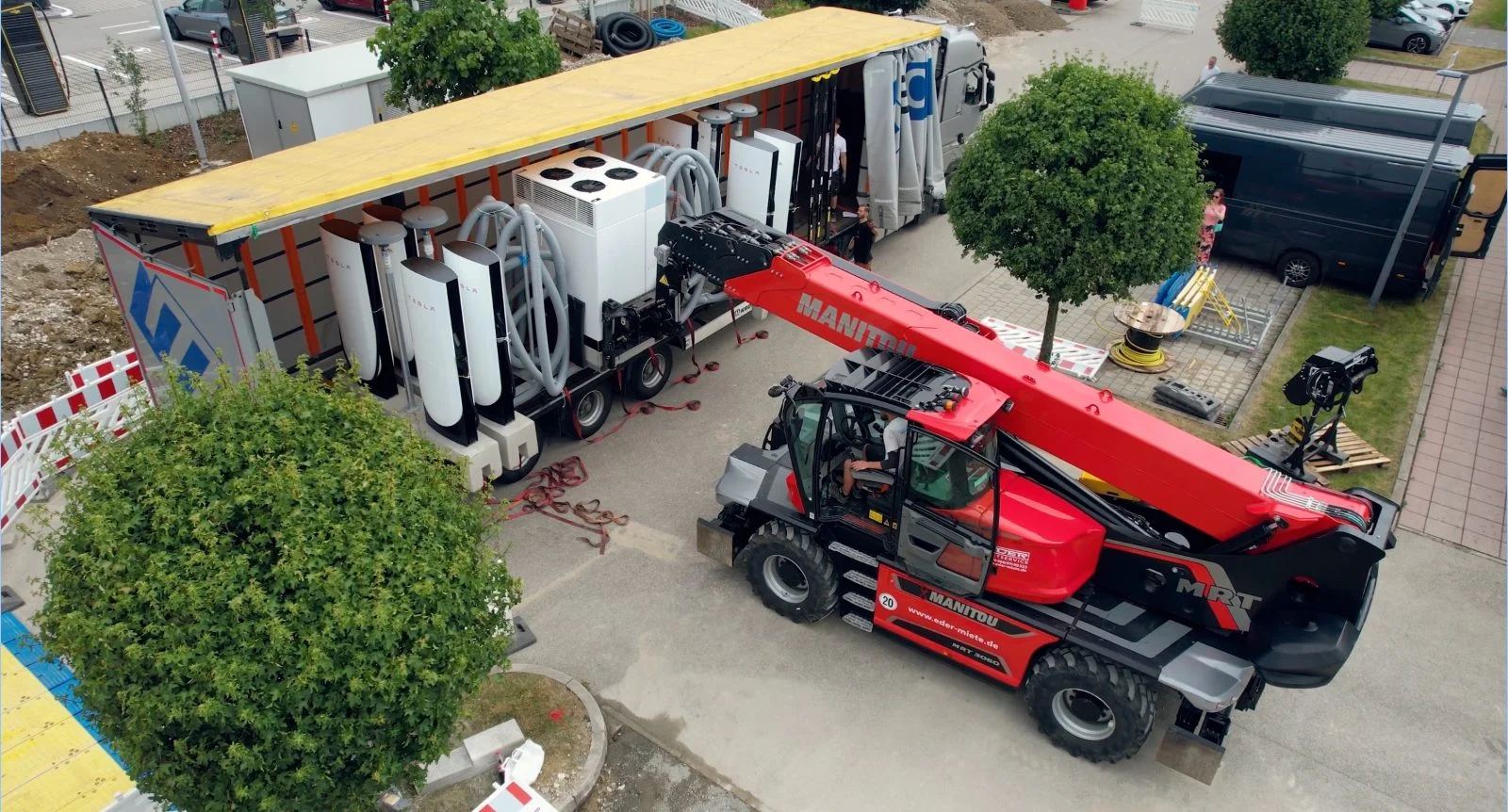
Tesla has rolled out its first Accordion Supercharger, a pre-fabricated charging unit designed to simplify installation and reduce costs. With the ability to transport 16 charging stalls on a single truck, this new solution is reportedly 20% cheaper to install compared to traditional setups, reflecting Tesla's ongoing struggle to accelerate its Supercharger deployment.
The company's vision is to pre-assemble all Superchargers at its manufacturing facilities. This approach is not only practical but necessary given the challenges Tesla faced with deployment inefficiencies in the past few years.
Overview of the Accordion Supercharger
The Accordion Supercharger is named for its unique structure, which folds up like an accordion. This design allows Tesla to ship multiple V4 stalls without extensive logistical hurdles. Unlike traditional installations that require extensive groundwork and could be hampered by spatial constraints, these units can be placed conveniently between parking spaces, allowing Tesla to set up charging stations even in cramped urban areas.
As noted by Tesla's charging division, this new system eliminates the need for civil construction work, like trenching and conduit installation, which often delays the setup of traditional charging stations. Instead, deploying a pre-wired unit can significantly cut installation time, translating to faster expansion of the Supercharger network.
Tesla's Journey with Prefabrication
This isn’t Tesla's first attempt at pre-fabricated charging solutions. In March 2022, the company showcased a Supercharger station that was completed in just eight days using a preceding version of this pre-assembled system. By April 2024, they had managed to reduce this timeframe to a mere four days post-delivery. However, turmoil struck when Elon Musk dissolved the entire charging team, including key personnel, an unexpected move that significantly impacted their deployment capabilities.
Following the layoffs, Tesla’s deployment plunged. In Q2 of 2024, the company added merely 2,017 new Supercharger connectors, the slowest rate in three years and a noticeable decrease from the previous quarter's 2,687. Since then, they’ve struggled to maintain consistent growth with fluctuations in stall additions throughout 2025 and into 2026, underscoring the urgency of refreshing their approach.
Recent Deployment Trends
While Tesla's Supercharger network, boasting over 82,000 connectors at more than 8,700 stations, has seen growth, the pace has sharply declined. Previously, Tesla's annual growth rates exceeded 35% during the peak years of 2020 and 2021. Current rates reflect a stark slowdown, hovering around 17% as of Q2 2026. While the company has acknowledged the influence of stagnant EV deliveries on these figures, the introduction of non-Tesla EVs into their network adds another layer of complexity.
Competitive Challenges from BYD
While Tesla aims to regain momentum, competitors are accelerating their own infrastructures. BYD, for instance, has rolled out an impressive number of fast-charging stations, installing 10,000 of its 1,500 kW "flash charging" units in just five months across 325 Chinese cities. This aggressive expansion highlights a pivotal shift in the charging landscape, with BYD targeting up to 20,000 stations by the year's end. Their devices boast superior charging speeds, providing significant charging capability compared to Tesla's V4 stations.
The growing pace of competition is alarming for Tesla, particularly as BYD could soon match nearly half of Tesla's global stall count. While Tesla remains a leader in certain markets, their prolonged deployment issues could hinder their competitive edge.
Evaluation of Tesla's Strategic Moves
The Accordion Supercharger signifies a potential turning point for Tesla's deployment strategy. The engineering behind it reflects a thorough understanding of scalability and operational efficiency. This pre-assembly model could be the answer Tesla needs to overcome logistical hurdles associated with traditional installations.
Should Tesla meet its goal of factory-pre-assembled Superchargers, we could expect a notable boost in deployment rates. The transition to this model could indeed help the company reclaim its earlier rapid growth trajectory.
However, it’s critical for Tesla to address the underlying issues stemming from the historical team layoffs and the current competitive landscape defined by aggressive challengers like BYD. If they can navigate these waters effectively, Tesla might just reclaim its title as the leader in EV charging solutions.
As the industry evolves, the pace at which Tesla can roll out its new Accordion Superchargers will be key to determining its future position in the marketplace amidst escalating competition.
Discussion
Sign in to join the discussion.