Tesla reveals new European Semi specs, including 550 km range and 800 kW charging, challenging a competitive electric truck market.
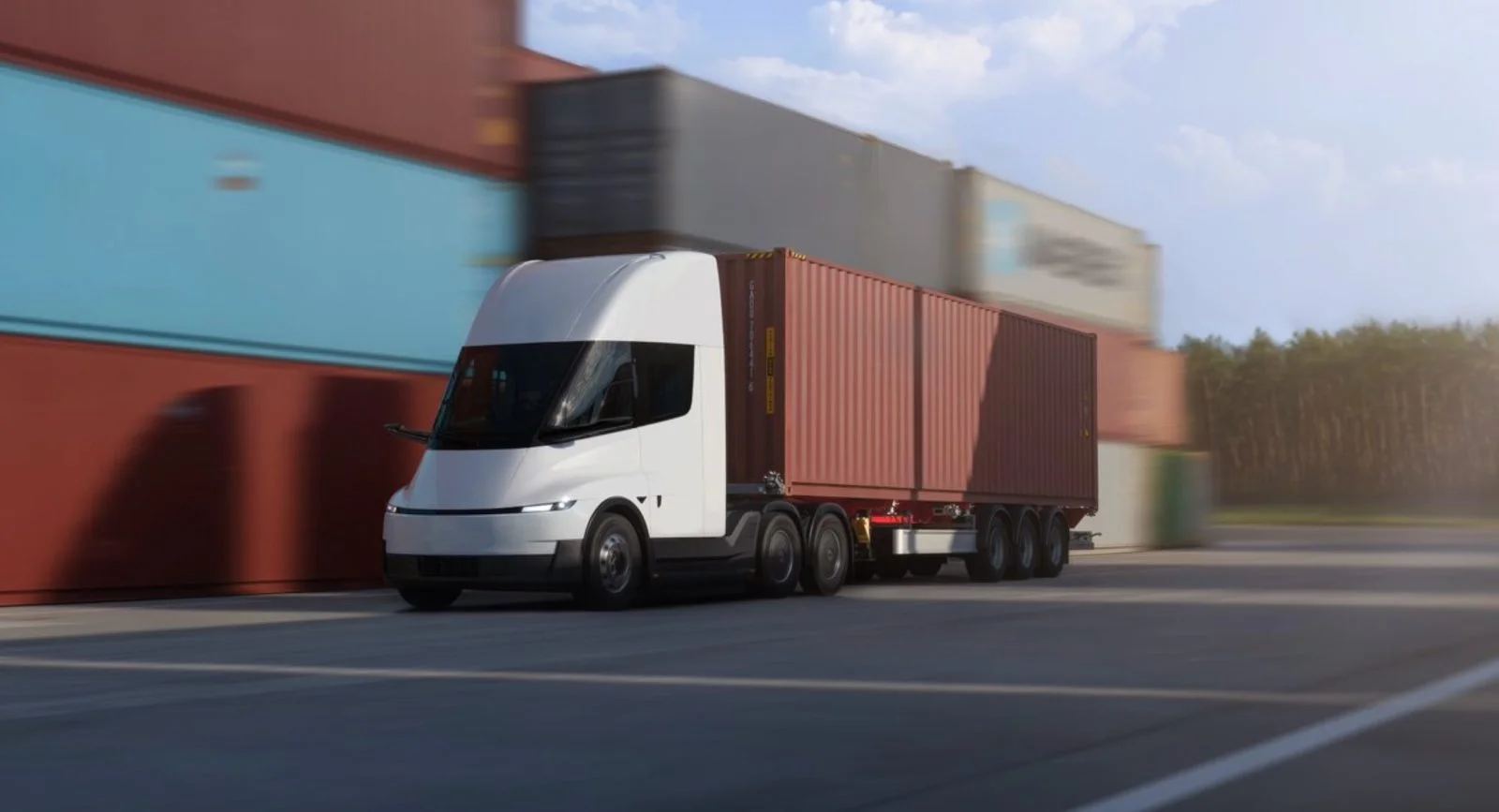
Tesla has shared the European specifications for its much-anticipated Semi electric truck, revealing notable differences from the US version. The truck boasts a range of up to 550 km (342 miles) when fully loaded at 40 tonnes, a specification that positions it competitively in the European market.
The announcement was made via Tesla Europe's social media platform just days prior to the official launch at the IAA Transportation show in Hannover, scheduled for September 15-20. While the range and charging specs are impressive, Tesla has yet to disclose details regarding pricing or expected delivery timelines for the European market.
European Semi Specifications
Outlined in a recent post on X, the key specifications for the European Semi include:
- Maximum range of 550 km at 40 tonnes fully loaded
- Energy consumption of 1 kWh/km
- Charging capabilities via Megacharger up to 800 kW, restoring approximately 60% of range in 30 minutes
- ePTO output of up to 25 kW
- Gross combination weight of 40 tonnes with a curb weight of 9,100 kg
These figures indicate that Tesla is gearing up to meet the specific needs of European logistics while adhering to strict regulations governing weight and emissions.
Comparison with US Specifications
In comparison to the US model, the European Semi's range appears lower than the American Long Range variant, which is rated at a substantial 500 miles (805 km) using an 822 kWh battery. The European value of 550 km is derived from the vehicle being fully loaded, which is notably heavier than the American standard of 82,000 lbs (37.2 tonnes)—a key factor in range calculations. Europe allows zero-emission trucks to exceed the standard weight limit, meaning higher loads come at the expense of range.
However, the Semi's curb weight of 9,100 kg (~20,000 lbs) is lighter compared to the US version’s weight of about 23,000 lbs, placing it closer to the standard range model. This raises questions about the battery configuration being offered in Europe, as a lighter vehicle typically uses a smaller battery pack, potentially explaining the 550 km range versus the advertised 805 km for the US version.
Charging efficiency also presents a significant difference, with Tesla stating the charging rate of 800 kW in Europe—enabling drivers to recover about 60% of their range in 30 minutes. The US Semi has demonstrated capabilities up to 1.2 MW charging, which can replenish around 70% in the same timeframe. The energy consumption of 1 kWh/km closely aligns with real-world data seen from US fleets, adding context to the European model's potential performance.
Navigating a Competitive Landscape
Tesla enters a European market that is already bustling with established electric truck offerings from prominent manufacturers such as Mercedes-Benz, Volvo Trucks, MAN, Scania, DAF, and Renault. Each of these companies has established service networks and a loyal customer base, making the competition quite stiff. For instance, Mercedes' eActros 600 model provides around 500 km of range from a 600 kWh battery, indicating that Tesla's 550 km specification is competitive but not unprecedented.
At present, Tesla is only manufacturing the Semi at its new high-volume plant adjacent to Gigafactory Nevada. Whether trucks destined for Europe will be imported or manufactured locally remains unclear—a major logistical consideration as the company prepares for its debut in Hannover. CEO Elon Musk hinted previously that production may eventually shift to Tesla's Berlin facility, depending on demand and regulatory requirements.
Insights and Speculations
While the specifications presented are commendable, several key details are conspicuously absent—namely price, delivery timelines, and the exact battery configuration for the European model. With a curb weight of 9,100 kg suggesting a standard range truck, there's a possibility that the true range capabilities of the European Semi may fall short of expectations.
The 800 kW charging capability also invites scrutiny. Given the emphasis on Tesla’s ability to achieve substantial range recovery during short breaks, this power level represents a noticeable decrease from the US's 1.2 MW. This discrepancy could potentially affect the feasibility of long-haul operations across Europe, impacting fleet scheduling and efficiency.
Tesla faces an uphill battle in a saturated marketplace; however, competitive pricing could be the critical factor that disrupts established players. The challenge lies in how well Tesla can position itself to leverage its innovative design and technology against seasoned manufacturers that already have an extensive foothold in the sector.

Discussion
Sign in to join the discussion.