Volkswagen Group reports that electric vehicles now account for 40% of its European orders, showcasing a shift in consumer preference amidst declining sales overall.
Through the first nine months of 2026, Volkswagen Group recorded global deliveries of 6.01 million vehicles, reflecting a 9% decline compared to 6.60 million during the same period in 2025. This drop is primarily attributed to significant sales losses in China, while European and South American markets showed some resilience.
The third quarter was particularly challenging, with total deliveries falling 14.3% to 1,885,300 vehicles. A closer look at the regional performance reveals:
- Europe: 2,956,000 vehicles, an increase of 1.7%
- North America: 680,200 vehicles, a decrease of 4.0%
- South America: 502,500 vehicles, an increase of 4.3%
- China: 1,378,800 vehicles, a staggering 30.2% drop.
This decline in the Chinese market translated into a loss of roughly 595,000 vehicles, which notably mirrors the overall decrease of around 593,000 units observed globally. While the rest of the world's performance remained stable, it illustrates a concerning trend for the group in its largest single market.
Turning to electric vehicles, Volkswagen categorizes its plug-in sales into two categories: all-electric and plug-in hybrids. In total, the group delivered 678,700 fully electric vehicles, marking a 5.4% drop from 717,700 the previous year. In contrast, plug-in hybrids surged by about 23%, totaling 368,000 units. Cumulatively, this results in around 1.05 million plug-in vehicles, representing about 17% of the group's overall deliveries.
Looking specifically at all-electric vehicles, they comprised approximately 11.3% of total deliveries, a slight increase from 10.9% in the previous year. This share increased even against a backdrop of declining sales volume because the overall delivery numbers dropped more sharply.
For a broader context, Volkswagen's all-electric deliveries in Europe rose by an impressive 12.1% through September, reaching 586,100 units. During the third quarter alone, the growth rate accelerated to 19.6%. Consequently, the share of all-electric vehicles in Europe increased from 18% to 20% over the past nine months.
Orders indicate a promising trajectory. Volkswagen's all-electric order book in Europe has doubled since the last year, and the intake of orders jumped more than 60% in Q3. Now, electric vehicles account for roughly 40% of the group’s order books in the region.
Meanwhile, the European electric vehicle market is also evolving. Reports from the ACEA highlight that all-electric cars represented 21.7% of EU registrations through August. Factors such as rising fuel prices in the EU and UK have fueled this shift, with Volkswagen’s sales chief citing both the expense of fuel and the availability of more affordable entry-level models as key influences on buyer behavior in Germany.
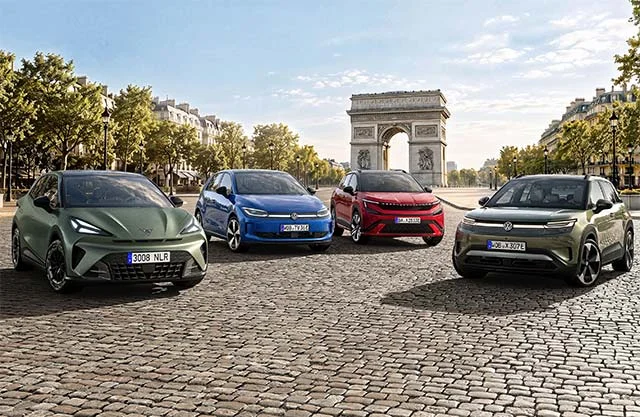
On the product front, Volkswagen's Electric Urban Car Family is gaining traction, with four compact models: the VW ID. Polo, VW ID. Cross, Škoda Epiq, and CUPRA Raval, collectively achieving nearly 150,000 orders. The ID. Polo's starting price of €24,995 and reports of a ten-month wait demonstrate strong demand. Škoda's Epiq has garnered approximately 35,000 orders while the ID. Cross starts at about €28,000. Both models are manufactured in Spain, aligning with a strategy to promote local production against imports.
Škoda's performance reflects this trend, as its all-electric sales spiked by 41.3% to 167,400 units through September. Meanwhile, Volkswagen’s plug-in hybrid and range-extender models saw deliveries increase by about 23%, thanks largely to strong demand for second-generation products, especially in China, where electrified vehicle sales surged by 30% in Q3.
Nevertheless, there's a cooling off in growth rates. The rise in plug-in hybrids was about 31% in Q1, followed by 27% in the first half of the year, slowing to just 23% as of September.
China remains a focal point for Volkswagen's strategy; for example, the SAIC Volkswagen has recently launched the ID. Era 9X range-extender crossover, which saw sales of 7,330 units in April and May. The Tiguan L ePro plug-in hybrid impresses with an electric range of 143 km according to China's testing standards.
In Europe, the acceptance of plug-in hybrids is on the rise as well, making up 10% of registrations with nearly 758,000 vehicles sold through August. Notably, Italy recorded the most significant growth at 77.6%.
Understanding the difference between the vehicle types is essential: a plug-in hybrid electric vehicle (PHEV) can operate on electric power or the combustion engine, while an extended-range electric vehicle (EREV) relies solely on the electric motor, with a small engine only generating power for the battery. Volkswagen counts both categories for reporting purposes.
Despite the challenges in China, where overall deliveries fell by 30.2%, the new emphasis on electrification is starting to show promise. Among the silver linings, Volkswagen marked a significant increase in electrified deliveries in China, up 30% year-on-year.
This underscores Europe’s critical role, as approximately 86% of the group’s all-electric deliveries, or 586,100 of the total 678,700, originate from the continent.
Top-Selling Volkswagen Group Electric Vehicles
In the all-electric segment, Škoda stands out, with the Elroq leading the list at 92,200 deliveries, followed closely by the VW ID.4/ID.5 at 81,900 and the Škoda Enyaq at 72,700. The VW ID.3 recorded 61,100 units, trailed by the Audi Q6 e-tron (50,400) and VW ID.7 (47,500).
Brand performance showcases notable variances. While Škoda’s electric deliveries saw substantial growth at 41.3%, SEAT/CUPRA experienced a more modest rise of 13.5%. In contrast, Volkswagen Passenger Cars witnessed a decline of 26.3% to 212,200 units, while Audi dropped 12.0% to 143,700, and Porsche fell 20.8%.
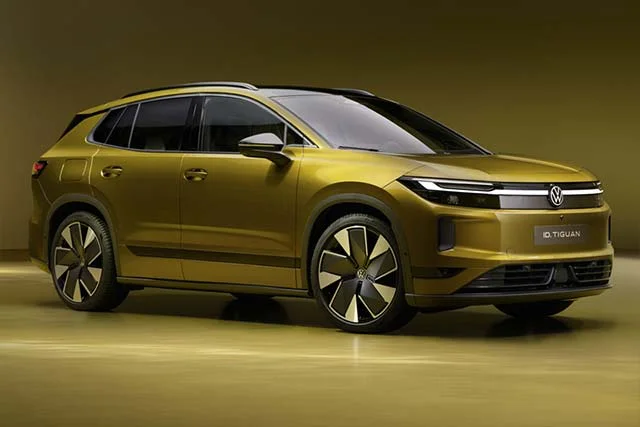
In response to market demands, Volkswagen is expanding its lineup with larger models, including the upcoming ID. Tiguan that promises a range of up to 600 km and starts at around €42,695.
Discussion
Sign in to join the discussion.