BMW's 2026 update introduces an integrated 3D navigation and driver assistance system, improving the driving experience with real-time visuals.
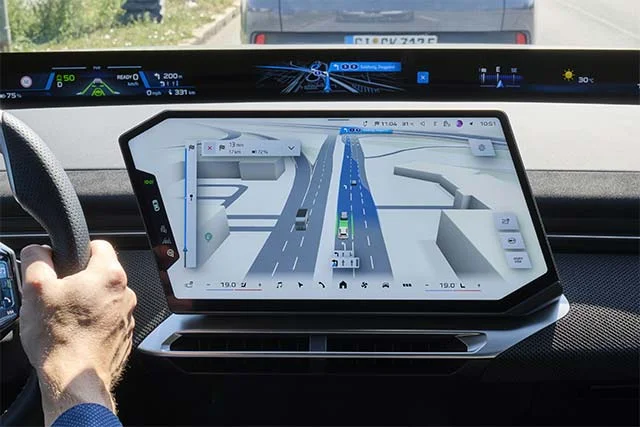
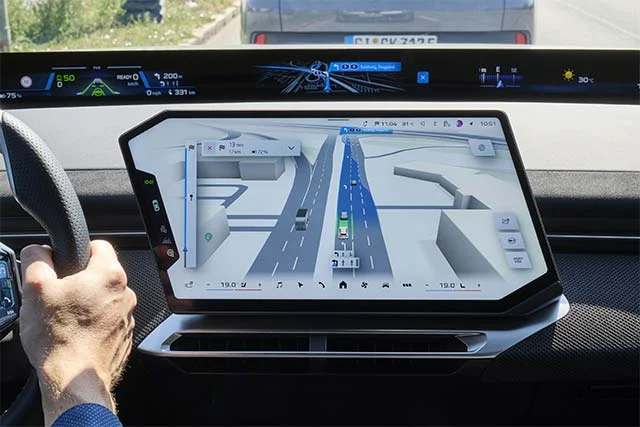
BMW is set to elevate its navigation experience with a significant upgrade in its BMW Maps feature, integrating 3D mapping and driver assistance functionalities into a unified display. Slated for rollout in October 2026 with vehicles equipped with the new Operating System X, this advanced system aims to simplify the complexities of assisted driving. This is more significant than it looks, as it represents a shift in how traditional automotive navigation is approached.
Introduction of 3D Navigation
The first embodiment of this technology will debut in the new-generation BMW iX3. Unlike traditional displays which separate navigation from driver assistance, the updated interface merges both elements into a single real-time visualization. This method is not only user-friendly but essential in today's fast-paced driving scenarios where distractions abound. It reminds one of Tesla’s 3D representations, which have captured the market's attention.
Drivers will benefit from precise lane positioning and detailed depictions of surrounding vehicles and significant road features. This holistic view is especially beneficial in challenging driving environments—multi-lane highways, intricate intersections, or congested urban settings—where deciphering multiple streams of information can be daunting. If you’re working in this space, you'll recognize how cluttered interfaces can overwhelm even experienced drivers.
Through its integrated mapping, BMW offers a clearer understanding of the vehicle's surroundings, combining intelligence with practicality. This approach not only provides clarity but reassures drivers who often navigate diverse and complicated road conditions.
Enhanced Driver Assistance with Highway Assistant 2
Coupling the new BMW Maps interface with its latest driver assistance technology delivers even greater functionality. Highway Assistant 2 allows for hands-free driving on highways with speed capabilities reaching up to 130 km/h (80 mph). The system not only manages both longitudinal and lateral movement of the vehicle but also facilitates automated lane changes, provided the driver approves the maneuver with a simple glance. This feature exemplifies the blend of automation and driver engagement that’s crucial for safety.
When navigation is actively guiding the driver, Highway Assistant 2 can assist from the on-ramp all the way to the exit. This continuous support is a hallmark of BMW's evolving technology, indicating the brand's commitment to providing a seamless driving experience. Initially, this feature will be available in the BMW iX3, with plans for wider deployment across other Neue Klasse-based models and further updates. The rollout strategy shows that BMW is understanding the incremental nature of technology adoption; you can't rush safety features onto the market.
Preparing for Urban Driving Automation
Looking to the future, BMW aims to incorporate navigation-assisted semi-automated driving in urban environments starting in 2027, initially launching in Germany. This shift emphasizes the importance of integrated map data in enhancing the functionality of driver assistance systems. Navigation will no longer just guide turning points; it will inform systems about upcoming road complexities and the vehicle's route. This foresight is indicative of how urban driving conditions are increasingly influencing automotive technology development.
To make this interaction clearer, BMW is optimizing its latest Maps interface to ensure drivers are well-informed as they operate their vehicles under semi-automated conditions. The reality is that mastering urban navigation requires an entirely different approach than highway driving, and the automotive sector is finally beginning to recognize this disparity.
Mapbox Collaboration Enriches the Experience
The innovative 3D navigation and driver assistance experience is a result of BMW's in-house development, enhanced with mapping data from Mapbox. This collaboration provides detailed information about lanes, landmarks, and physical features that augment BMW's visual displays. Mapbox's extensive database can enhance the system's accuracy and reliability, a critical factor when managing advanced driver assistance features.
By merging comprehensive mapping data with vehicle sensors and AI, BMW is creating an enriched external depiction of the driving environment. This integrated approach means navigation instructions and driver assistance information can be presented in a cohesive manner, enhancing clarity for drivers. (and this is the part most people overlook) The efficiency of how this data is processed will play a significant role in real-time driving scenarios.
Availability and Market Limitations
BMW Maps with Driver Assistance won’t be universally accessible across all models or regions from the outset. The feature’s launch is contingent on the presence of the latest Highway Assistant or Highway & City Assistant systems, and it will be restricted to certain countries, cities, and specific roads. The phased rollout means functionality may differ based on the geographic market, which poses challenges for a global brand trying to standardize technology.
While a detailed list of compatible U.S. locations has yet to be shared, promotional materials were notably produced in the United States, hinting at potential availability. However, there’s still a lingering question on how soon consumers can expect widespread access. The intricacies of local regulations and infrastructure can’t be overlooked.
The advancement of BMW Maps indicates a promising trajectory in merging navigation and driver assistance, poised to redefine the driving experience in upcoming models. But, it's essential to remain cautiously optimistic; past launches have shown that ambitious plans often face delays or alterations based on real-world factors.
Implications and Future Outlook
The introduction of BMW Maps with enhanced driver assistance capabilities signals a potential shift in automotive technology. As companies like BMW invest heavily in these features, we might see a redefinition of consumer expectations. Integrated systems could soon become a standard rather than an exception.
Moreover, BMW's roadmap aligns with broader industry trends pushing towards autonomous driving systems. This could set the stage for future regulations and insurance models as the lines between driver responsibilities and automated systems blur. As these technologies mature, the landscape of vehicle ownership and operation as we know it may change dramatically.
All said, the future looks promising—but it’s not without its uncertainties. Automakers face the challenge of ensuring that while they embrace complex integrations, they don’t compromise core principles such as safety and reliability. How BMW navigates this path will determine its place in an increasingly competitive market.

Discussion
Sign in to join the discussion.