Volkswagen's Mission Efficiency, the successor to the XL1, sets a new record for economy while offering greater usability at a competitive price point.
An Electrifying Successor: The Volkswagen XL1 and Mission Efficiency
The Volkswagen XL1, launched in 2013, initially captivated enthusiasts and eco-conscious drivers alike with its striking design and remarkable fuel efficiency. It was heralded as the most economical production car of its time, boasting a cutting-edge diesel engine that exemplified what was possible in automotive technology. Fast forward 13 years, and Volkswagen has unveiled its successor, the Mission Efficiency, set to debut in 2027. This new model aims not just to repeat the past's accomplishments but to outshine them in key areas like performance and user experience.
Record-Breaking Fuel Efficiency
The Mission Efficiency has already established itself as the world record holder for fuel efficiency among near-production vehicles. Departing from the diesel engine of the XL1, this new model employs a powerful electric motor generating 134bhp, utilizing fuel cell technology akin to what’s found in the latest ID.Polo. This shift marks a significant departure from diesel, reflecting broader trends in the industry towards electrification. What’s striking about this innovation is that it effectively doubles the power of its predecessor while still sharing the MEB platform. The battery capacity has also seen a slight increase from 52kWh to 54.9kWh, indicating Volkswagen’s commitment to enhancing energy storage while maintaining efficiency.
Impressive Range and Efficiency
When it comes to range, the Mission Efficiency presents compelling statistics. Volkswagen claims it can cover up to 500 miles on a single charge under optimal conditions. In recent testing, a 794-mile journey from Wolfsburg to Vienna required charging just once, with an average efficiency of 8.2 miles per kWh. If you're working in this space, you’ll recognize this kind of efficiency as a significant advancement compared to traditional electric vehicles. Notably, Volkswagen aims for an overall efficiency of 8.4 miles per kWh, significantly outpacing the ID.Polo’s 4.5 miles per kWh. This leap doesn't just illustrate technological progression but points to a potential shift in how electric vehicles are viewed for long-distance travel.
Aerodynamic Design: Improving Efficiency
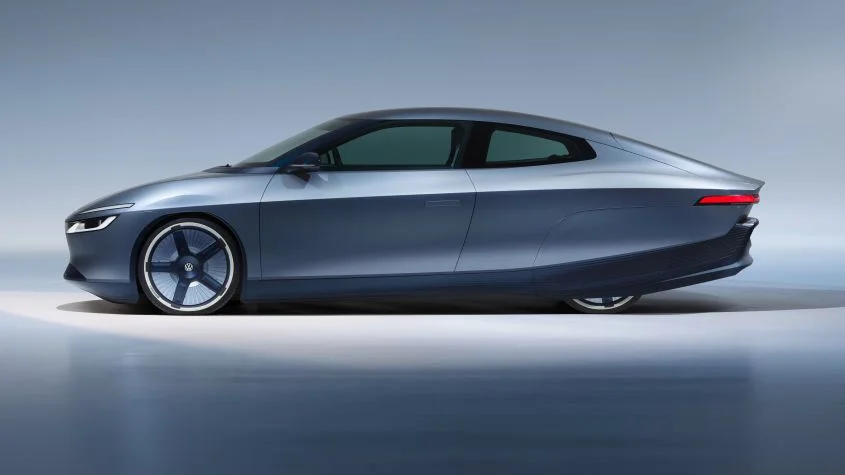
The design of the Mission Efficiency plays a critical role in its high-performance metrics. Its sleek aerodynamic profile is reminiscent of the XL1, boasting a drag coefficient of just 0.158. This impressive figure surpasses that of the Mercedes-Benz EQS, which comes in at 0.19. Enhancements such as a reduced rear track width, a lengthened wheelbase, active air slats, and a tapered rear have all contributed to this remarkable aerodynamics. And this is the part most people overlook: even a minor change in aerodynamics can lead to substantial improvements in energy consumption. While we don’t yet have specific figures on weight, it’s likely that the Mission Efficiency will tip the scales heavier than the lightweight 795kg XL1; however, the use of carbon-fiber-reinforced materials for various components will help mitigate this increase.
Practicality Meets Innovation
Unlike the two-seat XL1, the Mission Efficiency is designed with a practical two-plus-two configuration. The spacious interior introduces a double bubble roof for additional rear headroom and a generous 481-liter boot, showcasing Volkswagen's focus on user-centric design. Clever storage solutions, such as compartments behind the wheel covers, are also integrated into this layout. The interior does take cues from existing VW models, featuring a steering wheel borrowed from the ID.Polo alongside a compact central display. Efforts to shed weight lead to some unconventional choices, like the omission of door electronics. The bespoke seats, constructed with recycled materials, are manually adjustable, while a Bluetooth speaker has replaced the traditional sound system, pointing to a shift in how in-car entertainment is approached.
A Look Ahead: Changing Market Dynamics
Currently, the Mission Efficiency isn't available for purchase, but it’s on Volkswagen’s radar for production. The XL1 was priced at nearly £100,000 during its limited run, setting a high bar for exclusivity. In contrast, the Mission Efficiency aims for a more accessible target price around £42,000, according to a spokesperson for Volkswagen speaking to Auto Express. This potential shift could broaden its appeal significantly, making it a contender not just for eco-conscious consumers, but also for families looking for a practical yet innovative vehicle.
Implications for the Future
As Volkswagen gears up to transition the Mission Efficiency from concept to production, the implications for the automotive market are profound. With a blend of efficiency, practicality, and a more approachable price point, this model could help redefine electric vehicle perceptions. What this means for you is that the conversation around electric vehicles is shifting; they could soon be seen not just as eco-friendly alternatives, but as viable options for everyday commuters and families alike. The Mission Efficiency stands at the intersection of technology and consumer needs, setting a new standard for what's possible.

Discussion
Sign in to join the discussion.