The Renault Sport Spider, often overshadowed by the Lotus Elise, offers an immersive driving experience despite its niche appeal and limited production.
The Renault Sport Spider: A Misunderstood Classic
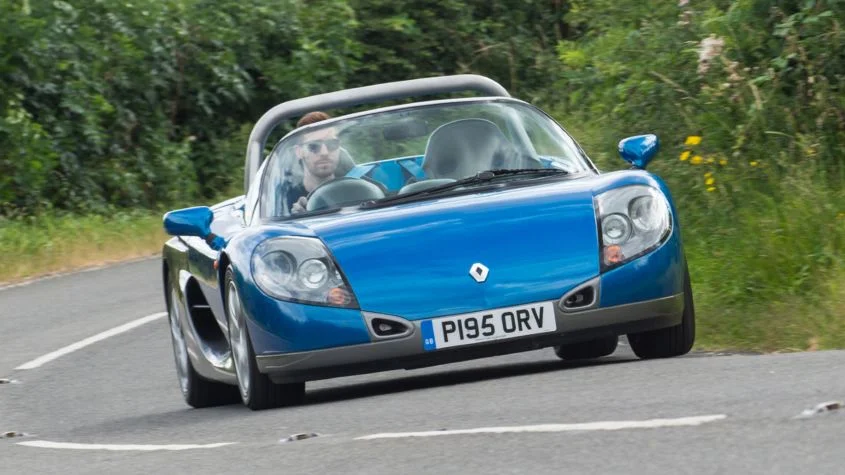
When evaluating the Renault Sport Spider, it’s hard not to see it as a vehicle positioned in the shadow of its fierce competitor, the Lotus Elise. Launched between 1996 and 1999, the Spider was part of a larger trend of lightweight sports cars that defined the era. Yet, with only 1,685 units produced compared to over 10,000 Elises, its legacy feels more niche than celebrated. The comparison is stark: while the Elise clinched numerous awards, the Sport Spider struggled to gain recognition, often overlooked in favor of its rival.
Design Meets Practicality
Unveiled at the Geneva Motor Show in 1995, the Renault Sport Spider was designed to capitalize on the sporting success of the Williams Renault F1 team. Its distinctive beetle-like shapes, a mix of quirky and purposeful design, surely caught the attention of motorsport enthusiasts. Unlike the Elise, however, the Spider featured a standard windscreen for UK models, though this only marginally increased its usability. Priced at £25,950 – significantly higher than the Elise – the Spider combined unique aesthetics with limited comfort and practicality. It lacks essential features like side screens and proper heating, creating a driving experience that might not suit everyone.
Driving Experience: Engaging Yet Challenging
Getting into the Spider feels like entering a challenge. The absence of door handles means a bit of acrobatics, and once inside, the snug interior requires adjustment – literally. After removing cushions from the Recaro seats, I found myself sitting lower to enjoy the drive, but even then, the visibility was a challenge. Driving on the M1 was frigid, especially when every gust of wind invited an icy shock. Despite this, the Spider proved competent on the twisty roads of Yorkshire, where its handling shone. Its firmly tuned suspension maintains composure over rough surfaces, making for an impressive and controlled ride.
Chassis and Steering: A Dance Partner on the Road
The foundation of the Spider is a welded box-section chassis, which feels robust and stable—perhaps even more so than you might expect from a sports car of its size. Engaging with the steering offers a delightful tactile connection, with small movements translating into immediate feedback. The setup inspires confidence, especially when cornering; the Spider holds its line with impressive tenacity, seeming to cling to the road with a blend of grip and predictability.
Engine Performance: A Mixed Bag
Under the hood, the 2-litre four-cylinder engine, borrowed from the Clio Williams, is a source of mixed emotions. With 148 hp at your disposal, you’d anticipate a spirited performance, but at 930kg, the weight dampens the exhilarating feel that some might expect. The engine’s soundtrack doesn’t quite compensate for its shortcomings; it delivers a rough note rather than a melodic symphony of speed. There’s an element of charm in the driving experience, but it might leave enthusiasts longing for a bit more power.
Transmission Trials
Shifting gears in the Sport Spider can become an exercise in patience. The five-speed gearbox felt unyielding, requiring a robust approach to engage gears, especially when seeking to shift into reverse. This cumbersome aspect might undermine the driving pleasure for some; navigating tight spaces could transform into a frustrating venture instead of a seamless transition.
Cult Status and Legacy
The Renault Sport Spider’s limited production ultimately contributes to its cult status today. Even after two decades, spotting one in the wild sparks curiosity and admiration for its distinctive design and racing pedigree. The unique driving experience continues to resonate, offering a connection few modern vehicles provide. While the Elise may command the limelight, the Spider appeals to those who desire something offbeat and rare, a delightful reminder of a different automotive ethos.
In the end, the Spider may lack some of the finesse of its contemporaries, but it compensates with character and an engaging connection to the road. Car aficionados who appreciate an immersive driving experience will find merit in this French sports car, even if it's meant for a select audience.

Discussion
Sign in to join the discussion.