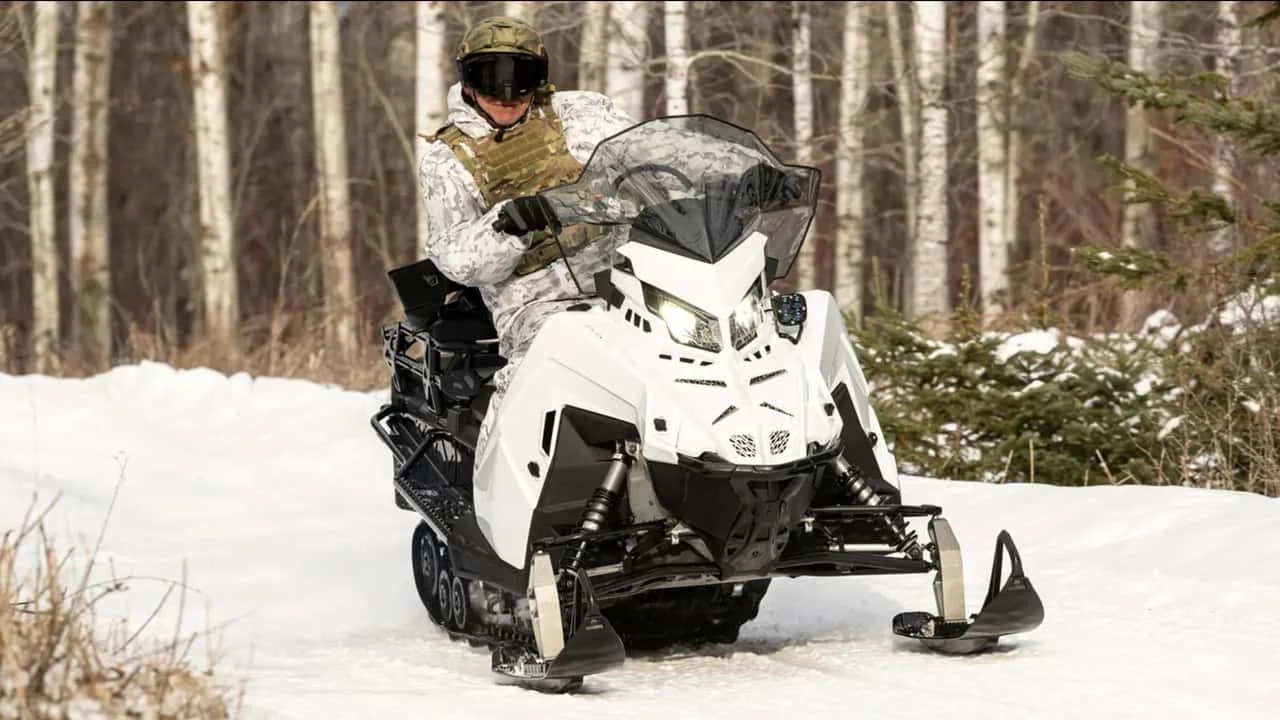
Polaris's Military 850 Voyager Crossover targets deep Arctic snow, pairing heavy-sled towing with light-sled agility. Field performance remains unproven.
A sled built for the Arctic, not the trail
Polaris has built a military snowmobile for deep snow, and the pitch is aimed squarely at terrain where ordinary machines give up. The Military 850 Voyager Crossover arrives as Arctic tensions climb, which is the detail that gives this launch its weight.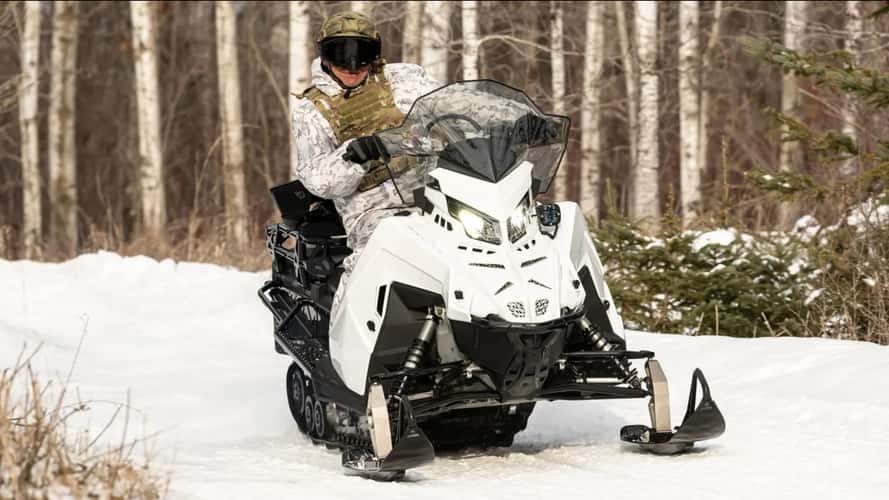 Photo by: Polaris
Why deep snow is the real test
Snow depth is where most vehicles fail first. Wheels sink, tracks lose traction, and a recon mission that should cover ground ends up stalled in a drift. A machine designed for that environment isn't a novelty. It's an answer to a specific operational problem. That said, the fragment gives no specs, no performance figures, and no details on who will field the sled or how many they'll order. A crossover name tells you the intent, not the capability. Until there are numbers and field reports, it's fair to treat the "super capable" framing as a claim to test, not a verdict.What a sled tells you about the Arctic
Here's the thing: the sled matters less than the question it raises. Why does a military need a snowmobile now? Rising tension in the Arctic is pushing planners to think harder about moving people and equipment through places roads don't reach. A consumer-style machine adapted for that work suggests the requirement is practical and near-term, not theoretical. If you're working in defense procurement, cold-weather logistics, or Arctic infrastructure, that's the signal to watch. The vehicle is the visible part. The sourcing decisions behind it are where the real story will show up.By Robbie Bacon, Nov 12 at 8:51am ET
Polaris putting its name on a military sled is less of a leap than it first looks. The company has spent years [working with the US military](https://www.rideapart.com/news/804731/polaris-patents-new-autonomous-vehicle-tech-for-sxs-utv-army/) on vehicles built for terrain most manufacturers would rather not test on. The snowmobile is the newer piece. The Army needed one, and [it needed one specifically built for the job](https://www.rideapart.com/news/808699/polaris-stealth-military-850-snowmobile-specs-features/). The timing matters. Military attention to the Arctic has intensified, and Polaris, which is based in Minnesota, responded with a new machine for missions in that region. The Military 850 Voyager Crossover is meant to bridge two things that usually pull against each other: the towing muscle of a heavy sled and the nimbleness of Polaris's lightweight models. Anyone who has tried to make a light machine carry real weight knows how hard that bridge is to build. The Army, Marine Corps, and Air Force have all placed orders, with deliveries scheduled to run from 2026 into early 2027. That's a tight window for a vehicle that's still being defined. The specs give a clearer picture of what the Army is buying. The sled tows 450 pounds and has room for a driver, a passenger, and stowed gear. Those numbers are modest next to what a utility vehicle can haul, but a snowmobile's job is different. It has to get people and equipment across deep snow where wheels and tracks of other types struggle, and 450 pounds is the figure that will tell you whether the machine can actually do that. The development story is the part I find most revealing. Polaris started work in 2025 in response to an Army request for a sled that could handle heavy-duty work and deep-snow reconnaissance at the same time. Within a year, the company was competing for contracts. According to Dave Skog, business development manager at Polaris Government and Defense, the crossover concept didn't come from the original brief. The Army raised interest in a crossover sled during negotiations, and Polaris went to investigate it. That's a useful detail. It suggests the requirements were still moving while the company was building toward them. The fragment doesn't say how much the crossover idea reshaped the design or the schedule, and that gap matters if you're trying to judge how fast a military program can adapt to a customer who changes its mind mid-negotiation.

Discussion
Sign in to join the discussion.