The new Volkswagen ID. Buzz Cargo LWB offers increased cargo space, advanced technology, and a powerful battery for commercial users.
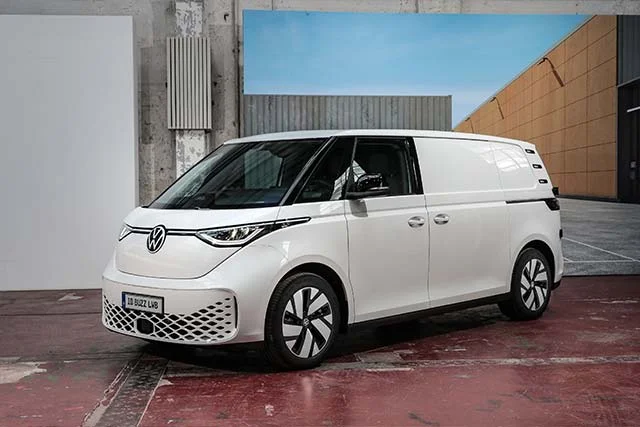
Volkswagen Commercial Vehicles is set to launch the ID. Buzz Cargo Long Wheelbase (LWB), enhancing its electric van lineup with a focus on increased cargo capacity and new features. The model will debut with pre-sales starting on September 23, 2026, in Germany, priced at €50,630 net for the 250 kW (340 PS) 4MOTION variant, while the rear-wheel-drive option will begin at €48,490 net a week later.
Market Waiting Game
UK customers will have to wait until early 2027 for orders, expected for delivery in spring. This delay highlights the challenges that manufacturers face when expanding their electric vehicle (EV) offerings. While the ramp-up in production of EVs is encouraging, regional disparities in availability can impact customer choice. This also reflects broader supply chain issues that have affected the automotive industry, particularly in the EV segment.
Space Redefined
The long-wheelbase version promises to boost cargo space by approximately 0.5 cubic meters over the standard ID. Buzz Cargo, coupled with a wider second sliding door that makes loading standard Euro pallets far easier. This change isn't just about convenience; it aligns Volkswagen's product with the real needs of businesses that require efficiency and practicality in their operations.
The ID. Buzz Cargo LWB features a 2,458-mm load area, extending the space by 250 mm compared to the regular wheelbase model, translating to a total cargo volume of 4.4 cubic meters. The vehicle's width between the wheel housings reaches 1,230 mm, and depending on the drivetrain configuration, it comes with a maximum payload capacity of 700 kg for the rear-wheel-drive model and 606 kg for the 4MOTION variant. These specs are essential for any commercial operator considering how much equipment or goods can be transported in a single trip. If you're working in this space, these metrics can make a significant difference in your bottom line.
As part of its design, the LWB Cargo is fitted with a wooden load floor, offering configurations with either two or three seats. A manually adjustable lumbar support option is also available, and the price difference for the extended model over the standard one is around €2,340 net. The attention to detail in ergonomic design is a subtle, yet beneficial feature that can enhance driver comfort during long shifts. (And this is the part most people overlook). Comfort can lead to better productivity, something many in the commercial vehicle arena might consider worthy of investment.
More Power with Advanced Technology
Equipped with a larger 86-kWh battery, the ID. Buzz Cargo LWB is set to outperform its standard counterpart, which utilizes a 79-kWh battery. The rear-wheel-drive version delivers 210 kW (286 PS), while the all-wheel-drive 4MOTION increases traction to 250 kW (340 PS). The ability to offer higher power outputs positions Volkswagen competitively against traditional combustion engine vans, which have long dominated this market.
Additionally, the towing capability stands strong for its class, allowing up to 1,800 kg with a braked trailer, even on steep gradients. This opens the door for a range of applications, from small contractors to delivery services that require versatility and reliability. That said, many consumers will see the efficiency of an electric vehicle as a double-edged sword—how do you balance power with practicality? This dilemma is something every potential buyer will need to weigh carefully.
Customers can choose the LWB Cargo with either a sizeable tailgate or optional rear wing doors, expanding utility and access based on user preference or specific operational needs.
Innovative Software Features
The upgraded ID. Buzz Cargo LWB benefits from Volkswagen's latest software version, greatly enhancing functionality. Among the standout features is the enhanced Travel Assist system, now capable of recognizing traffic lights and automatically yielding to red signals. This improvement is not just about making driving easier—it's packed with transformative potential for urban logistics, especially in busy city environments where stopping and starting is commonplace.
Another significant improvement includes one-pedal driving, designed to let users accelerate and decelerate through the accelerator alone, utilizing regenerative braking more effectively. This feature allows drivers to maintain better control and responsiveness, key attributes for those maneuvering in tight spaces or heavy traffic.
Mobile Power Source with V2L Functionality
The ID. Buzz Cargo LWB also introduces Vehicle-to-Load (V2L) capability, turning the vehicle into a mobile power source. By using an appropriate PowerSocket adapter, its high-voltage battery can deliver up to 3.0 kW of continuous power to external equipment, ideal for tradespeople needing energy away from traditional supplies. This feature can reach a peak output of 3.6 kW and will be available with standard household plugs or CEE connections commonly used in camping setups. The versatility it offers can be an attractive selling point, especially for businesses requiring energy on-site, whether for tools or temporary installations.
Next-Level Infotainment
Volkswagen has integrated a new Innovision infotainment system into the ID. Buzz Cargo LWB. The revamped app store will allow drivers to download vehicle-specific apps for various needs, covering areas like audio, streaming, parking, and charging. The updated multifunction steering wheel enhances the overall driving experience with simplified operation. Such features not only make the driving experience more enjoyable but could also promote greater brand loyalty among users who value connectivity and ease of use.
Targeting the Commercial Sector
The ID. Buzz Cargo LWB's extended load floor, increased capacity, larger battery, and available 4MOTION system are designed specifically to cater to businesses needing more space without resorting to larger electric vans. With features like a second sliding door and enhanced towing capacity, this model presents numerous practical benefits for commercial use. The focus on utility and ergonomics is a strategic move that could bolster Volkswagen's position in the increasingly competitive commercial EV sector.
Anticipated sales for the new ID. Buzz Cargo LWB in Germany start in September 2026, while UK buyers will have to wait until early 2027 for ordering, with a market launch expected in spring.
Future Outlook and Market Implications
As Volkswagen gears up for the ID. Buzz Cargo's release, several underlying trends in the automotive and commercial sectors demand attention. More businesses are looking to electrify their fleets in response to rising fuel costs and environmental mandates. This demand makes Volkswagen's timely entry into the electric commercial market all the more significant.
The introduction of features like V2L capability could set a new standard for utility vans, allowing them to be more than just vehicles for transport but also versatile tools for various job sites. However, will these features resonate in a segment traditionally focused on cost-effectiveness? That's the million-dollar question.
As the ID. Buzz Cargo LWB rolls out towards its launch dates in Germany and the UK, its impact on existing players in the market will be closely watched. Stay tuned. The reception to this model could redefine expectations for electric commercial vehicles in the coming years.
Discussion
Sign in to join the discussion.