Genesis prices its first performance model at $99,500 CAD, with up to 641 hp, dedicated drive modes and an expected Canadian arrival by late November 2026.



A high-performance price for Genesis’ electric SUV
Genesis is putting a clear figure on its first high-performance model: the 2027 GV60 Magma will cost $99,500 CAD in Canada, destination included. The electric SUV pairs more than 600 horsepower with performance controls and chassis-oriented design changes, bringing the brand into a more direct contest for luxury EV buyers who want sharper driving character. The price positions the Magma just below the $100,000 mark, while its specification signals that Genesis wants this version to be judged on more than acceleration alone.
That distinction matters. A performance EV has to make its power useful and engaging across different kinds of driving, and Genesis has built the Magma’s pitch around selectable modes, steering-wheel controls, sound and visual cues, and hardware changes to the body and wheels. The announcement gives buyers a detailed account of the intended character; it doesn’t yet tell us how those choices feel on the road.
Power with a performance focus
A dual-motor all-wheel-drive system supplies more than 600 hp. Activate Boost Mode and output climbs to as much as 641 hp and 583 lb-ft of torque. That extra output is presented as a temporary performance step, giving the driver a clear distinction between the model’s regular operating character and its maximum-power setting. The figures are substantial, though horsepower alone can’t describe how consistently the vehicle delivers that force or how it manages it through a corner.
Genesis has also equipped the Magma with Launch Control, GT Mode, SPRINT Mode and Drift Mode, giving drivers distinct settings for acceleration, pace and vehicle response. The list suggests a wider performance brief than a simple straight-line run: one setting is for launches, others tune the car for faster driving or more responsive handling, and Drift Mode is aimed at controlled oversteer. The value of those controls will depend on whether their effects feel meaningfully different behind the wheel.
Virtual Gear Shift is central to the model’s effort to make electric acceleration feel more involving. It uses simulated engine speeds, shift feedback, on-screen gear indicators and coordinated sound effects to imitate gear changes. That approach responds to a familiar challenge for performance EVs: electric power can arrive without the rising revs and shifts that help drivers read a conventional powertrain. The Magma is adding those signals back in as an experience layer, even though they’re simulated.
An enhanced e-Active Sound Design Plus system adds simulated performance audio through interior and exterior speakers, with sounds inspired by recordings at the Goodwood Festival. Sound can make speed feel more legible, but it’s also a matter of taste; some drivers will welcome the added feedback, while others may prefer the quieter character associated with electric driving. Here's the thing: Genesis is making engagement part of the specification, not treating silence as the only virtue of an EV.
GT Mode balances performance, comfort and efficiency during faster driving, while SPRINT Mode emphasizes power and responsive handling. Launch Control manages torque and wheel slip for starts from a standstill. Boost Mode temporarily raises power and torque; Drift Mode provides a setting for controlled drifting. The modes give the driver several ways to shape the car’s response, though their names alone don’t establish how much the settings differ in practice.
A wider stance and a more focused cabin
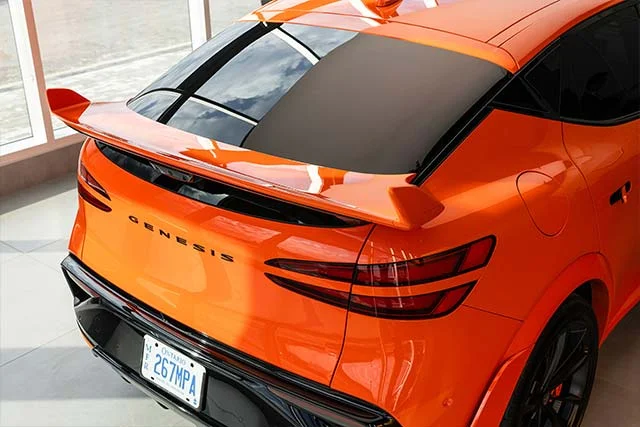
The Magma sits lower and wider than the standard GV60. Its exterior changes include front bumper canards, extra fender garnishes and breathers, plus a winglet-style rear spoiler. Exclusive 21-inch forged alloy wheels and wider tires complete the setup, with Genesis positioning the package to improve grip, stability and control. Those changes give the performance claims a visible and hardware-based dimension: the Magma is intended to look and sit differently, not just gain power through software.
Yet a wider stance and larger wheels don’t settle the question of ride comfort or everyday usability. They point to a more focused setup, but the announcement doesn’t provide details on how the revised proportions affect the ride or steering. This is more significant than it looks: the distinction between a fast electric SUV and a convincing performance model often comes down to how the chassis communicates, not just how quickly power arrives.
Canadian buyers can choose Magma Orange, Uyuni White, Vik Black or Makalu Gray Matte. Magma Orange is the signature finish for the performance model, giving the car a clear visual identity in a segment where design can help distinguish one premium EV from another. The other choices give buyers a less conspicuous route without changing the underlying performance package described here.
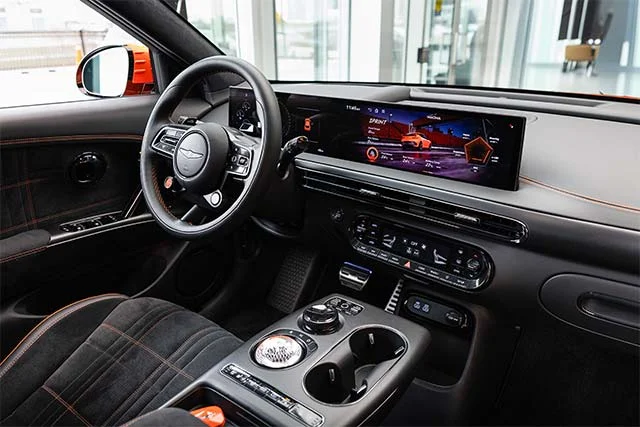
Inside, Genesis introduces its first performance bucket seats, trimmed in Obsidian Black suede with Magma Orange stitching. Suede also covers the door trims and centre-console armrest, while exclusive quilting, layered stitching and black decorative details carry the theme through the cabin. The Genesis Crystal Sphere remains on the centre console, preserving a distinctive feature of the GV60 while the surrounding materials and trim mark this version out.
Dedicated Boost and Magma Mode buttons on the steering wheel provide quick access to performance settings. Magma-specific alloy pedals and a three-circle performance display further set the interior apart from the regular GV60. For a driver, these details make the performance intent visible and accessible; they also raise the expectation that the controls and display will be useful while driving, rather than serving only as styling cues. If you're working in this space, that balance between theater and practical feedback is the part to watch.
Canadian price, ownership and arrival
The $99,500 CAD manufacturer’s suggested retail price includes destination charges. Genesis’ Canadian ownership package includes up to five years of scheduled maintenance, at-home valet service, 24/7 roadside assistance, Genesis Connected Services and a comprehensive warranty. Those services add context to the price: ownership support is part of the offer, though buyers will still need to decide how much weight to give those benefits alongside the vehicle’s performance equipment and purchase cost.
Genesis expects the 2027 GV60 Magma to reach Canadian retailers by the end of November 2026. That timing gives prospective buyers a stated window for its arrival, while leaving details such as real-world driving impressions for later. The model’s Canadian price and feature list are clear; the open question is how convincingly the hardware, modes and simulated feedback come together on the road.
What the Magma needs to prove
With 641 hp available in Boost Mode and a price just below $100,000 CAD, the Magma gives Genesis a distinct performance entry point—and puts its driving modes and hardware at the centre of the brand’s case for a premium electric SUV. Its combination of all-wheel drive, selectable responses, wider tires and performance-focused cabin equipment makes a broader argument than raw output: Genesis is presenting the car as an experience with several layers of driver involvement.
And yet. The announcement describes intent more clearly than outcome. Drivers will ultimately judge whether the modes feel distinct, whether the added sound and shift simulation deepen the experience, and whether the chassis changes make the SUV more composed when driven hard. Until those questions can be answered from time behind the wheel, the GV60 Magma is a well-defined proposition, but not yet a proven one.
The post 2027 Genesis GV60 Magma Priced at $99,500 in Canada appeared first on Electric Cars Report.
Discussion
Sign in to join the discussion.