Karma’s first Eximius commission targets nearly 1,200 hp, blending a V8 series hybrid with extensive carbon fiber and a four-seat track-focused cabin.
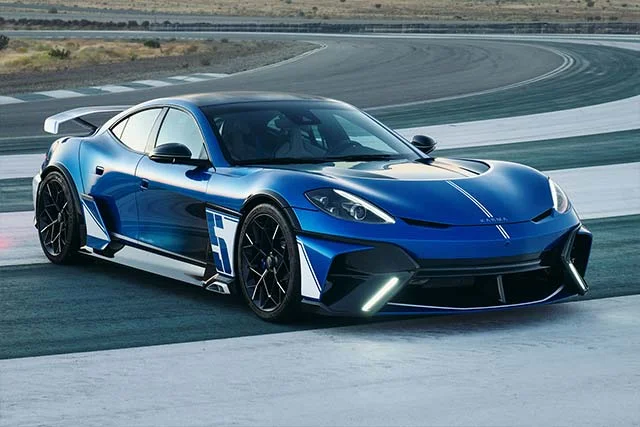

Karma Automotive’s first Eximius commission is a striking test of how far a luxury automaker can stretch a bespoke brief: a four-seat, carbon-fiber-bodied performance car with a planned output approaching 1,200 horsepower. The Eximius 1 combines a 6.2-liter V8 with electric propulsion in a series plug-in hybrid system, then wraps that unusual setup in hardware and styling aimed squarely at high-speed driving.
The car debuted at the 2026 Concours at Wynn Las Vegas on October 31. It remains in development with the client who commissioned it, and Karma is targeting delivery in 2027. Its acceleration and speed figures are estimates, rather than finalized performance claims: the company projects a 0-to-60-mph time of 2.7 seconds and a top speed above 200 mph.
A Gyesera foundation, extensively reworked
Eximius 1 starts from the design foundations of Karma’s Gyesera, but the shared elements are limited. The roofline, greenhouse, lighting elements and doors carry over; most of the exterior has been redesigned to create a wider, more muscular four-door shape. Karma says the car is 50 millimeters wider than the underlying design.
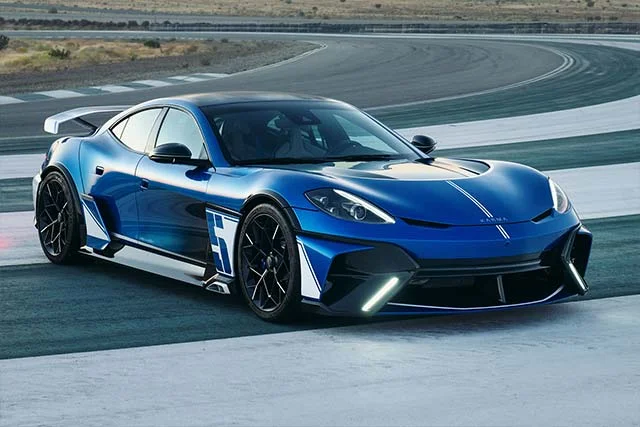
Borealis Blue paint, exposed carbon-fiber sections and white graphics set the visual theme. The front end gets a carbon-fiber splitter and large side intakes, while vents in the hood and extended wheel arches add to the car’s track-oriented appearance. At the back, a fixed GT wing and a complex diffuser are intended to manage airflow and stability at speed. Angular daytime running lights mark both ends.
Material choice is central to the project. Karma says every exterior panel apart from the outer body surface uses prepreg carbon fiber. The car rides on 21-inch magnesium wheels with satin-black finishes and center-locking hubs. Those wheels are intended to reduce rotating and unsprung mass; combined with the wider stance and aerodynamic changes, they support the car’s high-speed ambitions.
That collection of parts gives the Eximius 1 a different character from a conventional appearance package. Its bodywork and chassis equipment signal a car expected to work at speed, while its four-door layout keeps room for passengers. The result sits in an unusual space between bespoke luxury car and track-focused machine.
A V8 that generates electricity
The powertrain is the project’s most distinctive engineering choice. Instead of sending power from the V8 directly to the wheels, the planned series hybrid uses the combustion engine to generate electricity; electric motors provide propulsion. Karma estimates about 550 hp from the 6.2-liter gasoline engine and 645 hp from the electric drive system, for combined output near 1,200 hp.
That architecture makes the Eximius 1 more than a high-output V8 car with an electric assist. The engine and motors have separate roles, with electrical propulsion doing the work at the wheels. The source material doesn’t specify battery capacity, electric-only range, charging time or the detailed motor configuration, so those elements remain open questions as development continues.
Karma has paired the planned output with carbon-ceramic brakes, two-piece slotted rotors and Öhlins semi-active suspension. Those components suggest the car’s performance brief extends beyond straight-line acceleration. Still, the projected 2.7-second sprint and 200-plus-mph maximum should be read as targets while the vehicle is being developed, not as verified production specifications.
A racing mood with four seats
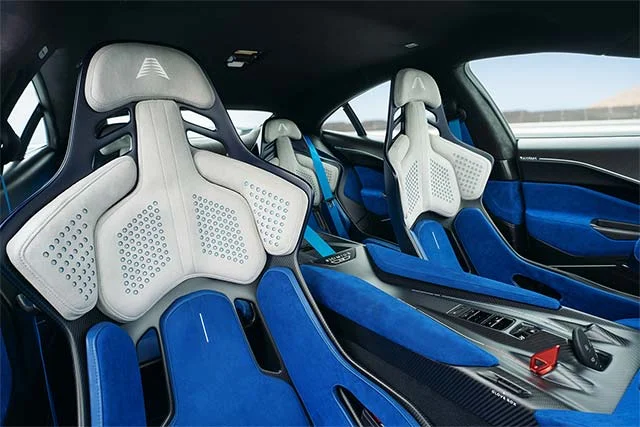
The cabin carries the same mix of luxury materials and motorsport cues. Recaro carbon-fiber bucket seats for the front occupants are trimmed in blue Alcantara and Italian leather, with contrasting Moondust Alcantara sections. Carbon fiber appears across the doors, steering wheel, seats and center console. The four doors themselves are made from exposed carbon fiber, with simplified armrests that fit the car’s pared-back performance intent.
A flat-bottom steering wheel and billet-machined aluminum pedals reinforce the theme. The instrument panel uses glossy carbon fiber, while anodized billet-aluminum vents add a more crafted detail. The rear compartment remains part of the brief: this is still a four-seater, and the center console extends between the back seats.
One particularly personal touch is a custom-fitted carbon-fiber racing helmet belonging to the commissioning client, secured between the rear seats with a dedicated strap. An emergency kill switch adds another track-focused cue. Together, these details make the cabin feel tailored to a particular owner rather than designed as a standard interior with a few extra-cost finishes.
Nine commissions, each intended to stand alone
Eximius is a bespoke vehicle program, not simply the name of one special edition. According to Carscoops, Karma plans to work with nine clients, each commissioning an individually specified vehicle. Buyers can collaborate with the company’s design and engineering teams on styling, performance and powertrain choices, with the aim of producing cars that won’t be duplicated.
That scope goes beyond Karma’s existing Studio personalization program, which offers choices within a production model’s established framework. Eximius is meant to allow deeper changes, potentially including bodywork and mechanical specifications. How much freedom each client will have, and how the remaining commissions will differ from the first, hasn’t been detailed.
The idea began when a Karma Revero owner approached the company seeking a vehicle more extreme and unexpected than the standard offering. The client’s identity hasn’t been disclosed. Karma’s leadership sees the commissions as a way to explore design and engineering ideas that would be difficult to pursue in regular production models.
Development continues ahead of 2027 delivery
Karma hasn’t announced pricing, final production specifications or detailed terms for the broader Eximius program. The extensive carbon-fiber construction and bespoke engineering point to an exceptionally expensive commission, but the company hasn’t provided a figure. Eximius 1 is still being developed in collaboration with its owner, with delivery planned for 2027.
For Karma, the project signals a willingness to pair combustion and electric propulsion in a low-volume, high-performance format while the industry shifts toward electrification. The mix is distinctive: a four-seat layout, a V8-based series hybrid and track-oriented equipment, all shaped around one client’s brief. The next test is whether the remaining commissions will explore different engineering directions—or build on the same extreme formula.
The post Karma Eximius 1 Unveiled as a Nearly 1,200-HP Bespoke Track Machine appeared first on Electric Cars Report.


Discussion
Sign in to join the discussion.