The new charger cuts estimated AC charging times roughly in half, provided drivers have access to a compatible 22-kW station.
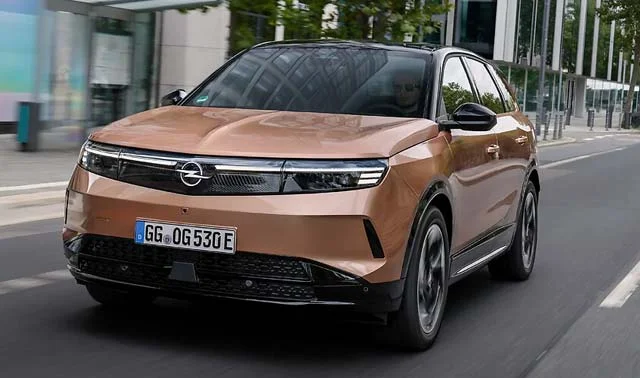
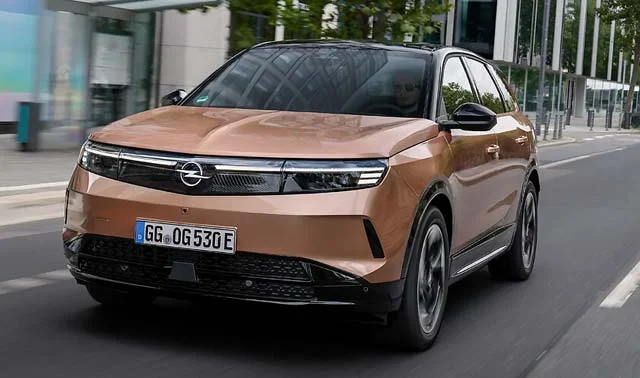
A faster AC option for the Grandland
Opel’s new 22-kW onboard charger targets a familiar inconvenience for electric-vehicle drivers: the time a car spends connected to an AC charging point. The company says this is the first time it has offered this charging capability in a passenger car, and the option is available across all three electric Grandland versions. It changes how quickly the car can take power from a suitable AC supply, but it doesn’t alter the basic distinction between AC charging and faster charging options.
The upgrade applies to the standard Grandland Electric, the Long Range model and the dual-motor Grandland Electric AWD. Opel estimates that a compatible 22-kW AC station can cut charging time by about half compared with the standard 11-kW setup. That’s a meaningful improvement for drivers who leave the car parked for a few hours, though the headline reduction depends on having access to the right equipment.
Charging times depend on the station
For the Grandland Electric and AWD, each with a 78-kWh battery and 73 kWh usable, Opel estimates a charge time of about 2.5 hours at 22 kW, compared with five hours at 11 kW. The Long Range version has a 100-kWh battery, of which 96.9 kWh is usable; its estimated time falls from around 6.5 hours to roughly 3.25. These are Opel’s stated estimates, and the charging rate a driver actually gets depends on the station and available electrical supply.
| Opel Grandland version | Battery capacity (usable) | Charging at 11 kW | Charging at 22 kW |
| Grandland Electric | 78 kWh (73 kWh) | 5 hours | 2.5 hours |
| Grandland Electric AWD | 78 kWh (73 kWh) | 5 hours | 2.5 hours |
| Grandland Electric Long Range | 100 kWh (96.9 kWh) | 6.5 hours | 3.25 hours |
That improvement matters most at home, at work or at public charging locations equipped to supply the higher rate. The car’s onboard charger can accept up to 22 kW, but the charging point and the electrical supply behind it must also support that output. A 22-kW charger, then, won’t shorten every AC stop by the same amount. If you’re considering the option, the relevant question is whether the places where you routinely park can deliver that power.
Here’s the thing: the faster onboard charger expands the Grandland’s ability to make use of higher-powered AC infrastructure; it doesn’t create that infrastructure. Drivers with access only to an 11-kW point should expect the standard-rate estimate to remain the more useful reference. A charging connection is only as fast as the limits shared by the car, the station and its supply.
Range, ride and AWD options
Charging is only one part of the Grandland’s electric proposition. Opel lists a WLTP range of up to 519 kilometers for the standard model and up to 691 kilometers for the Long Range version. Those figures distinguish the versions on paper, while the larger usable battery in the Long Range model also corresponds to a longer estimated AC charging time. Buyers are weighing a package of range, charging access and vehicle configuration, rather than one headline specification in isolation.
All electric variants also come with Frequency Selective Damping suspension. Opel describes a system that varies its response with road and driving conditions: it absorbs short impacts on rough surfaces, while firmer damping at lower frequencies supports road contact and more controlled handling. The stated aim is to balance comfort with stability during braking, cornering and high-speed Autobahn driving. That’s a broad claim about tuning; how the balance feels will depend on the road and the driver’s expectations.
For buyers who want more traction and power, the Grandland Electric AWD pairs two motors for a combined 239 kW, or 325 horsepower, and up to 509 Nm of torque. Four drive modes are available: Normal, Eco, Sport and 4WD. The 4WD setting keeps both motors active to send power to all four wheels, while Sport mode sharpens steering and accelerator responses. Both modes can access peak power and torque. More choice in how the car responds, then, is part of the AWD version’s appeal.
This is more significant than it looks for drivers whose routines involve long parking windows: cutting the stated AC charging time in half can make a higher-powered connection more useful. But the benefit is conditional. Without a compatible point, the extra capability won’t deliver the shorter estimates. The numbers here are appealing, but they describe a best-fit setup rather than every charging stop.
Ownership services and the practical trade-off
Opel’s Electric All In package accompanies purchases of battery-electric models such as the Grandland. It includes a Free2Move charging pass, e-routes navigation functions, eight years of mobile charging and breakdown assistance, and a battery warranty. These services address practical ownership needs around finding or using charging and getting help at the roadside. Their presence adds support to the package, though the details provided here don’t establish how often a particular owner will use each service.
For everyday use, the charger’s value comes down to the fit between the car and a driver’s routine. A home or workplace connection that can supply 22 kW gives the upgrade room to matter; a lower-powered point narrows the difference. And yet, even when the faster rate is available, drivers still need time parked at the charger. A shorter wait. That’s the appeal, in plain terms.
What the upgrade means for buyers
The 22-kW charger strengthens the Grandland’s AC charging case by making the car capable of accepting more power than the standard 11-kW setup. Opel’s estimates suggest the difference could be substantial for all three versions, including the Long Range model with its larger battery. The catch is easy to miss: charging speed is a system outcome, not a feature the car can deliver on its own (and this is the part most people overlook).
If you’re working out which Grandland fits your needs, consider where the car will charge during ordinary stretches of the week, alongside its range and drivetrain. Drivers who can regularly use a compatible 22-kW AC point have a clearer reason to value the upgrade. For others, the stated 11-kW times may better reflect the experience they can expect. Opel has added useful capability; how much it changes ownership will depend on access.
The post Opel Grandland Electric Gets 22-kW Onboard Charger, Cutting Charging Times in Half appeared first on Electric Cars Report.

Discussion
Sign in to join the discussion.