Vauxhall recorded 102,852 UK electric vehicle sales by October 2026, with vans, affordability measures and charging access shaping its next phase.
A 100,000-vehicle milestone
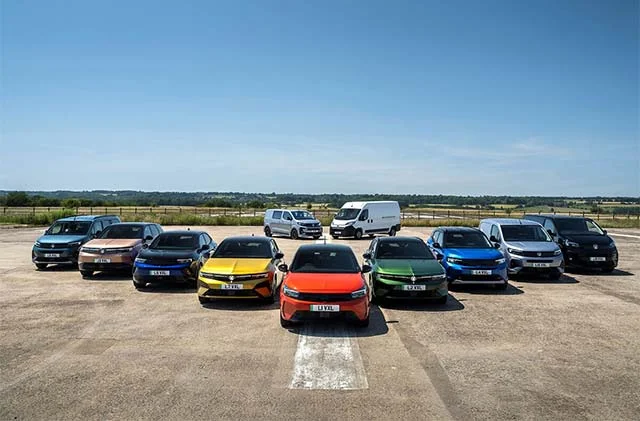
Vauxhall’s 102,852 battery-electric vehicle sales in the UK by October 2026 show how its EV strategy has grown beyond adding models. The brand has built volume across passenger cars and vans, while pairing its expanding range with efforts to lower purchase costs and identify gaps in public charging. That combination matters because sales depend on more than what appears in a showroom: buyers also weigh the upfront price and whether charging fits their routines.
The 100,000th vehicle was a Grandland Electric 213PS Ultimate, delivered by Drive Vauxhall Nuneaton. The model placed third overall in the 2026 Auto Express Driver Power reliability survey and ranked first in the mid-size SUV category. Those rankings give the milestone a recognizable product face, though a survey result and a cumulative sales total answer different questions: one reflects reported owner experience, while the other tracks the brand’s reach over time.
Here’s the thing: crossing six figures is a marker of scale, not proof that every obstacle to adoption has been solved. Vauxhall’s figures point to sustained interest across several vehicle types, but they don’t reveal how sales are distributed across models or how many buyers have access to convenient home charging. A significant threshold, with limits to what it tells us.
From early sales to a broader lineup
Vauxhall passed 10,000 EV sales in 2021 and 50,000 in 2023. The latest milestone puts that growth in sharper relief, and reflects a lineup that has widened from early electric offerings to a full range of electric passenger cars and vans. The progression suggests the company has moved from establishing an electric presence to making it a regular part of its product offer, with different vehicles aimed at different uses.
The company’s electric history dates to 2011, when it introduced the Ampera, a European model with range-extender technology. In 2019, the Corsa-e brought Vauxhall into the modern mass-market EV segment. Its 50kWh battery and 136hp motor delivered a WLTP range of up to 209 miles. That shift from a range-extender model to a familiar small-car format matters: it put electrification into a vehicle class many buyers already understand, rather than asking them to start with a less conventional body style.
The current Corsa Electric offers a 51kWh battery and 156hp motor, with a maximum WLTP range of 265 miles. In 2024, Vauxhall completed its commitment to offer an electric version of every passenger car in its range. The change in the Corsa’s quoted range and output shows how the model has developed, but published maximum range is only one part of a buying decision. Real-world use also depends on driving conditions and access to charging, so buyers will still need to judge whether the stated range fits their own journeys.
Commercial vehicles have been a distinct part of that expansion. Since 2021, every van in the lineup has had a fully electric version, and Vauxhall was the UK’s best-selling electric van manufacturer from 2021 through 2023. Its Combo Electric is built at Ellesmere Port, which became the UK’s first volume manufacturing plant dedicated to EVs. For businesses, the van range makes electrification a practical fleet question as well as a consumer choice: vehicle suitability and charging arrangements have to work across the demands of daily operations.
Price and volume models shape the offer
Vauxhall has also tried to narrow the upfront price gap between electric and combustion models. The Frontera Electric and Frontera Hybrid launched at the same list price, while electrified versions of the New Astra use the same on-the-road pricing across trim levels. Matching prices can make comparisons easier for shoppers, since it brings the choice closer to a question of how each powertrain fits their driving and charging habits.
The UK Electric Car Grant can further change the Astra’s price comparison: with the grant applied, the Astra Electric can cost less than its hybrid and plug-in hybrid alternatives. That gives buyers weighing the initial purchase cost a clearer reason to consider the electric version. The comparison is specific to the prices described here, however; purchase price alone doesn’t settle questions about charging access, running costs or how a car will be used.
The Mokka Electric leads Vauxhall’s electric passenger-car sales, with more than 26,000 sold since its introduction in 2020. The Corsa Electric has recorded more than 23,000 sales since its launch that year. These established models anchor the range as Vauxhall adds performance variants: the Mokka GSE and Corsa GSE are billed as the fastest electric production cars the brand has built. The sales figures show that familiar models are doing much of the work of building volume, while the GSE versions give the range a different point of interest.
That shift broadens the pitch beyond everyday practicality. Vauxhall is making room for performance and driving enjoyment within a portfolio still centered on accessible models. This is more significant than it looks: a broad EV range has to speak to buyers with different priorities, even if the performance versions aren’t the main source of sales.
Charging access remains part of the strategy
More models and lower prices address only part of the adoption challenge. Drivers without private driveways may also need convenient options close to home, a need Vauxhall has tried to map through its Electric Streets of Britain campaign. For those households, access to a nearby public charger can shape whether an electric car is a workable option at all.
Launched in 2023, the initiative asks drivers to register streets where they want public on-street charging. More than 13,000 streets have since been submitted. Vauxhall shared that information with charging providers char.gy, Connected Kerb and Kerbo Charge to inform potential network expansion. The submissions make unmet demand more visible to providers, but they don’t by themselves show where chargers have been installed or whether a particular street has gained access.
(And this is the part most people overlook.) Charging access isn’t simply a matter of counting vehicles or proposed locations; drivers need options that fit where they live and how they travel. If you’re working in this space, the campaign’s submissions are a useful signal of interest, while the practical test is whether that interest turns into charging people can use.
What the milestone says about the next phase
The sales milestone captures a brand with more than a decade of electric-car history and a substantial commercial-vehicle presence. Its next test is whether model choice, pricing and more visible charging demand can keep that growth going. Each part supports the others: choice gives buyers a vehicle to consider, pricing shapes the initial decision, and charging access affects whether ownership works day to day.
Vauxhall’s progress is therefore best read as evidence of a wider offer taking hold, rather than a verdict on the remaining barriers. The company has established volume models, added electric versions across its passenger-car range and included vans in its plans. What this means for you depends on the vehicle you need and where you can charge it; the headline total can’t answer those questions on its own.
The post Vauxhall Surpasses 100,000 Electric Vehicle Sales in the UK as EV Demand Continues to Grow appeared first on Electric Cars Report.

Discussion
Sign in to join the discussion.