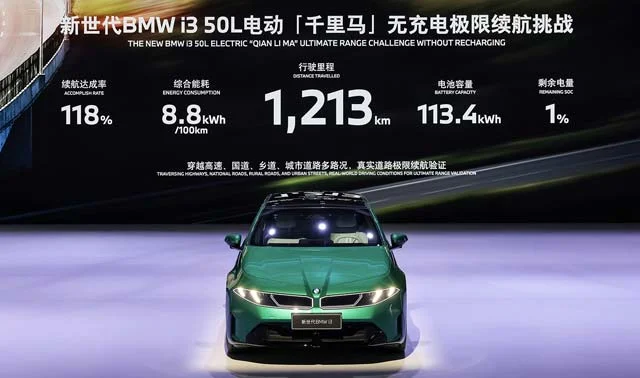
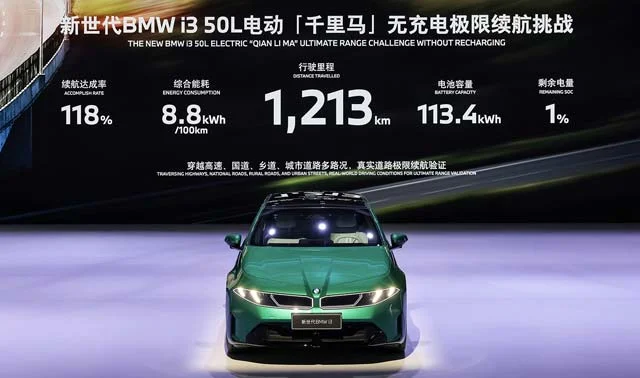
BMW’s i3 50L drove 1,213 km without recharging, exceeding its 1,028 km CLTC rating and averaging 8.8 kWh per 100 km.
A demanding range claim, with limits
BMW’s next electric sedan has put efficiency at the center of its Neue Klasse pitch. In a China road test, the BMW i3 50L covered 1,213 kilometers (754 miles) without a charging stop, about 18% beyond its 1,028-kilometer CLTC-rated range. That’s an attention-grabbing result, but it describes a single drive under particular conditions rather than a distance every owner should expect to cover.
The difference between the test distance and the rating makes the result notable; it also calls for context. A standardized range figure gives buyers a basis for comparing vehicles, while a road test reflects the route, pace and conditions of that specific run. BMW’s account offers a real-world data point, but it doesn’t say how the result would change with a different driving style, weather or traffic.
The drive began at BMW’s Tiexi plant in Shenyang and crossed highways, national roads, rural stretches and urban streets. That mix matters because energy use can shift as speed and driving conditions change. BMW reported average consumption of 8.8 kWh per 100 kilometers, a figure that helps explain the distance as much as the car’s large battery does. This is more significant than it looks: a large pack can store more energy, but consumption determines how far that energy carries the vehicle.
That result came under specific route, weather and driving conditions. Range in customer use will vary with factors such as temperature, speed, terrain, vehicle load and climate control. The headline figure is therefore best read alongside the consumption number and the test’s limitations.
A large battery paired with efficiency measures
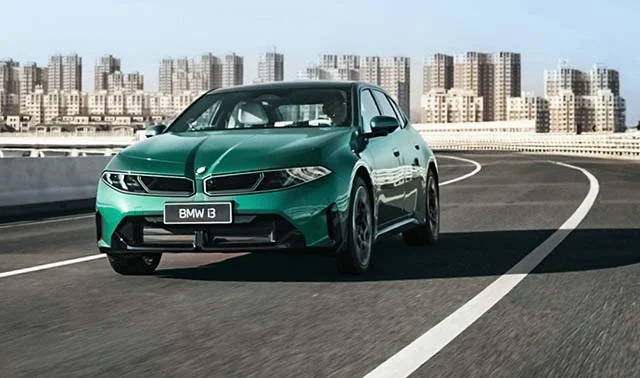
The i3 50L carries a 113.4 kWh pack built with BMW’s latest large cylindrical cells. Battery capacity is only part of the range story: the car also uses the company’s sixth-generation eDrive system, an 800-volt electrical architecture and its Energy Master control unit to manage power use across the vehicle. In practical terms, these components address different parts of the same problem: storing energy, converting it into motion and controlling how the vehicle uses it.
BMW says its sixth-generation battery technology targets higher energy density, faster charging, durability and safety. Those are broad engineering goals, and the road test doesn’t independently establish how well the pack performs on each one. Its reported distance and consumption do, however, put an efficiency figure next to the battery’s stated capacity—a more useful pairing than capacity alone.
Production of the battery system has started at the company’s powertrain facility in Shenyang, a step toward deploying the technology in its next electric models. That links the test car to BMW’s wider manufacturing plans. Scaling a new battery system depends on turning a design into a repeatable production process, though the source gives no production volumes or other details that would show how quickly that work will expand.
The test shows what the combined system can achieve on one route. It doesn’t establish the range drivers should expect across different conditions, but the reported consumption offers a useful efficiency benchmark alongside the headline distance. If you’re comparing electric sedans, that distinction matters: a single long run can demonstrate potential, while consistent performance across ordinary trips is what will shape daily ownership.
Charging capability rounds out the long-range claim
The 800-volt setup supports peak charging power of up to 400 kW. That capability is intended to reduce charging time on longer trips, complementing the battery’s capacity and the car’s reported efficiency. Peak power alone doesn’t tell a driver how long a stop will take; the actual charging experience depends on the conditions of the session, and the source doesn’t provide a charging curve or a stop-time figure.
For an electric vehicle intended for long-distance use, those elements work together: range can reduce how often a driver needs to stop, while charging speed can shorten stops when a recharge is necessary. Neither feature tells the whole story on its own. A large battery may extend the distance between stops, but it also makes efficiency important; a high peak rate can help at a compatible charger, but its value depends on how charging proceeds beyond that peak.
The 1,213-kilometer run puts the i3’s energy use in focus; the stated 400 kW peak points to BMW’s other part of the road-trip proposition. That said, the company’s figures leave open a practical question for buyers: how closely will ordinary charging sessions match the promise implied by the peak specification? The available information doesn’t answer that.
Neue Klasse puts the i3 in a broader rollout
The i3 joins the BMW iX3 as an early vehicle in the company’s Neue Klasse program, which brings a new generation of electric powertrains, batteries, digital systems and vehicle architecture. BMW has presented the i3 to the Chinese market as an electric driver’s car that retains the brand’s driving character while adopting the new technology. That positioning asks the car to do two jobs: show technical progress and make the brand’s established identity feel relevant in an electric model.
The company plans to introduce nearly 20 models featuring Neue Klasse technologies in China during 2027. The i3’s range run gives BMW a concrete efficiency result to point to as it prepares that larger rollout in a market where local automakers are also advancing battery capacity, charging speeds and driving range. The announcement signals the intended scale of the program, but it doesn’t establish how each planned model will perform or how quickly buyers will see them.
Here’s the thing: a headline range test can help make a technical program legible to consumers, yet it’s only an opening argument. BMW still has to show how the battery, powertrain and charging claims hold up in varied use, and how those features come together across the broader model rollout. And the strongest evidence will be repeatable performance, not a single impressive drive.
What the test means for buyers
For now, the i3 50L’s reported consumption is the detail that gives the long-distance claim useful context. The 1,213-kilometer run is a striking demonstration of what BMW says the car achieved on one route; the 8.8 kWh per 100 kilometers figure helps explain the result in terms of energy use. Neither should be treated as a guarantee for a customer’s own trip.
Similar electric vehicles typically see range shift with speed, temperature, terrain, load and cabin heating or cooling, the same factors BMW identifies here. That makes a test result most useful as evidence of potential, not a substitute for a standardized rating or experience across different drivers and conditions. A long distance. A narrow evidence base.
(And this is the part most people overlook.) BMW’s broader case rests on the relationship among battery capacity, efficiency and charging, rather than on any one specification. If the company can carry those elements into its planned Neue Klasse models, the i3 could serve as a meaningful early example. The test makes that proposition more concrete, but the rollout will determine whether it holds beyond this car and this drive.
The post New BMW i3 Drives 1,213 Km Without Charging, Setting New Electric Range Record appeared first on Electric Cars Report.

Discussion
Sign in to join the discussion.