Mercedes’ cell-level converters could keep EV systems at up to 800 volts, simplify power electronics and support bidirectional charging.
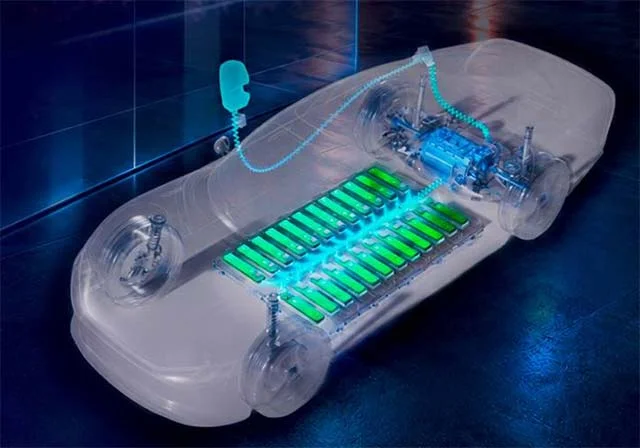
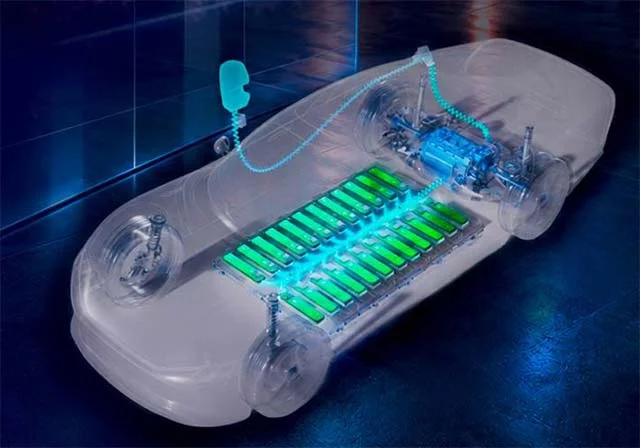
Mercedes-Benz is developing a battery electronics architecture that could decouple an electric vehicle’s power system from the battery pack’s changing voltage. Its Power Converter uses software-controlled micro-converters to deliver a stable output of up to 800 volts, with possible gains in powertrain design flexibility and charging capability. The idea shifts some voltage management into the battery itself, where individual cells or groups of cells can be controlled more directly. That’s a meaningful change in where the conversion work happens, though the company hasn’t yet shown production-vehicle results.
Cell-level conversion changes the voltage equation
In a conventional EV, the pack’s voltage depends on how many cells are connected in series. Voltage also varies as the battery discharges, while ageing and differences between cells can affect pack performance. Power electronics must account for those shifts, which means components downstream have to operate across a range of conditions rather than around one fixed input.
Mercedes’ approach distributes conversion across the battery: individual micro-converters manage one cell or a group of cells, and multiple units work in parallel to produce high-voltage DC. That gives the vehicle’s electrical system a steadier input, even as battery conditions change. The current generation supports AC and DC applications and delivers up to 3 kW. In practical terms, the architecture aims to make the pack’s changing internal state less visible to the systems that draw power from it.
The controls could also ease the burden on weaker cells by reducing their workload selectively. That may help balance the pack and make better use of its energy, though Mercedes hasn’t provided production-vehicle results. The distinction matters: a control strategy can improve how a battery’s available capacity is managed, but it can’t by itself establish how much additional range or service life a finished vehicle would gain.
A more predictable input for powertrain designers
A stable output of up to 800 volts could let engineers tune the traction inverter around a narrower, more predictable voltage range. In today’s designs, the inverter must accommodate changes in battery voltage as energy flows in and out of the pack. A steadier supply could reduce that design burden and create more scope to standardise power electronics across vehicle platforms. This is more significant than it looks: a change in the voltage interface can affect how several parts of the powertrain are specified, packaged and coordinated.
The architecture could also loosen the link between battery layout and system voltage. Mercedes may be able to build more modular packs for different vehicle sizes and performance targets, without relying as heavily on a particular number of cells in series. If you're working in this space, the appeal is clear: platform teams could have more room to adapt pack capacity and vehicle configuration while keeping a consistent electrical interface.
These are design opportunities, not confirmed efficiency or range gains. The practical effect will depend on how the converter performs in production vehicles and under real driving conditions. A stable voltage is useful only if the conversion process itself doesn’t introduce losses or constraints that offset the gains elsewhere.
Combining charging and conversion functions
Mercedes says the system could take on tasks now handled by separate power electronics, potentially removing the need for a conventional onboard charger. That unit converts incoming AC power into DC for the battery; folding its role into a broader conversion system could cut parts, weight and packaging demands. Here’s the thing: combining functions can simplify a vehicle’s hardware layout, but it also concentrates more responsibility in one architecture.
Fewer separate components may also simplify powertrain development and reduce manufacturing costs. Any effect on vehicle energy use or driving range will depend on the system’s final design and efficiency. Those outcomes aren’t automatic; they hinge on how well the converter handles charging and propulsion demands across the conditions a vehicle encounters.
Bidirectional charging could be software-enabled
The Power Converter is being developed for AC and DC charging as well as bidirectional energy transfer. That could support Vehicle-to-Home (V2H), where a car supplies power to a home, and Vehicle-to-Grid (V2G), where it sends electricity back to the grid. These functions depend on more than the vehicle’s converter: the receiving equipment and the wider charging setup also have to support energy flowing in both directions.
Mercedes also sees software as a way to enable or adjust some functions without adding hardware. Over-the-air updates could bring new charging features after delivery, though the company hasn’t confirmed whether specific capabilities will be sold as paid upgrades. That flexibility could let a vehicle’s capabilities change over time, but it leaves practical questions about which functions will be available, when they’ll arrive and what equipment they require.
Complexity remains the test
Placing many converters within the battery architecture adds electronics and control demands. Reliability, heat management, diagnostics and long-term servicing will all matter. A failed unit could also make repairs more involved, depending on how the hardware is packaged and replaced. (And this is the part most people overlook.) Distributed control can offer fine-grained management, but it also creates more points that engineers and service teams may need to monitor.
The key question is whether cell-level conversion delivers enough flexibility and efficiency to justify that added complexity. Mercedes’ next step is to show how the system performs at vehicle scale, where durability and serviceability will matter as much as its 800-volt output. The concept is promising. Proof will come from how it behaves in a complete vehicle over time, not from the headline voltage alone.
What the architecture needs to prove
For drivers, the most relevant outcomes would be practical ones: charging behavior, dependable operation and a vehicle that can be serviced without excessive difficulty. The available information doesn’t establish how the Power Converter would change those experiences. That said, the architecture points to a broader engineering question: whether shifting more control into the battery can make electric platforms easier to adapt without making them harder to maintain.
That balance will shape the technology’s significance. If the system can support different pack designs, integrate charging functions and manage cell differences while meeting the demands of production, it could give Mercedes more freedom in vehicle development. If those benefits come with added cost, losses or service complications, the case becomes less compelling. For now, the promise is architectural flexibility; the evidence needed to judge it is still ahead.
The post Mercedes Develops New 800-Volt Power Converter Technology for Future EVs appeared first on Electric Cars Report.


Discussion
Sign in to join the discussion.