A recent survey reveals that while daily driving needs are modest, many Americans favor electric vehicles with extended range and faster charging capabilities.
Consumer Preferences for Electric Vehicle Range
Insights from a recent BMW Group survey reveal a striking contradiction in American consumer preferences regarding electric vehicles (EVs). Despite most Americans primarily drive less than 75 miles daily, an overwhelming majority desires a driving range exceeding 300 miles for their electric cars. This discrepancy underscores persistent concerns about range anxiety and the allure of long-distance travel, even for daily commuters.
Survey Findings and Range Expectations
The survey's results are compelling: while 73% of American adults say 25 to 75 miles is sufficient for regular commutes, 42% express a desire for at least 300 miles of range, with 18% wanting 400 miles or more. This gap between actual driving needs and consumer expectations places significant pressure on automakers to balance range capabilities with practical daily use.
Charging Infrastructure: Speed and Accessibility
Charging speed emerges as a key concern in the EV buying process. The survey indicates that 53% of respondents would be more inclined to consider an EV that could provide roughly 150 miles of range in just 10 minutes at a fast-charging station. The preference for rapid charging is particularly pronounced among younger demographics; approximately 70% of Gen Z and 65% of Millennials indicated that faster charging sways their decision-making. In contrast, only 30% of Baby Boomers feel the same.
Respondents are also adjusting their expectations regarding charging time. By 2026, a notable 55% deem 30 minutes or less as an acceptable duration for a charging stop, indicating a shift in how consumers view charging convenience. Notably, BMW’s latest EV technology can achieve significant charging efficiency, adding an estimated 185 miles in just 10 minutes with an 800-volt DC fast charger.
The Price Barrier to Electric Vehicle Ownership
While range and charging speed capture attention, the survey highlights that cost remains the most substantial barrier to EV adoption. Fifty-one percent of respondents identified the upfront price as the primary obstacle. Concerns over battery life and replacement costs followed, with 31% of participants voicing these worries. The findings suggest that addressing the financial aspect is just as crucial as enhancing technology.
Lower operating costs are appealing; 27% of respondents are drawn to EVs due to their lower ownership and maintenance expenses. Comparatively, 19% are motivated by performance capabilities and environmental benefits. Interestingly, 55% would contemplate purchasing a used EV if it offered sufficient savings, indicating a path to making electric mobility more accessible for budget-conscious buyers.
Increasing Acceptance of Electric Vehicles
Despite the lingering concerns over pricing and charging, acceptance of electric vehicles appears to be on the rise among Americans. The survey reveals that 68% of respondents would consider purchasing an EV, a noteworthy increase in perception. Furthermore, only 56% still view electric vehicle buyers as early adopters, down from 62% the previous year. This shift points towards growing acceptance among the general population rather than just enthusiasts.
Expanding the Value of Electric Vehicles
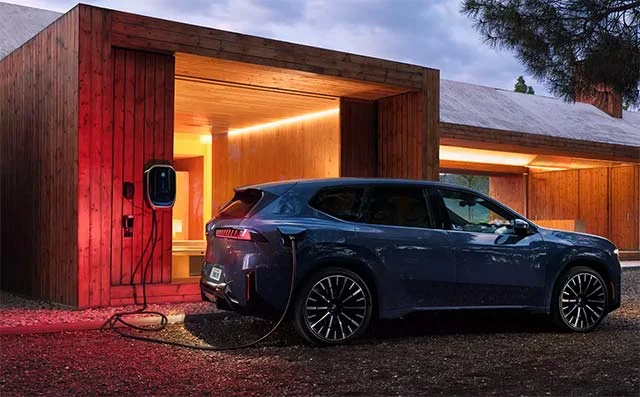
Another intriguing finding from the survey suggests that 57% of Americans would be more inclined to purchase an electric vehicle if it could serve as a backup power source during outages. This concept of bidirectional charging enables electricity to flow from the car to a home, effectively turning the vehicle into a power supply during emergencies. BMW has incorporated such functionality in its new iX3 model, highlighting how additional features can enhance the appeal of EVs beyond mere transportation.
Understanding the Range Anxiety Factor
The survey reveals a complex relationship between perceived need and actual usage. While many consumers can complete their daily tasks within a shorter range, the preference for extended range can be attributed to travel flexibility and peace of mind on longer trips. Automakers are increasingly focusing on larger battery capacities and improved charging solutions to address this anxiety.
Looking Ahead: EV Adoption Challenges
Ultimately, the survey reflects a critical reality for the EV market: automakers must not only advance battery technology and charging infrastructure but also ensure these vehicles are financially viable. Potential buyers are seeking assurance that electric vehicles are practical, affordable, and reliable for diverse driving needs, whether for daily commutes or longer journeys.
Survey Methodology
This analysis is based on an online survey conducted by Big Village for BMW Group from September 11-13, 2026, involving 1,005 U.S. adults aged 18 and older. The responses were weighed to represent the broader U.S. adult population. This context provides essential insights into consumer expectations surrounding electric vehicle range and functionality.
Discussion
Sign in to join the discussion.