EV prices are easing and several models start below $30,000, but charging access, fees and depreciation still shape the real cost of ownership.
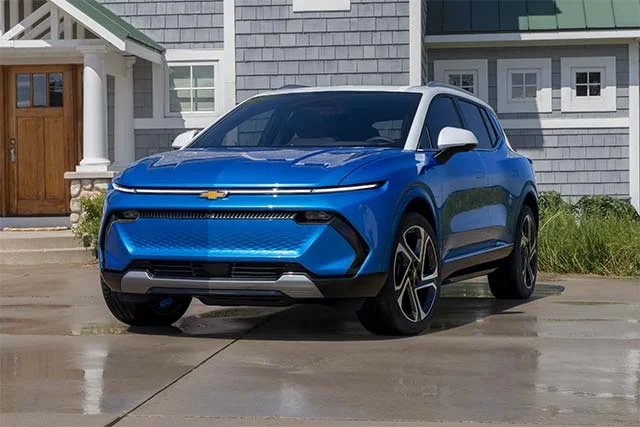
The clearest shift in the electric car market is happening at the showroom: lower prices are beginning to make EVs accessible below the premium tier. Several models now start under $30,000, and automakers have cut prices even after federal purchase credits ended in September 2025. But falling sticker prices haven't settled the buying decision. Range, charging access, fees and resale value still determine whether an EV fits a driver’s budget.
Prices are easing as incentives disappear
The average new car price was reported at about $58,000 in March 2026, down from $63,000 after 2025. EV pricing followed a similar downward direction despite the end of federal tax credits for new and used electric vehicles on September 30, 2025.
The incentive deadline pulled demand forward. New EVs accounted for 11.4% of car sales in September 2025, then 5.8% in October. Dealers had expected prices to rise once buyers lost access to credits, but discounting followed instead. The average new EV price reportedly fell 12.3% over six months, while Chevrolet reduced the Equinox EV’s price by 13.4% between October and March.
Demand remains uneven. EV sales were reported down 36% late in 2025 and 27% in early 2026 compared with the same periods a year earlier. That combination of weaker sales and lower prices suggests automakers are using price to keep buyers engaged, even as the market adjusts to the loss of tax incentives.
Sub-$30,000 models change the entry point
The advertised starting prices put compact EVs within reach of more buyers, though the listed figures exclude destination fees.
| Model | Starting price | Range |
|---|---|---|
| 2027 Chevrolet Bolt | $28,995 | 262 miles |
| 2026 Nissan Leaf S+ | $29,990 | 303 miles |
| 2026 Tesla Model 3 Standard | $36,990 | 321 miles |
| 2026 Chevrolet Equinox EV | $35,000 | 319 miles |
The Leaf’s destination fee is $1,495, a reminder that the headline price doesn't represent the full amount due. Buyers should compare the complete price on the window sticker, including delivery charges and any dealer fees.
Charging access is part of the value equation too. The Bolt pairs an LFP battery with a NACS charging port; a 10% to 80% charge is expected to take up to 25 minutes. Nissan says the Leaf can use more than 27,500 Tesla Superchargers without an adapter. The Model 3 brings a reported 321-mile range and access to Tesla’s extensive charging network, making it a useful benchmark even at a higher starting price.
Hyundai and Kia offer alternatives for buyers who want a crossover shape. The Hyundai Ioniq 5 starts at around $36,600, and Hyundai plans to price its 2026 lineup without discounts. The 2025 Hyundai Kona Electric SE was listed at $32,975, while the Kia Niro EV and Kona Electric occupy the subcompact crossover category. Their appeal is straightforward: buyers can get more utility than a small hatchback without moving into the highest-priced segment.
Battery design and production volume set the ceiling
The battery remains the largest cost component in an EV, so changes in chemistry and pack design have a direct effect on the price automakers can offer. LFP batteries are a lower-cost option, and engineers are also working to reduce the number of components in battery packs.
Platform sharing can spread development costs across more vehicles. Higher production volumes should also lower per-car costs as factories build more units on common designs. That scale effect takes time, however: lower sales in late 2025 and early 2026 make it harder for manufacturers to reach the production volumes they had anticipated.
Smaller vehicles and battery packs are likely to be the first places where lower prices appear. Rivian’s R1S and larger battery-equipped pickup sit at the expensive end of the market, while less costly trucks are expected later. The nearer-term route to a lower sticker price is a compact hatchback or SUV that doesn't carry a large battery.
Hybrids offer a different kind of reassurance
Some buyers continue to choose hybrids because they want to reduce fuel use without depending on charging. Hybrid sales rose nearly 27% last year, and Hyundai sold 33% more hybrids in August than in the same month a year earlier. One Toyota dealership in New York told NPR that its hybrid inventory lasted just 12 days.
Plug-in hybrids can cover short trips on electricity while retaining a gasoline engine; conventional hybrids don't plug in at all. With gasoline prices described as approaching $4.50 in the fall, both formats can appeal to drivers who want better fuel economy but feel uncertain about charging. A comparison between the Kona Electric and a hybrid illustrates the trade-off: the electric model was less expensive for one shopper, but concern about charging led them to choose the hybrid.
Compare total ownership costs, not just the sticker
In August, the average transaction price for EVs was reported at more than $54,000, compared with around $50,000 for gasoline vehicles. The upfront gap is narrowing, but the purchase price alone doesn't settle which option costs less to run. EV owners avoid buying gasoline and may face lower maintenance costs, while their charging bill depends on where and when they plug in.
Home charging can make routine use simpler and may cost less than relying on public chargers, whose prices vary. A standard household outlet can recharge a car overnight, though it is much slower than DC fast charging. A Bolt can reach a substantial charge in about 25 minutes on a fast charger, while a household outlet may need the night.
Before choosing a model, check whether home charging is practical, locate public stations along regular routes, review the battery warranty and calculate the full purchase price with destination fees. These details can shift the economics as much as a modest difference in range or MSRP.
Used EVs offer savings with added checks
The typical used EV price was reported at $35,276 in March 2026. Models such as the Kia Niro EV and Hyundai Kona EV may be available for less, and rapid depreciation on newly released electric cars can create opportunities for secondhand buyers. The same depreciation makes condition and battery health especially important to verify.
A VIN report can help establish a vehicle’s specifications, recall history, odometer readings, accident record and prior ownership. Buyers can use services such as EpicVIN’s Florida VIN check to review vehicle history. Flood damage deserves particular attention because water exposure can put an EV battery at risk. A history check won't replace an inspection, but it can reveal issues that a low price might otherwise conceal.
Further price cuts will depend on battery costs and production scale; there is no assurance that EVs will soon fall below $25,000. The practical shift is already visible, though: entry prices have moved below $30,000, and used models widen the choices. For buyers, the strongest comparison is the full cost of the car, charging setup and ownership history—not the sticker alone.
Discussion
Sign in to join the discussion.