The Hyundai Staria Load Electric has launched at $70,990, featuring impressive specs and technology enhancements for 2027.
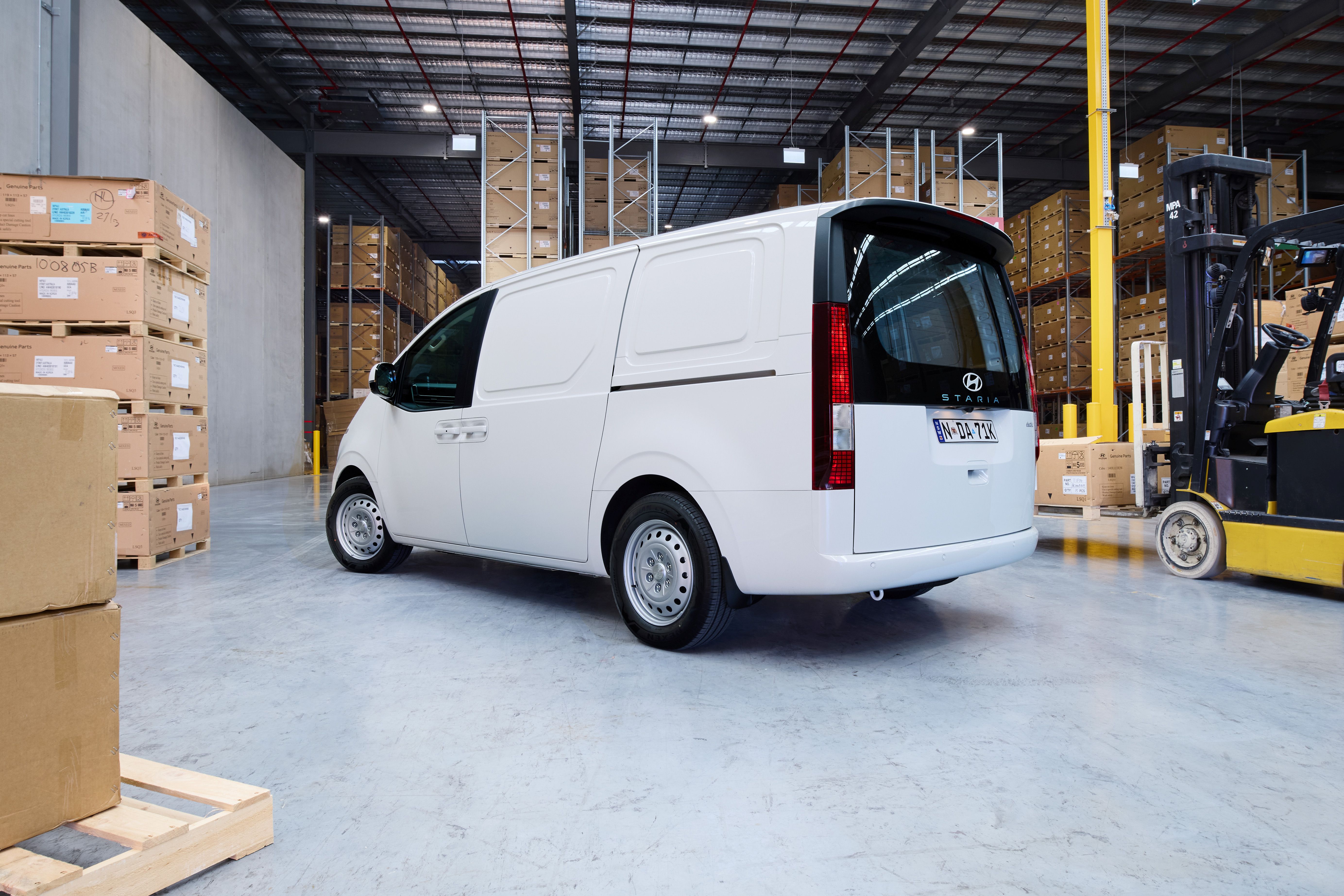
The Hyundai Staria Load Electric has officially hit the market, positioning itself as a competitor to other electric vans like the LDV eDeliver 7 and Ford E-Transit Custom. Priced at $70,990 before on-road costs, it represents a significant premium over its diesel counterpart, which starts at $49,990, and the recently introduced hybrid version, priced at $53,490. This pricing strategy reflects a growing trend in the automotive industry, where electric vehicles often come at a higher initial cost compared to traditional internal combustion models. While the investment may seem steep, many buyers are increasingly considering the long-term savings on fuel and maintenance.
The electric variant is currently available only in a base trim, while the more luxurious Premium trim remains exclusive to the hybrid model, which is priced at $61,240. This strategy seems deliberate, targeting businesses looking to transition to electric without significantly altering their budget. By offering a more affordable base version, Hyundai may attract fleet operators and small business owners who are keen to go green but must tread carefully in terms of expenses.
Performance and Specifications
Hyundai has ensured that the Staria Load Electric maintains the same cargo dimensions as its diesel and hybrid siblings, with a slightly higher payload of 1005 kg, compared to 1039 kg for the hybrid and 997 kg for the diesel. While the slight variances in payload might seem minor, they speak to the operational flexibility that potential users need. With a braked towing capacity of 2000 kg, this model is not quite as capable as its diesel counterpart, which can handle up to 2500 kg. Nonetheless, it still presents a functional option for various applications, especially for small to medium-sized operations where heavy towing may not be a primary requirement.
The distinct closed-off grille gives the Electric model a unique visual identity. Inside, it comes equipped with a standard 12.3-inch digital instrument cluster and an integrated 12.3-inch touchscreen infotainment system, which is increasingly expected in modern vehicles. This system not only enhances the user experience but also supports over-the-air updates, a feature that has become a pivotal expectation for tech-savvy consumers. The ability to update software and add features remotely can significantly enhance the vehicle's longevity and functionality over time.
Battery and Charging
Under the hood, the Staria Load Electric houses an 84 kWh battery paired with a single electric motor, generating 160 kW and 350 Nm of torque. Hyundai claims impressive charging capabilities, stating that the vehicle can be charged from 10% to 80% in just 20 minutes using a 350 kW charger. This quick charging time is indicative of the advancements made in battery technology, providing potential users with more convenient options, particularly for those who need to minimize downtime.
A vehicle-to-load (V2L) outlet is also included, allowing users to power small appliances directly from the vehicle. This feature may not be something all users initially consider, but its utility shines in practical scenarios. For example, a contractor can run tools right from the van, which adds a level of versatility you don't find in standard combustion vans.
Dimensions and Cargo Space
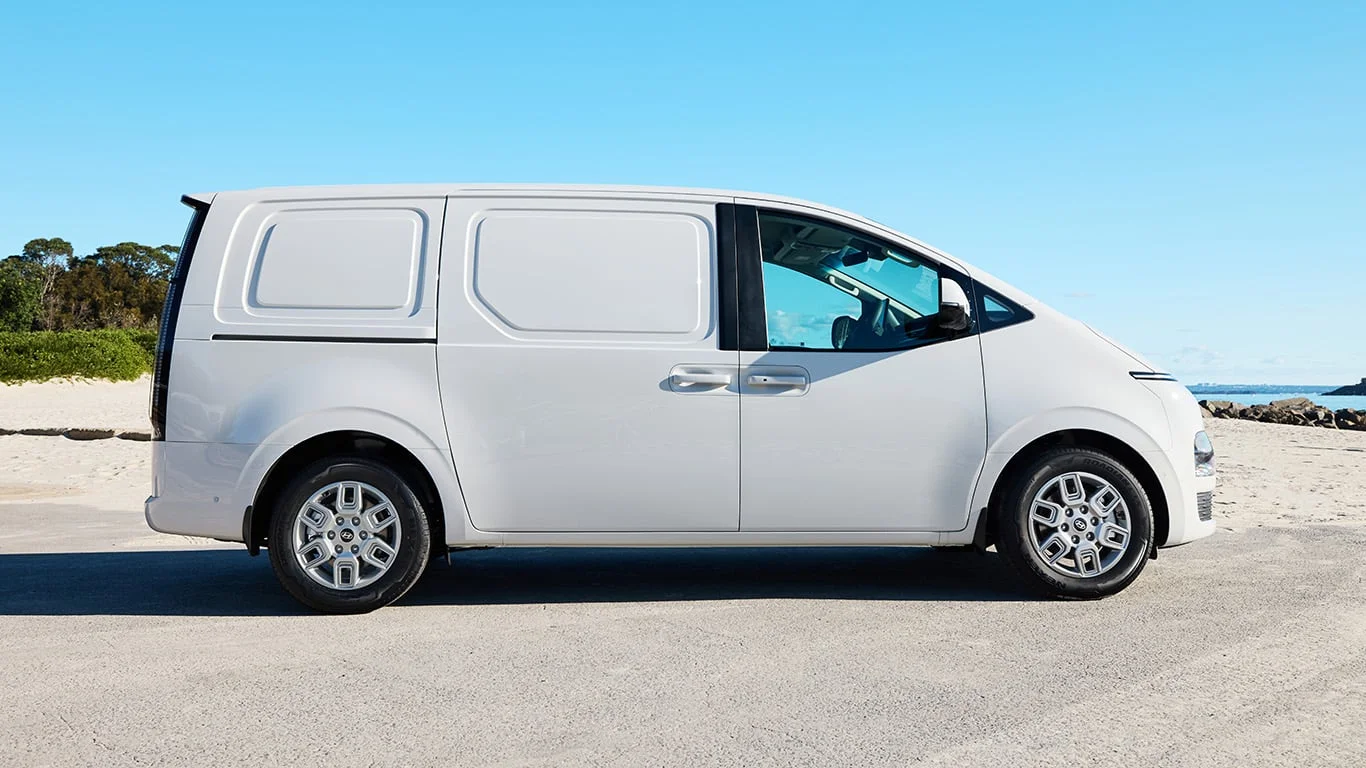
Despite being a front-wheel-drive model, the Staria Load Electric incorporates a 23.9-litre storage compartment under the bonnet, adding further utility. This thoughtful design choice enhances the vehicle's practicality. The dimensions of the vehicle include a length of 5253 mm, a width of 1997 mm (2269 mm including mirrors), and a height of 2000 mm. With a cargo volume that remains ample at 4935 litres, cargo length of 2607 mm, and width of 1640 mm, operators will find it offers substantial practicality, especially for goods transport. With e-commerce booming, this kind of space is more vital than ever.
Warranty, Servicing, and Safety
Hyundai backs the Staria Load with a solid five-year or 160,000 km warranty and an extended eight-year battery warranty. Regular servicing for the electric variant is required every 24 months or 30,000 km, with the first two services capped at $645 and $667 respectively. Such service caps are beneficial as they limit the unexpected costs that often accompany vehicle maintenance. Although the Electric model has yet to undergo official safety assessments, its diesel and hybrid variants achieved a commendable five-star rating from ANCAP, based on tests performed in 2021. This history suggests that consumers can expect a level of safety that aligns with their expectations, something vital for business users.
Safety Features and Technology
The Staria Load Electric comes packed with standard safety equipment. Features include adaptive cruise control with stop/go, autonomous emergency braking, blind-spot assist, and lane-keeping assist. Unique to the Electric version is the addition of Lane Following Assist 2, enhancing driving confidence. In a segment where safety is paramount, the inclusion of these features will likely appeal to operators prioritizing the protection of their investments and personnel on the road.
Standard Equipment and Customization
Standard features in the base trim include a two-seat layout, 17-inch steel wheels, automatic halogen headlights, and proximity entry. While these are practical, higher trims like the Hybrid Premium offer additional upgrades such as LED headlights and heated seats, appealing to those who want a more comfortable ride. Buyers can also choose between colors like Creamy White and Shimmering Silver, with the latter incurring an extra charge. Customization options not only allow businesses to reflect their branding but can also enhance the vehicle's appeal when used in various operational scenarios.
For those interested in exploring more, visit the Hyundai Staria Load showroom.Future Outlook and Implications
What this means for you as an industry stakeholder is the recognition that electric vehicles are rapidly advancing and expanding into new segments, including commercial vans. While the initial purchase price of the Hyundai Staria Load Electric may deter some, the operational efficiencies and potential tax incentives on electric vehicles are factors that many businesses will weigh heavily in their purchasing decisions. As competition heats up in this sector, manufacturers will need to continue innovating within their electric offerings.
And yet, there's a bigger picture at play. The shift towards electrification in transport not only responds to regulatory pressures but also aligns with societal demands for sustainability. Stakeholders must be ready for a future that prioritizes greener alternatives, pushing traditional combustion engines to the backseat.
If you're working in this space, the message is clear: the transition to electric is not just a trend but an evolving standard that businesses will need to adapt to in order to remain competitive.
Discussion
Sign in to join the discussion.