Mercedes-Benz kicks off production of the new GLA at its Rastatt plant, highlighting its electric vehicle strategy with cutting-edge manufacturing techniques.
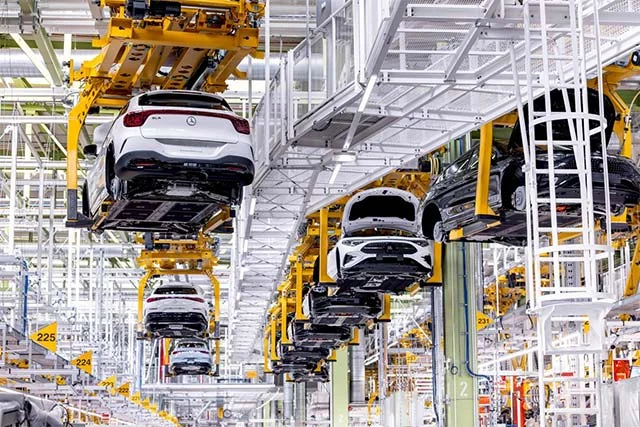
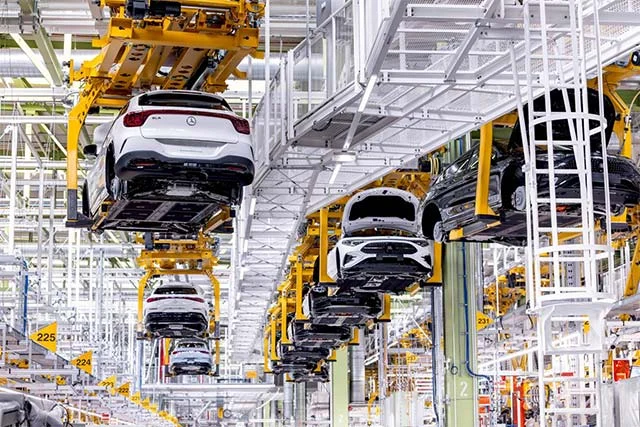
Mercedes-Benz has commenced series production of the new-generation GLA at its Rastatt facility in Germany, signifying a pivotal move in the automaker's strategy to streamline its vehicle lineup with a blend of software-driven and flexible manufacturing processes.
The all-electric GLA is currently in full production, with hybrid variants featuring advanced 48-volt technology and a revamped internal-combustion engine slated for launch in 2026.
This latest GLA is part of a series of models from Mercedes-Benz's revamped vehicle generation being manufactured at Rastatt, reinforcing the site’s importance as a core production hub for the company's compact vehicles.
Flexible Manufacturing for Electric and Hybrid Models
Rastatt's manufacturing capabilities allow for the assembly of electric, hybrid, and traditional vehicles on a unified production line. This flexibility enables Mercedes-Benz to adjust outputs in response to demand fluctuations in diverse global markets.
Currently, the new GLA is assembled in Assembly Hall 4.0, with plans to transition to an upgraded Hall 4.1 by 2027. The facility's transformation involves an investment of several hundred million euros, emphasizing digital twin technology for optimizing construction and production processes efficiently.
Using high-precision digital simulations has been a game-changer, enabling the swift conversion of Hall 4.0 in record time.
Integrating Software into the Production Process
The integration of software plays a critical role in the GLA’s production system. Mercedes-Benz is embedding its MB.OS operating system, artificial intelligence, and the MO360 digital production ecosystem throughout manufacturing.
This system operates on a chip-to-cloud model, allowing for centralized software distribution from the Mercedes-Benz Intelligent Cloud. It means vehicles can leave the assembly line equipped with the latest technology, granting the brand enhanced flexibility in managing vehicle functionalities.
This digital transformation aligns with the automotive industry's broader shift towards software-oriented vehicles, redefining both manufacturing and ownership experiences.
Components for the Electric GLA Produced Locally
Production of the electric GLA relies heavily on various facilities throughout Germany. Electric drive units and axles are manufactured at Untertürkheim, with Mettingen and Hedelfingen focusing on key components like motors and power electronics.
The GLA’s complete electric axles are built at Mettingen before being shuttled to Rastatt, while high-voltage batteries come from Accumotive in Kamenz, Saxony, which boasts extensive experience in battery systems. Body-in-white components are supplied from nearby Kuppenheim, reflecting an enhanced collaborative approach within the production network.
Enhancing Practicality and Comfort in the New GLA
Beyond its technological advancements, the redesigned GLA is crafted to enhance practicality, comfort, and aesthetics. With a lower profile and a longer wheelbase, the new GLA exudes a sportier look compared to its predecessor.
Upgraded interior features include a panoramic roof, a large MBUX Superscreen, and superior materials, enhancing the overall spaciousness and versatility of the cabin, aimed at increasing daily usability.
Moreover, the incorporation of Mercedes-Benz's MBUX Virtual Assistant, powered by generative AI, allows for more intuitive interaction, catering to user needs in real time.
The electric GLA's dedicated powertrain, sophisticated software, and adaptable production system highlight its significance within Mercedes-Benz's evolving compact EV strategy.
Rastatt's Strategic Role in the Electrification of Mercedes-Benz
Having been operational since 1992, the Rastatt plant employs about 7,000 workers, making it a significant employer in the region. Its capacity to produce various drivetrain types enhances Mercedes-Benz's agility in responding to changing consumer preferences for electric vehicles, hybrids, and traditional combustion models.
The initiation of GLA production embodies more than just the launch of a new model; it reflects Mercedes-Benz's commitment to transforming its German manufacturing framework to prioritize electrification, software integration, and production adaptability.
With the electric GLA entering production and hybrid models set to follow later this year, Rastatt is poised to play a key role in the next chapter of Mercedes-Benz’s compact vehicle evolution.
The post New Mercedes-Benz GLA Enters Production as Electric Version Leads the Way appeared first on Electric Cars Report.
Discussion
Sign in to join the discussion.