BMW has initiated Gen6 battery production in China, enhancing its EV capabilities with improved range and efficiency for the Neue Klasse lineup.
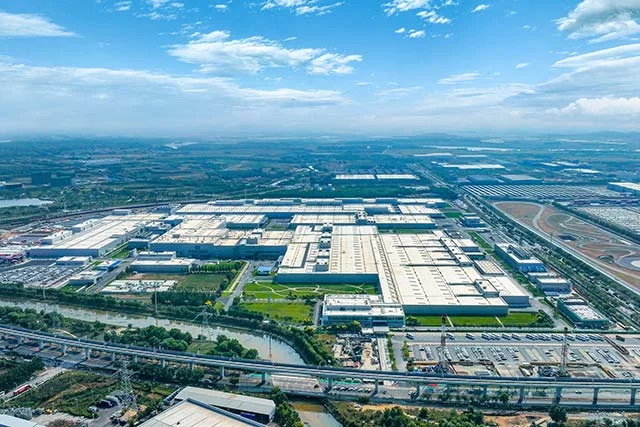
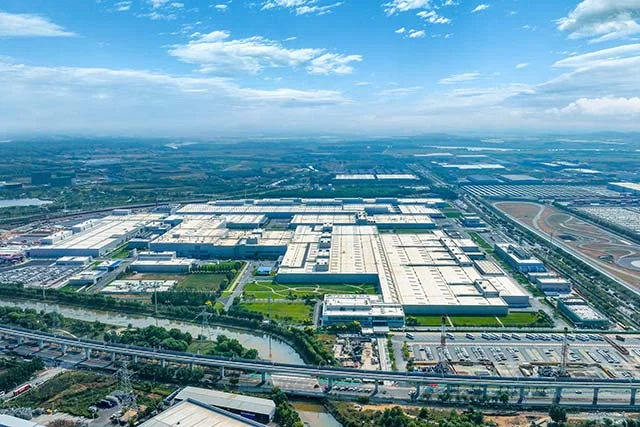
In a significant move for its electric vehicle ambitions, BMW Group has launched series production of its sixth-generation (Gen6) high-voltage batteries at its facility in Shenyang, China. This milestone is poised to bolster the automaker’s efforts in advancing its electric vehicle strategy as it gears up for a new range of models under the Neue Klasse branding.
Enhancements in Gen6 Battery Technology
The new Gen6 battery technology promises substantial advancements compared to its predecessor. BMW claims that these cylindrical cells provide over 20% increased energy density, which can lead to improvements in both driving range and charging time of up to 30%. This leap in capabilities is partly attributed to a novel cell-to-pack architecture that eliminates conventional modules, allowing the battery cells to be directly integrated into the housing for optimal space utilization. The implications of this shift cannot be understated, as increased energy density directly correlates to better overall performance, pushing boundaries that traditional battery setups often struggled with.
Another notable feature is the incorporation of the Energy Master, a centralized control unit embedded within the high-voltage battery. This unit is instrumental in managing power distribution and battery operations more effectively, aligning with BMW's objective of enhancing performance across its EV lineup. Motorsports enthusiasts will recall similar technologies enhancing not just performance but efficiency in racing contexts, so borrowing from that can serve BMW well as it ventures into more consumer-focused markets.
Global Battery Production Strategy
Shenyang marks the third addition to BMW’s international Gen6 battery production network, which already includes facilities in Debrecen, Hungary, and Irlbach-Straßkirchen, Germany. This localized production strategy not only decreases transportation costs and supports stable supply chains but also increases overall production efficiency as components are manufactured close to assembly plants. In an age where supply chain disruptions can severely hinder operations, such proactive measures appear not just sensible but necessary.
The manufacturer has plans to expand this network further, with upcoming battery assembly sites in Woodruff, United States, and San Luis Potosí, Mexico. By maintaining uniform production and quality standards across its locations, BMW leverages regional expertise while ensuring product consistency. This geographic expansion could serve as a differential advantage, particularly in North America, where consumer demand for electric vehicles is spiking and competition among legacy automakers is fierce.
Manufacturing Process of Gen6 Batteries
BMW's Gen6 battery assembly merges precision engineering with automation and digital oversight to enhance manufacturing quality. The process begins with a thorough inspection of individual battery cells, which are then combined with cooling units to form cell clusters. A meticulous laser cleaning follows before these components undergo welding, ensuring reliable connections. Subsequently, these clusters are integrated into a unified mechanical structure through a specialized foaming procedure that enhances durability and safety. It’s a layered process that emphasizes quality over quantity, which may become even more critical as regulations around battery safety tighten globally.
The final steps of production involve closing, sealing, and riveting the battery housing, followed by the installation of the Energy Master. Each battery endures a rigorous end-of-line quality assessment to verify performance, safety, and functionality before leaving the production facility. Dozens of variables could impact the efficiency of battery systems; thus, this rigorous quality control not only mitigates risks but can also serve as a selling point to consumers increasingly interested in reliability.
BMW's approach to quality control incorporates digital technologies at every manufacturing stage. Data analysis, digital twins, and AI-enhanced inspection systems are employed to detect potential defects early on, further ensuring high standards across their production network. By embracing cutting-edge technology in its manufacturing, BMW is signaling it won’t just keep up with competitors but actively seeks to set new benchmarks in the industry.
Preparing for the Future of Electric Mobility
The initiation of battery production in Shenyang signals BMW's readiness for the next evolution in electric vehicle technology. Enhanced energy density and faster charge capabilities are likely to position future Neue Klasse models favorably in a competitive EV market. Adopting a localized approach for production will not only streamline logistics but also fortify supply chain continuity. For stakeholders and consumers alike, this suggests a reduced wait time and less uncertainty for prospective vehicle launches.
With Gen6 battery production taking off in China, alongside existing facilities in Germany and Hungary, BMW is systematically working towards a cohesive global manufacturing network for its next-gen EVs. The anticipated North American expansion will further solidify this infrastructure. This multi-faceted strategy doesn’t just empower BMW; it could potentially reshape what consumers expect in terms of performance, charging times, and overall sustainability in electric vehicles.
Ultimately, this rollout encapsulates BMW's ambition to merge advanced battery technologies with efficient manufacturing practices, digital quality management, and a more resilient global supply chain, ushering in the next phase of electric vehicle evolution. If you're working in this space, watch closely—this strategic pivot could redefine industry norms, placing pressure on other automakers to keep pace or risk obsolescence.
Implications for the Automotive Industry
BMW's launch of its Gen6 battery production isn't merely about one company's growth; it sends ripples throughout the entire automotive ecosystem. As BMW positions its new batteries for mass adoption, competitors will likely be compelled to advance their own technologies to stay relevant. What does this mean for innovation? Well, the stakes just got higher. Traditional automakers who lag in battery technology may soon find themselves overshadowed by brands that embrace similar strategies.
And here's the thing: consumer expectations are evolving too, demanding more efficient, faster-charging, and longer-range options. If BMW successfully translates the promise of its new technology into market offerings, it may redefine consumer priorities. In essence, this move could tip the scales toward better quality and more competitive pricing, benefitting consumers across the board. The automotive race is far from over, and BMW's Gen6 batteries may just be the fuel needed for a renewed sprint.
The post BMW Starts Gen6 Battery Production in China for Neue Klasse EVs appeared first on Electric Cars Report.
Discussion
Sign in to join the discussion.