BYD’s U9 Xtreme reached 503.17 km/h in Abu Dhabi, pairing a production car speed record with a 1200V system and more than 3,000 PS.
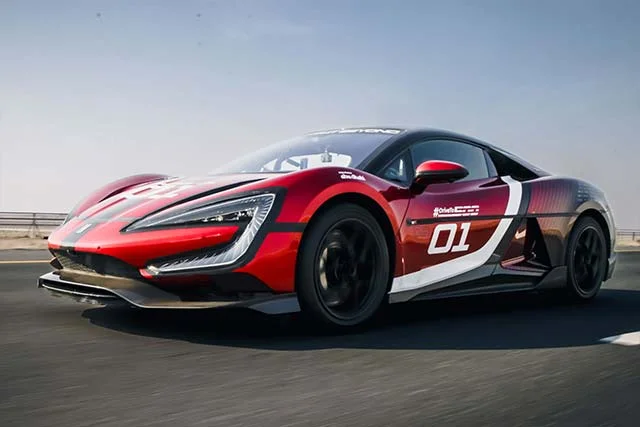
BYD’s YANGWANG U9 Xtreme has crossed a threshold that has long eluded production cars: on November 1, 2026, it reached 503.17 km/h (312.65 mph) on a road in Abu Dhabi. That makes it the first production car to officially exceed 500 km/h, and gives the electric hypercar a new speed mark after its own 496.22 km/h run in Germany the previous September.
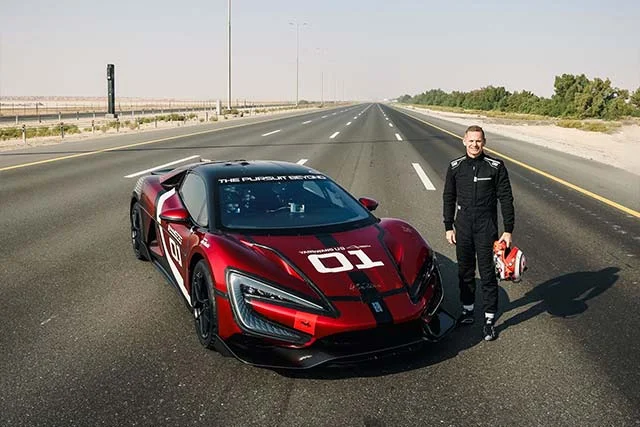
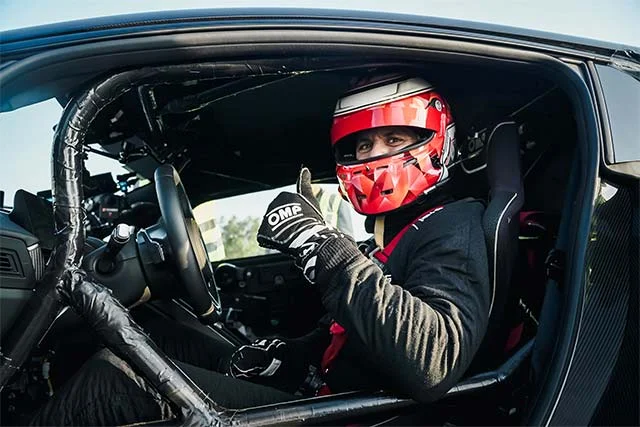
The result is a headline number, but the engineering story sits in the details: four independently controlled motors, a 1200V electrical architecture, bespoke tyres and overnight setup changes all had to work together. Professional racing driver Marc Basseng, who also drove the earlier record attempt, was at the wheel for both Abu Dhabi runs.
A record built around the whole vehicle
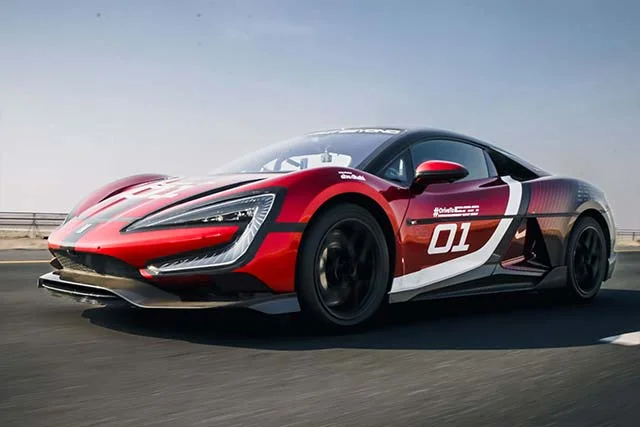
The U9 Xtreme’s 503.17 km/h run surpassed the prior record of 496.22 km/h, set by the same model in Germany in September 2025. The achievement was recognized with four Guinness World Records: fastest production car, fastest electric production car, fastest EV tyre and fastest road car tyre. The FIA also recognized the result.
BYD Executive Vice-President Stella Li credited the engineering team and pointed to work that continued after the car had already set its previous record. That continued development is reflected in the gap between the two results: improving a car already close to 500 km/h required attention to stability, road conditions and component behavior, not simply more power.
The attempt took place on Sheikh Khalifa Bin Zayed International Road (E11), in Abu Dhabi’s Al Dhafra region. Organizers used a 10-kilometre stretch that included a seven-kilometre straight. The road’s proximity to desert terrain and regular traffic made surface preparation a significant part of the work; the route was cleaned and inspected before the runs.
Two attempts on October 31 reached about 490 km/h. BYD engineers then adjusted the car overnight. They recalibrated the suspension software to increase rebound damping, changed the rear-wing angle to add downforce over the rear axle, fine-tuned tyre pressures and optimized battery and motor temperatures. The first run on November 1 helped confirm the setup changes. The second delivered the record.
More than 3,000 PS, managed at each wheel
The car is built around BYD’s upgraded e4 Platform, with four electric motors under independent control. Each motor is rated at up to 755 PS (555 kW), for a combined output exceeding 3,000 PS. The standard YANGWANG U9 produces 1,287 PS, putting the Xtreme’s output at more than twice that figure. The motors can turn at up to 30,000 rpm.
BYD describes a set of materials choices aimed at supporting that output: the motor stators use 0.1 mm silicon steel, while the rotors use 970 MPa ultra-high-strength silicon steel. The motor housings are made from aerospace-grade aluminium. Together, the car’s stated power-to-weight ratio is 1,217 PS per tonne.
Raw output alone doesn’t explain how the car stays composed. The e4 Platform can adjust torque at each wheel more than 100 times per second, distributing power as conditions change. At extreme speed, that control is part of the performance package: the car needs to put power down while managing grip and direction through small variations in the road surface.
1200V power delivery and a high-output battery
The U9 Xtreme’s electrical system operates at 1200V, above the 800V architecture increasingly used in premium EVs. BYD says it is the first production model to use a 1200V platform. The system supports current levels up to 1,000 amperes, providing the electrical capacity needed to feed the four motors while managing heat.
The car retains BYD’s Blade Battery, based on lithium iron phosphate (LFP) chemistry, with changes to meet the hypercar’s discharge demands. According to BYD, the updated system increases single-cell power density by 170% compared with an 800V configuration and supports discharge rates up to 30C. The company also says the car can deliver up to 1,800 kW even when the battery is at 20% state of charge.
Regenerative braking can exceed 700 kW, helping recapture energy and reduce the load on the conventional brakes. BYD says the 1200V system can cut heat generation by as much as 67% against an 800V system at the same power output. Those figures matter because sustained high power places heavy demands on both battery temperature control and electrical components.
Suspension and tyres take on the stability problem
At speeds near 500 km/h, suspension response and tyre behavior become central to control. The U9 Xtreme uses BYD’s DiSus-X Intelligent Body Control System, which manages movement at each corner through dual-valve electronic dampers. The system has a stated bandwidth above 12 kN and can generate up to 50 kN of active force within 120 milliseconds.
That response is intended to keep the tyres in contact with the road as acceleration, braking and cornering loads shift. Under certain conditions, the system can also create an inward body lean of up to 2.43 degrees while cornering. Combined with the e4 Platform’s torque control, the suspension gives the driver tools to manage a car whose power would otherwise be difficult to use effectively.
YANGWANG and Giti Tire developed a bespoke semi-slick tyre for the record attempt. Its compound and tread pattern were tailored for grip, durability and stability at extreme speed. The teams also addressed tyre movement against the wheel rim: a knurled rim interface and high-viscosity lubricant are used to reduce slippage and torque loss. The tyres’ own Guinness records underline how much of the result depended on the contact patch, not just the drivetrain.
A rapid development curve, with limited production
The U9 family’s speed progression has been steep. The original YANGWANG U9 reached 309 km/h at Wuhan Hannan Airport in January 2024. By October that year, the standard car had reached 391.94 km/h at Germany’s ATP Papenburg proving ground. The U9 Xtreme arrived in August 2025 and recorded 472.41 km/h, then rose to 496.22 km/h a month later. The Abu Dhabi result pushes that sequence past the 500 km/h mark.
Its record profile also extends beyond straight-line speed. The U9 Xtreme previously completed Germany’s Nürburgring Nordschleife in 6 minutes 59.157 seconds, setting a production electric vehicle lap record. That combination suggests a development brief broader than a single top-speed run, even if the Abu Dhabi record is the most striking measure of the car’s capabilities.
BYD plans to build 30 U9 Xtreme examples worldwide, with individual customization for each buyer. The first production-standard car, called “Dawn Moment,” was unveiled at that year’s Beijing Auto Show. Its finish uses fine gold powder beneath layers of clear coating, with matte-gold sections finished using techniques influenced by traditional Chinese lacquer craft. Some buyers have approved specifications and moved toward contract signing and production scheduling.
The 503.17 km/h result shows what BYD has achieved when high-voltage power delivery, control software, suspension and tyres are developed as one system. With only 30 cars planned, the U9 Xtreme’s larger significance may be as a test bed for the limits of production EV engineering—and as a marker for how quickly those limits are shifting.
The post YANGWANG U9 Xtreme Just Broke the 500 km/h Barrier With a Stunning New World Record appeared first on Electric Cars Report.
===END===
Discussion
Sign in to join the discussion.