Pony.ai and Toyota have started 24-hour driverless bZ4X rides in Guangzhou, with a planned expansion to about 1,000 vehicles across major Chinese cities.
A driverless service leaves the factory
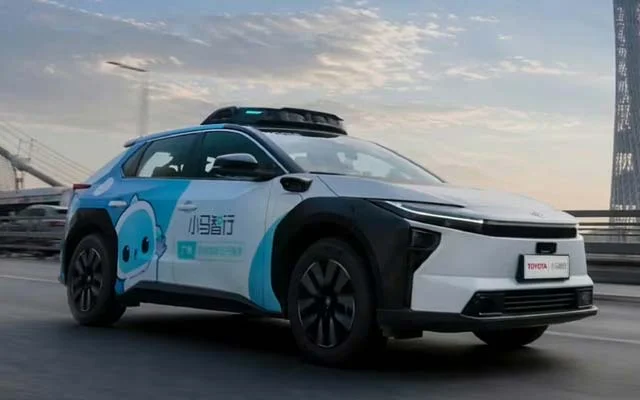
Pony.ai and Toyota have moved their bZ4X robotaxi from production into paid, driverless service, beginning in Guangzhou’s Nansha district. The launch puts a jointly developed Level 4 vehicle into daily use and sets up a planned fleet of about 1,000 robotaxis across major Chinese cities. That target signals ambition, but neither company has given a rollout schedule or disclosed Guangzhou’s initial fleet size, so the scale of the first deployment remains hard to judge.
The distinction matters. A robotaxi entering passenger service is a more concrete milestone than a prototype demonstration, but a live service in one district doesn’t establish how quickly it can spread or how consistently it can operate. The launch gives Pony.ai and Toyota a setting in which the vehicle and the passenger service must work together, under real operating conditions.
From factory line to passenger service
The seventh-generation bZ4X joined Pony.ai’s commercial fleet after mass production, testing and validation. The first mass-produced vehicle came off the line in February 2026. Riders in Nansha can request a trip at any time through the PonyPilot app or Pony.ai mini-programs on platforms including WeChat and Alipay, making the service accessible through familiar digital channels rather than a dedicated vehicle interface.
The vehicle is one of three models in Pony.ai’s Gen-7 lineup. It was designed around Level 4 autonomous driving, which means it can handle driving tasks without a human driver within its defined operating conditions and service area. That places it beyond Level 2 and Level 3 systems, where driver supervision or readiness is still required. The qualification is bounded, though: Level 4 capability applies within the conditions and area the system is designed to handle, rather than promising autonomous operation everywhere.
For the rollout, the companies emphasize the vehicle’s ability to keep operating when certain components fail. Pony.ai and Toyota worked together on engineering requirements that include redundant systems and fail-operational capabilities. In practical terms, redundancy is intended to give a vehicle alternatives when a component stops working; the companies haven’t described which failures are covered or how the system responds in each case. Pony.ai has also refined acceleration, braking and cornering, aiming to make rides feel smoother. That’s a useful focus: passengers experience the quality of a robotaxi through its motion and decisions, not just through the autonomy label.
The cabin is part of the product
Autonomy may get the vehicle onto the road, but the passenger experience will help determine whether people use it routinely. The bZ4X offers Bluetooth door unlocking, a voice assistant, in-car entertainment and adjustable climate settings. These features address ordinary moments in a trip: getting in, setting a comfortable cabin and occupying the ride. They also suggest the partners are treating the robotaxi as a transportation service, where comfort and ease of access matter alongside driving performance.
Here’s the thing: a vehicle can complete its driving task and still feel inconvenient to use. A service that depends on an app, remote access and an unfamiliar cabin has to make those steps understandable for passengers. The listed features speak to that experience, although the companies haven’t shared details about how riders are supported if they encounter a problem during a trip. For anyone assessing commercial readiness, those everyday interactions matter as much as the vehicle’s headline autonomy level.
The service is currently limited to Nansha. Pony.ai and Toyota say they’re preparing the model for introduction in other Chinese markets, with a target of roughly 1,000 vehicles across major cities as production grows. The companies haven’t said when that expansion will be complete or how many vehicles each city will receive. That missing detail leaves open whether the target describes a near-term buildout or a longer production ambition.
A partnership built over several vehicle generations
The Guangzhou launch extends work that dates to 2019, when Pony.ai and Toyota began collaborating on autonomous vehicles. Their activities now span Beijing, Shanghai, Guangzhou and Shenzhen. In 2023, Pony.ai, Toyota Motor China and GAC Toyota formed a joint venture with more than RMB 1 billion in investment to support robotaxi production and commercial deployment. The arrangement ties autonomous driving development to vehicle manufacturing and deployment, areas that need to progress together if a service is to grow beyond a small operating area.
That history gives the companies a foundation for the current launch, but partnership duration alone doesn’t show how easily a fleet can expand. Production must keep pace with deployment, and the service must work across the operating areas the companies choose. Each city can bring different operating conditions, so preparing a vehicle for introduction elsewhere is only one step in building a repeatable service.
Scale is the next test
The next test is whether manufacturing can support the stated fleet goal while the service expands beyond its first Guangzhou district. The 24-hour launch marks a concrete step, but the companies’ pace and the number of vehicles they can put on the road will show how quickly this model can become a broader urban transport option. The absence of an initial fleet count and rollout schedule makes it difficult to measure progress against the target today.
This is more significant than it looks: a paid service turns claims about autonomy and comfort into something riders can evaluate through actual trips. And yet, a launch is a beginning, not evidence of broad availability. If you’re working in this space, the useful signals to watch are how the service expands, whether production keeps pace, and whether the passenger experience holds up as more vehicles enter operation. For now, the companies have established a live starting point—and left the timetable for scale unanswered.


Discussion
Sign in to join the discussion.