FAW-Volkswagen has opened reservations for the ID. AURA L5, a midsize EV sedan with up to 580 km of CLTC range and a 416 hp AWD option.
Volkswagen’s next China-built electric car makes a case for local product development through a mix of long claimed range, high-output computing and everyday cargo flexibility. The ID. AURA L5 is a midsize liftback sedan, and FAW-Volkswagen opened reservations on November 16 ahead of a China launch expected before the end of 2026.
Three configurations are planned, but FAW-Volkswagen has yet to disclose official pre-sale or retail prices. Reservations require a 99-yuan deposit, about $15, which can be applied as a 2,000-yuan discount on the purchase. Eligible existing Volkswagen Group and China FAW customers may qualify for a further 3,000 yuan in purchase support. A time-limited offer also includes an upgrade to CATL battery cells for eligible buyers.
The L5 is the second vehicle in Volkswagen’s ID. AURA family, following the T6 electric SUV, which went on sale in September. The T6 starts at 129,900 yuan and reached 12,032 sales in October, offering a local reference point for the sedan’s eventual positioning. Pricing remains an open question in a crowded market where domestic brands compete aggressively across the electric sedan segment.
A liftback built around usable space
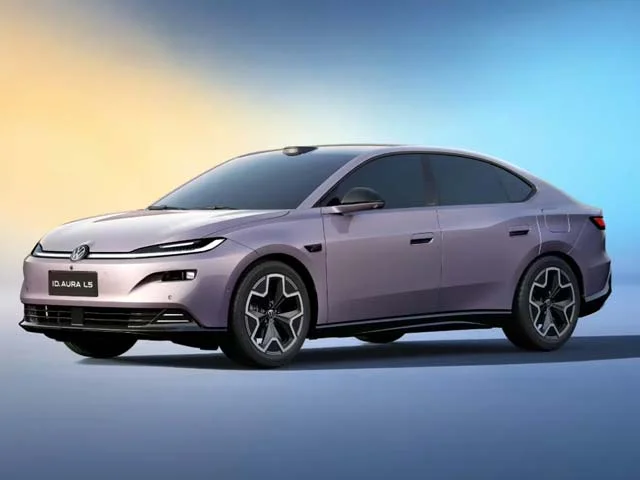
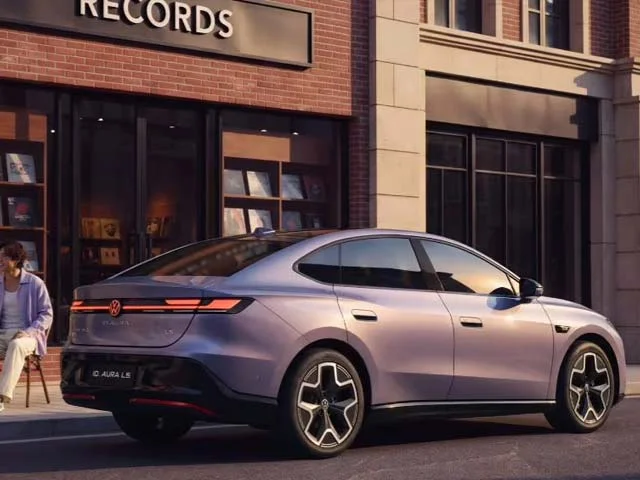
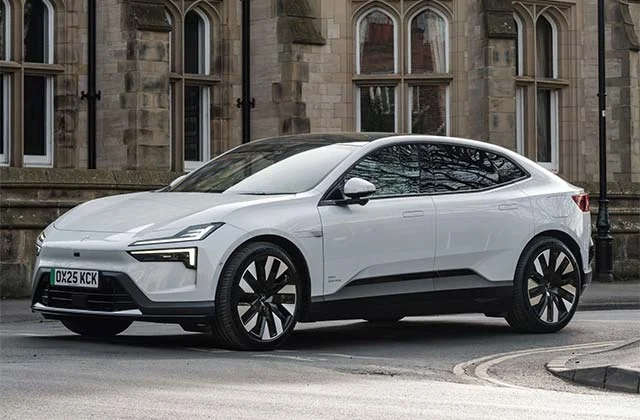
The L5’s fastback roofline and short overhangs give it a more streamlined profile than a traditional three-box sedan. Its dimensions are 4,883 mm long, 1,881 mm wide and 1,506 mm tall, with a 2,820 mm wheelbase. Volkswagen has paired the silhouette with frameless doors, semi-hidden handles and a choice of six exterior colors: white, gray, silver, purple, gold and blue.
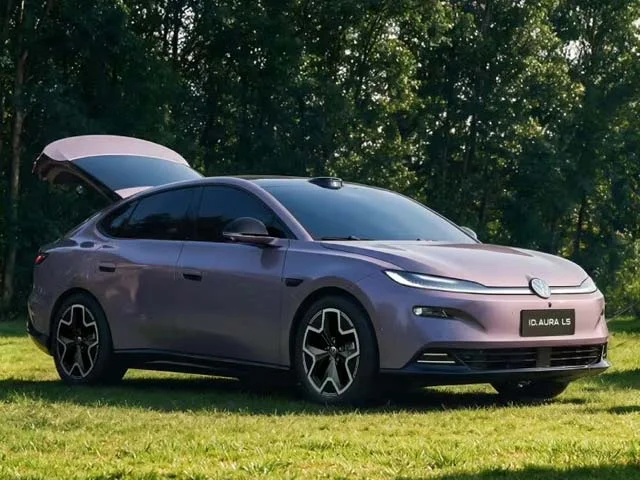
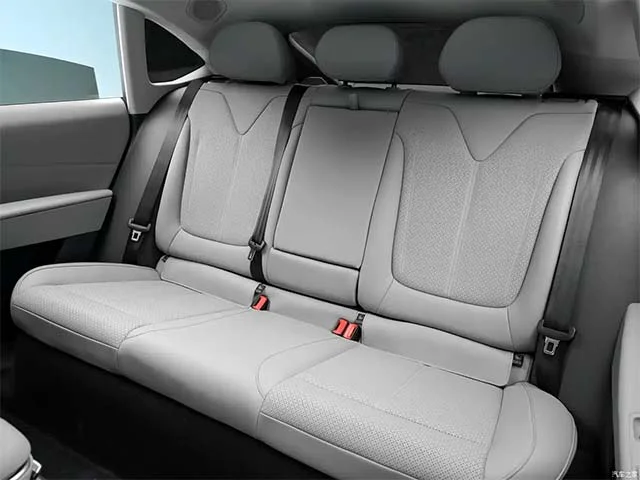
The powered rear hatch is the more consequential design decision. It opens beyond 70 degrees, with an aperture wider than one meter, making it easier to load bulky items than through a conventional sedan trunk opening. Luggage capacity is listed at 525 liters, rising to 1,200 liters with the rear seats folded. The cabin also has 44 storage compartments.
At the front, a closed grille sits between slim headlamps joined by a full-width lighting element. U-shaped styling cues and three-dimensional illuminated details give the nose a distinct identity within Volkswagen’s electric lineup. The practical liftback, though, is likely to matter more to buyers weighing the car against conventional sedans.
Two powertrain choices, one range claim
Built on Volkswagen’s China-focused Compact Main Platform (CMP), the L5 will be offered with single-motor rear-wheel drive or dual-motor all-wheel drive. The rear-drive version produces 155 kW, equivalent to 208 hp, and reaches a stated top speed of 175 km/h. The AWD configuration adds a second 155 kW motor for combined output of 310 kW, or 416 hp.
Both configurations use lithium iron phosphate batteries and carry a maximum claimed range of 580 km on China’s CLTC test cycle. That figure is a laboratory rating, so it shouldn’t be read as a promise of equivalent distance in everyday driving. Gotion High-Tech supplies batteries, while CATL cells are also available on the top Max trim.
The two-motor model gives the range a performance counterpoint, but the available information doesn’t specify whether every configuration achieves the full 580 km rating. Buyers will need the final trim and battery details to compare range and equipment on equal terms.
Driver assistance built with Chinese partners
A roof-mounted 192-line LiDAR sensor anchors the L5’s driver assistance package, called Hyper Sense 8 (HS8). The system was developed through Carizon, a venture between Volkswagen software subsidiary Cariad and Horizon Robotics. Its Journey 6H processor is rated at 420 TOPS.
HS8 is designed to support urban and highway Navigate on Autopilot functions, navigation assistance from parking space to parking space, and several automated parking features. The system uses a single-stage, end-to-end architecture, while LiDAR adds another source of information about nearby objects and traffic conditions.
These capabilities put the L5 in step with the technology expectations of China’s EV market, where assisted navigation and automated parking are increasingly prominent product features. They remain driver assistance tools: the driver must continue to supervise the road and control the car.
Digital cabin and a locally tailored electronics base
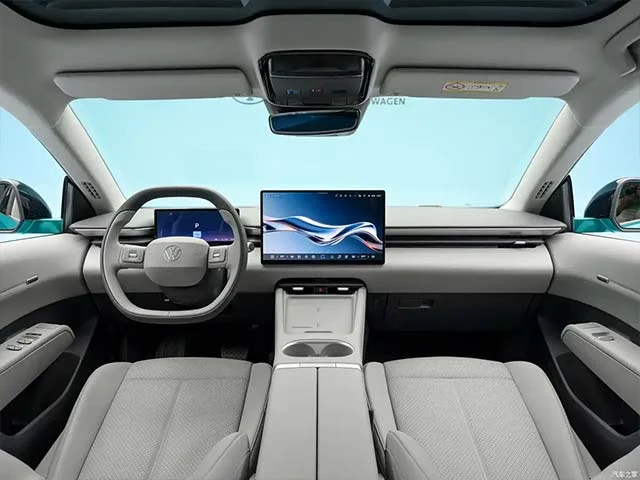
The dashboard centers on a 15.6-inch, 2.5K touchscreen, backed by a 10.25-inch instrument display and a 25.8-inch augmented-reality head-up display. The infotainment hardware includes an automotive processor built on a 4-nanometer manufacturing process. Volkswagen’s Yunqi cockpit system supports navigation agents and phone integration through Apple CarPlay, Huawei HiCar and Carlink.
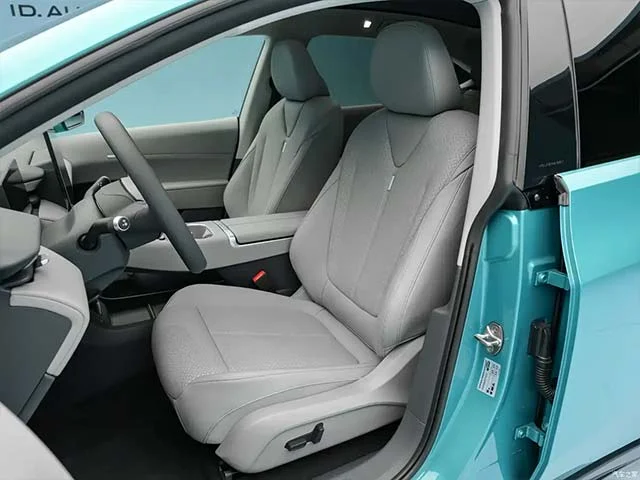
Comfort equipment includes seats with nine layers of cushioning, ventilation, heating and memory functions. A temperature-controlled storage compartment in the center console and a 14-speaker sound system round out the listed cabin features.
The L5 is also the first FAW-Volkswagen model to use the latest China Electronic Architecture, CEA 1.4. Volkswagen and Xpeng jointly developed CEA as the electronic foundation for vehicle functions, connectivity, infotainment and assistance systems. The HS8 package comes from the separate Carizon collaboration, showing how Volkswagen is drawing on multiple local partnerships to build products for Chinese customers.
That local engineering mix is the larger story behind the L5. Its range and feature list are familiar metrics in China’s EV race; the test will be whether final pricing, trim allocation and real-world execution make them persuasive together. Those details should become clearer as FAW-Volkswagen approaches the car’s expected launch later in 2026.
Discussion
Sign in to join the discussion.