BYD is in exclusive talks to acquire Ineos’s Hambach plant, adding a French production base as Ineos plans US manufacturing from 2028.
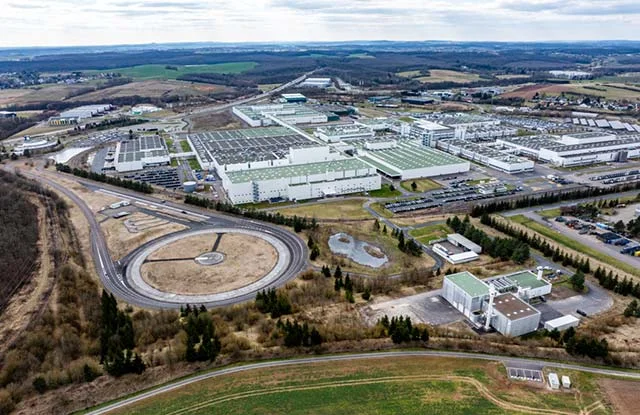
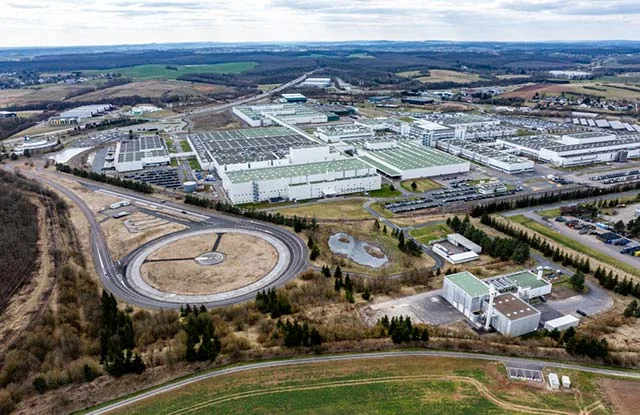
BYD’s negotiations to buy Ineos Automotive’s Hambach factory could give the Chinese automaker an established production base in France as it expands in Europe. For Ineos, a sale could support its shift toward US manufacturing while allowing its current models to keep rolling off the French line in the medium term. The proposal puts two different priorities on the same factory: BYD wants more production capacity near European buyers, while Ineos is preparing to change where it builds its vehicles.
That overlap makes the talks more than a straightforward change of ownership. The plant already has an operating line and a defined role in Ineos’s production plans, so any transition would have to account for both companies’ needs. The agreement’s terms haven’t been disclosed, leaving open how the companies would manage the handover and the continuing production commitments.
A French plant with an existing production line
The factory in northeastern France was owned by Mercedes-Benz before Ineos acquired it in 2020. It now builds the Grenadier off-roader and Quartermaster pickup. That history matters because BYD would be buying an existing industrial site rather than starting with a factory that has yet to produce vehicles. The site’s current use also means that a change in ownership would affect an established operation, not just BYD’s future expansion plans.
BYD plans to use the site to produce vehicles for European customers, bringing production closer to the market. Local manufacturing can give an automaker a direct production base in a region where it wants to sell, while reducing reliance on vehicles shipped from elsewhere. The article doesn’t specify which BYD models would be built at Hambach, or when production might begin under new ownership. Those unanswered questions will shape how much capacity the acquisition would add in practice.
Talks have entered an exclusive phase, but financial terms haven’t been disclosed. Any deal remains subject to consultation with employee representative bodies. That process is a reminder that a factory transaction involves people and ongoing work as well as property and production plans. BYD Executive Vice President Stella Li said the proposed investment reflects the company’s confidence in France and its long-term ambitions in Europe. That statement signals intent; the deal’s final terms and operating plans will show how that intent translates into production.
Ineos says Grenadier and Quartermaster production would continue at Hambach in the medium term if the negotiations succeed. The company is also preparing to start building both models in the United States in 2028. It has shortlisted possible factory locations and expects to select a site in the coming months. Keeping production in France during the transition could give Ineos time to establish its US operation without an immediate break in supply. A planned move, though, still depends on turning a shortlisted location into a working factory.
Why both companies want a production foothold
The United States accounts for about 70% of global Grenadier sales, making local manufacturing a significant part of Ineos’s plans. A US factory could also reduce the company’s exposure to tariffs on vehicles shipped from Europe. That gives the move a clear commercial rationale: production would be closer to Ineos’s largest market, and the company could reduce its dependence on exports from Hambach. The plant sale and the US plan are therefore connected, even if Ineos expects French production to continue for a time.
For BYD, the factory would add capacity as European trade conditions and local production expectations grow more demanding. The European Union is preparing a proposed Made in Europe framework with stricter local-content requirements that could tie European manufacturing to eligibility for some subsidies and government contracts. The proposal is still being prepared, so its final terms and effects aren’t established here. Even so, the direction of the debate gives automakers a reason to consider where they build and how their production fits regional expectations.
Here's the thing: a factory’s value depends on more than the fact that it exists. Its production capability, the timing of any conversion, and the models assigned to it all matter. The article doesn’t say how BYD would adapt Hambach for its vehicles, or how the change would affect the plant’s output. Those details will determine whether the purchase becomes a meaningful addition to BYD’s European manufacturing or mainly an early foothold. This is more significant than it looks, but the headline opportunity still needs a workable production plan.
BYD is already preparing to begin mass production at its factory in Szeged, Hungary, in early 2027. Ownership of a second European plant would expand its manufacturing presence and distinguish its approach from competitors using production agreements at existing sites. The two locations could give BYD more than one production base in Europe, though the article doesn’t describe how the company would divide work between them. Two factories on a map don’t automatically mean a coordinated regional operation. That depends on decisions about models, capacity, and timing that haven’t been announced.
Competition for European capacity
Other Chinese automakers are also lining up European production. Dongfeng plans to build vehicles at a Stellantis facility in France. Leapmotor is preparing to make electric vehicles at a Stellantis plant in Spain, while Geely is expected to produce vehicles at a Ford assembly facility in Spain. The examples show that several Chinese manufacturers are looking for routes into European production, including through partnerships with companies that already operate plants there.
BYD’s proposed purchase would differ in one important respect: it would own the Hambach site rather than rely on a production agreement at another automaker’s facility. That could give it more direct control over the plant, while also putting responsibility for its operation on BYD. The comparison has limits, since the article doesn’t give details about the arrangements at the other sites. Still, the distinction matters when assessing what BYD would gain from a purchase.
What the deal would mean for production
If you’re working in this space, the practical question is how the companies would sequence the transition. Ineos wants to preserve output at Hambach in the medium term as it prepares US manufacturing, and BYD wants the site for vehicles aimed at European customers. Those plans can coexist only if production timing, plant use, and the terms of the handover fit together. The companies haven’t disclosed enough detail to show how they’ll do that.
And yet. The proposal points to a broader contest over where vehicles sold in Europe will be built, and who will control the capacity behind them. Trade rules and local-content expectations may make regional production more attractive, while existing factories offer a way to add a foothold without waiting for a new site to be built. A working plant with an existing line. That’s the appeal, but execution will decide its value.
If the transaction goes through, Hambach would give BYD an operational French factory as it builds out its European footprint. For Ineos, the arrangement could help keep Grenadier and Quartermaster production running while the company prepares for US manufacturing. The next test is whether the companies can complete the deal, meet the required employee consultation steps, and keep Ineos production on track through its planned move. Until the terms and production plans are clearer, the opportunity is tangible, but its scale remains uncertain.
Discussion
Sign in to join the discussion.