Leapmotor reached 2 million vehicles produced in Jinhua, backed by rising deliveries and strong sales of its C Series models.
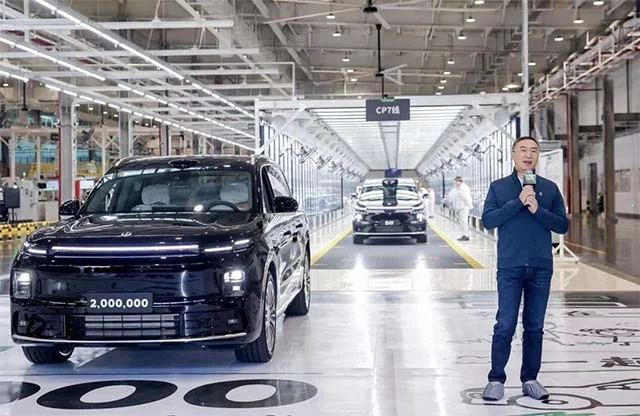
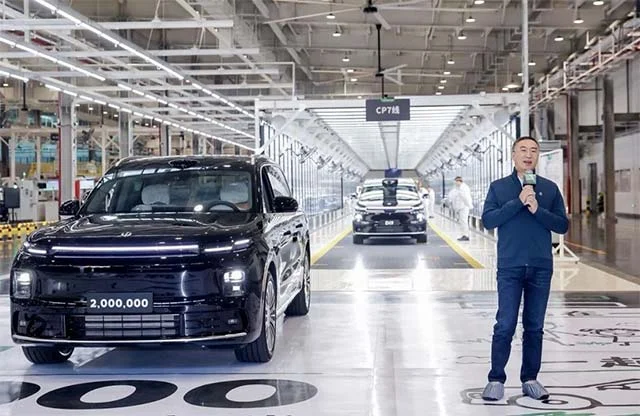
Leapmotor’s 2 millionth vehicle signals that the Chinese NEV maker has reached a scale few startups have matched. The milestone vehicle rolled off the line at the company’s intelligent manufacturing base in Jinhua, as monthly deliveries have crossed 100,000 for four straight months. Those two measures describe different parts of the business: production reflects what the company can build, while deliveries show what it can put into customers’ hands. Taken together, they suggest Leapmotor is moving beyond the stage where growth depends mainly on launching new products and into the harder work of sustaining high output.
Production scale meets sales momentum
Leapmotor delivered 106,127 vehicles globally in October 2026. From January through October, deliveries totaled 772,666, up 65.88% from the same period a year earlier. That pace gives the production milestone commercial weight: the company is expanding output while finding buyers across multiple markets. The figures point to strong recent momentum, though a short run of high monthly deliveries doesn’t by itself show how steady demand will be across the full year or across different regions.
Production milestones can be useful markers, but they don’t answer every question about a carmaker’s health. A company can build more vehicles and still face pressure to keep its factories busy, manage costs and match production to demand. Leapmotor’s delivery totals provide a more direct signal of customer uptake than the production count alone. Even so, the figures don’t explain how sales are distributed by model or market, details that would help show where the growth is coming from.
Its product range spans A, B, C and D platforms, from compact vehicles to higher-end models. The C and D Series account for more than half of cumulative production, and the C Series is nearing one million global sales. The C10 and C11 have each passed 350,000 cumulative sales worldwide. That concentration suggests the larger platforms are doing much of the work in building volume, while the wider range gives the company a way to address buyers with different needs and budgets.
This is more significant than it looks: a broad lineup only helps if individual models find enough buyers to justify their place in it. Cumulative sales figures offer evidence that the C10 and C11 have achieved meaningful reach, but they don’t reveal how recently that demand has arrived or how it compares between markets. The distinction matters. Long-running success can support a company’s scale, while newer products must prove they can add fresh demand.
In-house development underpins the lineup
Leapmotor credits its growth to internal technology development, manufacturing efficiency and cost control. Its full-stack research and development capabilities let it design and produce a substantial share of its vehicle technologies itself. That approach gives the company more direct control over product development and production costs, while supporting its aim of bringing advanced features to a broader customer base. The approach also puts pressure on execution: building more systems internally can give a carmaker control, but it makes the quality and coordination of that work central to the product.
Cost control matters especially in a market where buyers compare what a vehicle offers with what it costs to own and operate. A company that can manage more of its development and manufacturing process may have more room to shape that equation. But the source provides no cost figures, so it’s not possible to judge how much Leapmotor’s internal development has reduced prices or improved margins. The claim is best read as a description of the company’s strategy, rather than proof of a specific financial advantage.
Newer models are also broadening the range’s reach. The B10 has become one of Leapmotor’s best-selling vehicles worldwide. Introduced outside China in October, the B03X has already ranked among the leading sellers in its segment. The company is positioning these models around everyday usability and competitive ownership costs, alongside technology and pricing. That combination puts the emphasis on practical appeal, a useful counterweight to product pitches that rely mainly on technical features.
For buyers, those claims will have to hold up in daily use. If you're working in this space, the question isn’t only whether a model can attract attention at launch; it’s whether the company can keep service, availability and ownership costs aligned as sales grow. The available figures establish that the B10 is selling strongly and that the B03X has made an early impression outside China. They don’t yet show how durable that reception will be.
International growth will test the model
For Leapmotor, the 2 million vehicle mark reflects both manufacturing capacity and a growing base of customers. Its expanding lineup and rising sales outside China give the company a platform to pursue further growth as global EV competition intensifies. The next measure of progress will be whether it can sustain this delivery pace while extending the reach of its newer models. Growth abroad also asks more of a company than shipment volume: products must make sense to customers in markets with different expectations, and the business must support those customers after purchase.
The October introduction of the B03X outside China is one early sign of that effort, while the global sales reported for the C10 and C11 show that the company’s reach already extends beyond a single domestic market. Still, “global” totals can conceal uneven performance. Without a market-by-market breakdown, readers can’t tell which regions are supplying the strongest demand or how much each model contributes. That missing detail limits what the delivery figures can say about the durability of international growth.
And this is the part most people overlook: rapid expansion raises operational demands at the same time it creates opportunity. More vehicles mean more need to coordinate production, distribution and customer support, and each newer model adds another product to manage. Leapmotor’s manufacturing base and in-house capabilities may help it respond, but the reported milestones don’t show how well those systems will perform under continued pressure. The test is consistency.
Leapmotor has a clear set of indicators in its favor: a 2 million vehicle production milestone, four consecutive months above 100,000 deliveries and a growing presence for newer models. Its stated strategy links those results to internal development, efficient manufacturing and cost control. The evidence supports a company growing quickly; it doesn’t settle whether that growth can be maintained at the same pace or translated into lasting strength across markets. For now, the milestone is a strong measure of scale, and the next phase will show whether scale can keep producing sales.

Discussion
Sign in to join the discussion.