Subaru’s electric E-Outback pairs 381 PS, permanent all-wheel drive and up to 325 miles of WLTP range, with UK deliveries due in early 2027.
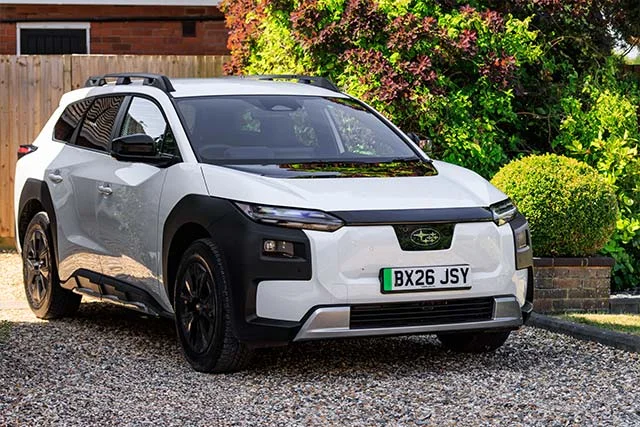
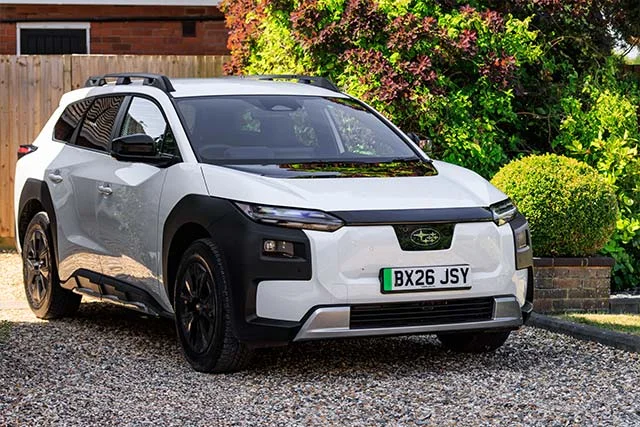
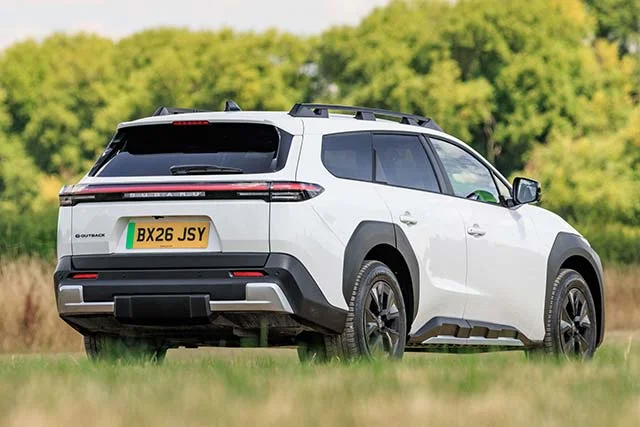
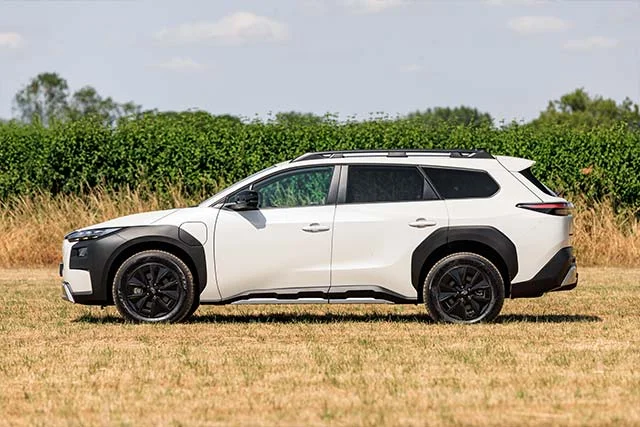
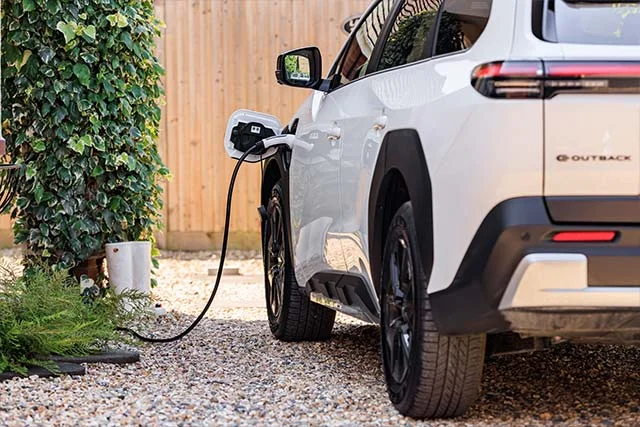
An electric Outback with a specific brief
The Subaru E-Outback makes a clear case for an electric SUV built around all-weather and off-road use: permanent all-wheel drive, 210 mm of ground clearance and dedicated terrain modes sit alongside a claimed range of as much as 325 miles. UK deliveries are scheduled for early 2027, with prices beginning at £49,995. The proposition is unusually focused: Subaru is foregrounding traction and clearance, while also claiming enough range and cabin flexibility for the daily routine.
That focus matters because electric SUVs often have to reconcile competing priorities. A raised body and all-wheel drive can serve drivers on rough roads or in poor weather, but capability claims are only useful if the vehicle’s range, charging routine and practical space fit the owner’s life. The E-Outback’s headline figures suggest Subaru wants buyers to weigh those needs together. The real test will come when drivers can assess how the range holds up across the conditions for which the vehicle is designed.
Electric power and performance
Built at Subaru’s upgraded Gunma Yajima plant in Japan, the E-Outback carries the nameplate’s 30-year history onto an all-electric platform. Its 74.7 kWh battery feeds two motors, one on each axle, each rated at 167 kW. Combined output is 280 kW (381 PS) and 536 Nm of torque. The layout gives the car electric drive at both axles, matching its permanent all-wheel-drive brief with the immediate response associated with electric motors.
That makes it the quickest-accelerating Subaru to date: 0–62 mph takes 4.5 seconds, while top speed is capped electronically at 111 mph. The range-topping performance sits beside three drive modes—Normal, Eco and Power—and steering-wheel paddles that adjust regenerative braking. The figures are striking for a vehicle positioned around utility, though outright acceleration doesn’t tell you much about how it behaves on a muddy track or how efficiently it covers a long motorway run.
Here’s the thing: performance is easy to advertise, while the trade-offs are harder to judge from specifications alone. Drivers will want to know how the modes alter the car’s response and how much control the regeneration settings offer in varied conditions. Those are questions for use, not the launch sheet.
Terrain capability shapes the package
Subaru has reworked its Symmetrical All-Wheel Drive system for the electric drivetrain. Power is continually apportioned between the front and rear axles to support traction, stability and control. The dual-function X-MODE system adds Snow/Dirt and Deep Snow/Mud settings for lower-grip conditions. In practical terms, these systems are intended to make the E-Outback’s power easier to manage when the surface is loose or slippery, rather than leaving the driver to rely on throttle inputs alone.
Grip Control manages throttle and braking at low speeds, leaving the driver to concentrate on steering, while Hill Descent Control is standard across all four trims. The 210 mm clearance and suspension tuning are intended to make the E-Outback useful on uneven tracks as well as motorways and country roads. Towing capacity is 1,500 kg with a braked trailer; gross train weight is 4,060 kg. Those specifications give the vehicle a broader brief than a pavement-focused family SUV, although they don’t by themselves establish how it will perform when loaded or over difficult terrain.
There’s a range trade-off between the entry model and the better-equipped versions. The AWD specification is rated for up to 325 miles on the WLTP cycle; Field, Touring and Touring + are each rated for up to 300 miles. That gap is relevant for buyers choosing between the base car and the additional equipment in higher trims. WLTP figures provide a standardised point of comparison, but actual range varies with conditions and use. In an electric SUV expected to tackle cold weather and rougher routes, that distinction deserves attention.
Cabin tech and everyday utility
The E-Outback’s 633-litre boot expands to 1,230 litres when the 60:40 split rear seats are folded. Those seats recline and include two ISOFIX child-seat mounts and top-tether attachments, reinforcing the family-car brief. The stated cargo capacity gives buyers a useful starting point, while the split-folding layout leaves room to balance passengers and luggage. Whether the boot’s shape and access work well for bulky items will be clearer in person.
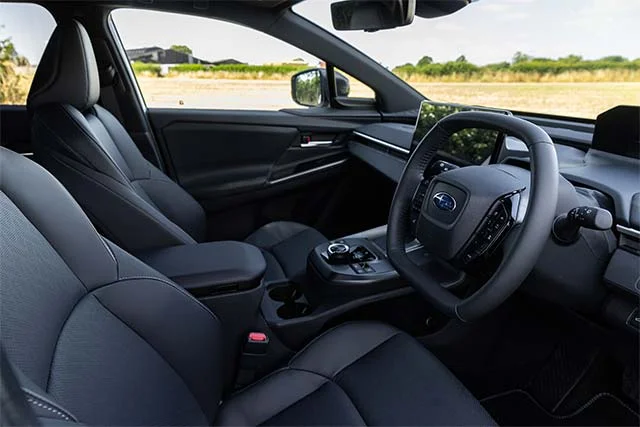
A 7-inch TFT display handles driver information, with a 14-inch touchscreen for infotainment and vehicle functions. Wireless Apple CarPlay and wired Android Auto are standard, as are two front wireless charging pads, USB-C ports front and rear, dual-zone climate control with an ECO mode, ambient lighting and acoustic glass. That’s a long list of equipment, and it covers several routine points of contact: phone connection, charging, climate and cabin noise. The large central screen also puts many functions in one place, so its menu layout and responsiveness will matter as much as its size.
All versions include heated front and rear seats, an eight-way electrically adjustable driver’s seat and two-way lumbar adjustment. Field, Touring and Touring + add driver-seat memory, ventilated front seats, an 11-speaker Harman Kardon audio system and a 220V AC outlet in the boot. Touring and Touring + also get a fixed panoramic roof with an electric sunshade. The trim ladder is therefore about comfort and convenience as well as appearance; buyers should compare the equipment they’ll use often against the higher starting prices.
Subaru Safety Sense is standard throughout the range, including Pre-Collision System, Dynamic Radar Cruise Control and Emergency Driving Stop System. A 360-degree Panoramic View Monitor includes an underfloor view to aid manoeuvring. The Subaru Care app supports remote cabin pre-conditioning and charging schedules. These features address different parts of ownership, from driver assistance to preparing the cabin and planning charging. A camera view can help with tight manoeuvres, but it doesn’t replace the driver’s judgement when ground clearance and obstacles matter.
UK trims, prices and finish options
| Specification | UK starting price (OTR) |
| E-Outback AWD | £49,995 |
| E-Outback Field | £51,995 |
| E-Outback Touring | £52,495 |
| E-Outback Touring + | £54,995 |
The range starts at £49,995 and rises to £54,995 for Touring +, with two intermediate trims priced at £51,995 and £52,495. The modest gap between Field and Touring contrasts with the larger step to Touring +, whose standard natural leather marks a clearer change in cabin finish. Price alone won’t settle the choice: the lower range ratings for the three higher trims may also factor into a buyer’s decision.
Buyers can choose from six exterior colours. Touring and Touring + offer a black bi-tone roof with Brilliant Bronze or Crystal White paint. Black synthetic leather is standard across the range; Touring + comes with blue and black natural leather as standard. Those choices give the upper models a more distinct appearance, while the standard upholstery keeps the entry model’s cabin specification straightforward.
What the E-Outback needs to prove
This is more significant than it looks: Subaru is carrying a familiar capability-led identity into an electric vehicle, rather than treating electrification as a reason to drop the all-weather brief. The combination of dual motors, terrain modes, useful clearance and towing capacity gives the E-Outback a coherent purpose on paper. And yet, capability claims and range claims need to hold together in real use, especially for drivers who expect to travel beyond paved roads.
If you're working in this space, the practical questions are familiar: how much range remains in demanding weather, how charging fits into longer trips, and whether the vehicle’s controls make low-speed terrain work easier. The supplied specifications answer only part of that. The most useful evidence will come from seeing how the car balances its off-road equipment with everyday comfort and usability.
Buyers can already see the main trade-off in the published figures: higher trims add comfort and equipment while carrying a lower WLTP range rating. (And this is the part most people overlook: the range difference may matter more to some owners than a premium audio system or panoramic roof.) For others, those features may be worth the compromise. A question of priorities.
With its mix of substantial ground clearance, towing capacity and electric performance, the E-Outback is aimed at drivers who want an SUV that can leave paved roads without giving up family practicality. Its UK launch is planned for early 2027. Until then, the case rests on specifications and Subaru’s stated intentions; the driving experience will decide how well those ambitions meet the demands of everyday use.

Discussion
Sign in to join the discussion.