Rivian furthers its partnership with Redwood Materials to enhance battery recycling and energy storage capabilities at its Illinois manufacturing plant.
Rivian and Redwood Materials: A Partnership for Sustainability
Rivian has announced a significant expansion of its collaboration with Redwood Materials, focusing on creating a more sustainable battery lifecycle. Given the crucial role batteries play in electric vehicles, this initiative addresses pressing challenges in the battery supply chain, specifically the increasing electricity demands at its manufacturing site in Normal, Illinois. Moreover, there's a growing urgency for establishing a domestic supply of battery materials as the electric vehicle market continues to expand at an exponential rate.
Collecting and Assessing Out-of-Service Batteries
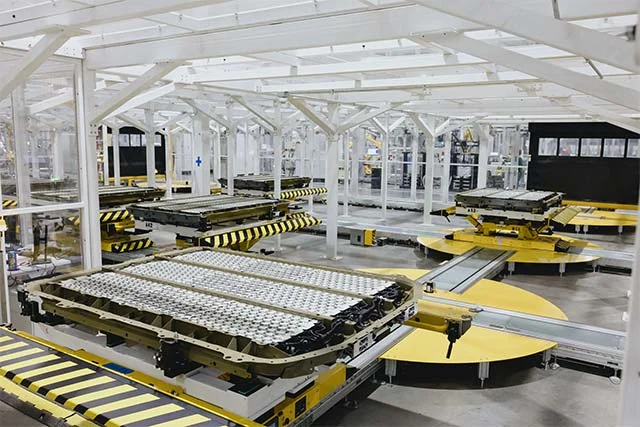
The updated agreement sets in motion a process where Redwood Materials will collect Rivian's out-of-service battery packs via a nationwide network. Each battery is assessed to determine its suitability for reuse in energy storage or its need for recycling—a pivotal step in ensuring materials like lithium and nickel are recovered effectively. This assessment process isn't just about determining the fate of a battery; it's part of a larger initiative aimed at redefining industry standards for battery disposal and recycling.
What happens next is important. For battery packs still retaining adequate capacity, the focus shifts to repurposing them as stationary energy storage systems. This allows Rivian to utilize these batteries to balance electricity demand at its production facility, particularly during peak hours or when renewable energy sources are abundant. It’s a practical move that reflects a growing trend in energy management strategies—leveraging existing resources instead of continuously seeking out new ones. Not only does this help Rivian enhance operational efficiency, but it also aligns with broader efforts to lower electricity costs and provide stability to manufacturing operations.
Expanding Partnerships and Sustainable Practices
This expanded partnership builds on a previous agreement from April 2026, which featured the integration of 10 megawatt-hours (MWh) of repurposed battery-powered storage solutions at the Normal facility. By evolving their approach, Rivian demonstrates that batteries that are no longer viable for vehicle performance can still play a significant role in energy management before their recycling phase. You'll notice how this tactic echoes similar strategies adopted by other companies aiming for sustainability in their operations.
If a battery is deemed unsuitable for electricity storage after its initial repurposing, it’s sent to recycling facilities. Redwood Materials boasts a noteworthy recovery rate, claiming to reclaim over 95% of essential minerals needed for battery production, including lithium, nickel, cobalt, and copper. These efforts are critical, as they significantly diminish reliance on newly mined resources and bolster the domestic supply chain, an aspect that often gets overshadowed in discussions about renewable energy sources.
A Circular Economy Approach
The dual focus on recycling and energy storage exemplifies a pathway towards a circular economy for batteries, wherein materials extracted from old batteries find new life in future production cycles. If you're working in this space, this model could represent a paradigm shift for how companies think about resource management. Rivian's Founder and CEO RJ Scaringe highlights that extending the lifecycle of battery packs not only boosts energy reliability but also contributes to lowering overall energy expenditures for their operations. It’s an interdependent relationship: more efficient energy management leads to cost savings, and these savings can, in turn, be reinvested into further solidifying sustainable practices.
Redwood Materials CEO JB Straubel underlines the potential contained within each returned Rivian battery pack, stating it can serve as both a source of grid energy and essential raw materials. This dual role could redefine how companies view waste, transforming it from a simple byproduct into a valuable resource.
The Bigger Picture: Implications for the Industry
As Rivian deepens its partnership with Redwood Materials, it embraces a model that enhances resource recovery and addresses pressing energy demands. The implications of this collaboration ripple through the broader electric vehicle market. Rivian's actions may motivate other manufacturers to adopt similar sustainable practices. If the industry sees tangible benefits from such initiatives, we might witness a shift in norms concerning battery lifecycle management across the board. After all, sustainability isn’t just a buzzword; it’s becoming a business imperative.
(And this is the part most people overlook) — while many discuss the importance of sustainability, fewer consider how operational practices can evolve hand-in-hand with technological advancements. Rivian’s move to adopt a circular economy strategy not only enhances its reputation as an environmentally conscious company but also positions it as a leader in integrating sustainability with practical business models. This marriage of environmental responsibility and operational efficiency could pave the way for a new industry standard in battery management—one that might set the groundwork for a more sustainable future in electric vehicles.
Discussion
Sign in to join the discussion.