Tesla plans to free Texas factory capacity for Cybercab production as Cybertruck sales lag. The company hasn’t said whether the pickup will be built elsewhere.
A factory decision with broader implications
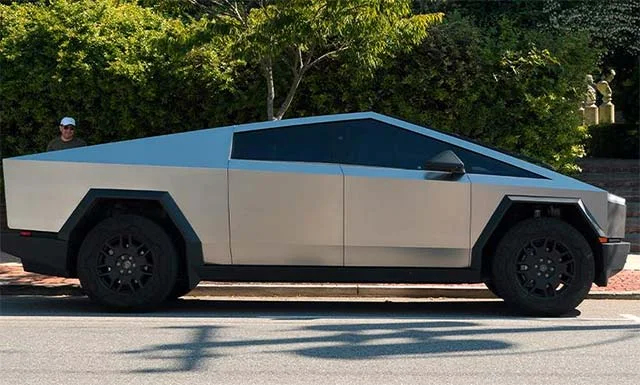
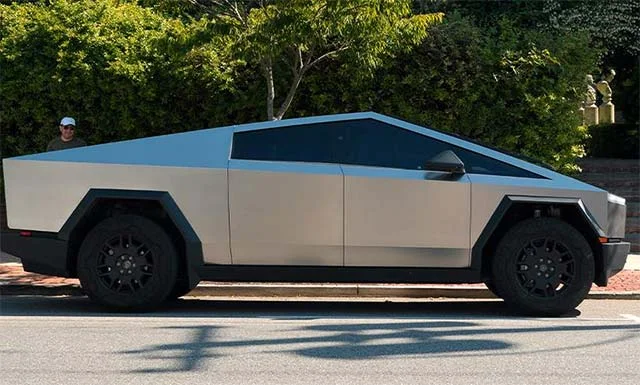
Tesla’s plan to wind down Cybertruck production at its Texas factory around mid-2027 puts the company’s autonomous ride-hailing ambitions ahead of a pickup that’s struggled to find buyers at scale. CEO Elon Musk announced the shift on November 6, 2026, saying the space would support higher Cybercab output. The message is direct about factory priorities, but less clear about the truck’s future.
The wording leaves a key question open: Tesla has said it will wind down production at Gigafactory Texas, but hasn’t confirmed whether the Cybertruck will be discontinued or built at another site. Austin is the only known Tesla facility equipped for the pickup’s specialized components, making a move elsewhere uncertain. That distinction matters: ending production at one plant doesn’t, by itself, establish that a vehicle has reached the end of its life.
Tesla will be winding down production of the Cybertruck at Gigafactory Texas around the middle of next year to make room for increased Cybercab production
— Elon Musk (@elonmusk) November 6, 2026
Cybercab gets factory priority
The production change reflects Tesla’s growing focus on autonomous transportation. The Cybercab, a two-seat vehicle designed without a steering wheel, pedals or traditional side mirrors, is central to the company’s plans for an autonomous ride-hailing network. Reserving factory capacity for it signals that Tesla sees this program as a higher priority for the Texas site.
That ambition has increasingly shaped Tesla’s identity around artificial intelligence and robotics, as well as vehicle manufacturing. The Texas capacity shift makes the trade-off tangible: Tesla is allocating factory room to its robotaxi program while reducing space for a pickup whose sales have fallen well short of early expectations. Factory capacity is finite, so every production decision reflects a judgment about which products and plans deserve room.
Here's the thing: a factory allocation is evidence of Tesla’s stated priorities, not proof that the Cybercab business will meet them. For the ride-hailing plan to justify the space, the company will need to turn its vision into vehicles and a service that can operate as intended. The announcement doesn’t provide detail on that path.
Sales trail the original ambition
When Tesla unveiled the Cybertruck in November 2019, Musk said the company could eventually sell about 250,000 a year. The design drew significant attention and hundreds of thousands of reservations, but those early signals didn’t translate into comparable deliveries. Reservations indicate interest at a particular moment; they don’t tell a manufacturer how many customers will complete a purchase at the final price.
Tesla sold 20,237 Cybertrucks in the United States in 2025, down 48% from 38,965 in 2024. Cox Automotive data cited by InsideEVs puts third-quarter 2026 sales at 4,323, with 11,586 sold in the first nine months of the year. Industry estimates place total deliveries at roughly 70,000 since customer handovers began in late 2023. The direction of the figures is hard to miss: demand hasn’t sustained the pace implied by the original annual target.
The figures underscore the gap between Tesla’s original target and the pickup’s actual market. The wider electric pickup segment has also proved tougher than many automakers expected; Ford, for example, has faced difficulties with its F-150 Lightning program. That context doesn’t explain the Cybertruck’s performance on its own, but it suggests the challenge isn’t limited to one company or one design.
The numbers here are underwhelming next to the early ambition. They also make a shift in factory priorities easier to understand: when demand is below expectations, a company has reason to reconsider how much production space a model should occupy.
Price changes haven’t revived demand
Price has been another obstacle. Tesla initially advertised the Cybertruck at around $40,000, but the production model arrived at substantially higher prices. In 2026, the company introduced a Dual-Motor All-Wheel Drive version starting at $59,990, down from the previously available $79,990. Tesla also reversed an earlier price increase for the higher-performance Cyberbeast.
Those changes didn’t produce enough demand to support production at the scale Tesla had anticipated. The company has since removed the entry-level Dual-Motor AWD from its order page. The remaining Premium AWD and Cyberbeast models now start at $92,490 and $102,490, respectively. A lower advertised entry point can attract attention, but sustained demand depends on the product, its price and what buyers are prepared to pay.
(And this is the part most people overlook.) Repeated price adjustments don’t reveal exactly why individual buyers chose not to order, and the article’s figures can’t settle that question. They do show that changing prices hasn’t, so far, produced sales at the scale Tesla once projected. If you're working in this space, that’s a reminder to treat launch interest and actual deliveries as different signals.
What the shift means for availability
Musk’s announcement identifies a production wind-down at Gigafactory Texas, not a final end date for the Cybertruck. Tesla hasn’t explained whether the pickup could shift to another factory or what the change would mean for current owners and future buyers. The uncertainty is practical: without a confirmed manufacturing plan, the announcement alone can’t tell customers how long the model will remain available.
That leaves questions about vehicle availability, replacement parts and resale values unanswered. Those concerns are connected to the model’s longer-term support, but the available information doesn’t establish what Tesla will do. The company’s next decisions on manufacturing will determine whether the Cybertruck’s Texas run marks the end of the model or simply the end of its production at that plant.
A test of Tesla’s priorities
This is more significant than it looks. Tesla is making a visible capacity choice between a production pickup with disappointing sales and a vehicle tied to its autonomous ride-hailing plans. The choice says something about where the company wants to direct its factory space, while leaving open whether the Cybercab can earn that priority through successful deployment.
What this means for you depends on why you’re following the Cybertruck. Prospective buyers still lack a clear answer about future production; owners have no new information here about parts or support; and observers of Tesla’s strategy have a concrete example of the company giving its autonomy ambitions more room. That said, the announcement is a factory plan, not a complete account of the model’s future. For now, the key distinction remains between winding down production in Texas and ending Cybertruck production altogether.
Source: InsideEVs
The post Tesla to Wind Down Cybertruck Production in 2027 as Cybercab Takes Priority appeared first on Electric Cars Report.

Discussion
Sign in to join the discussion.