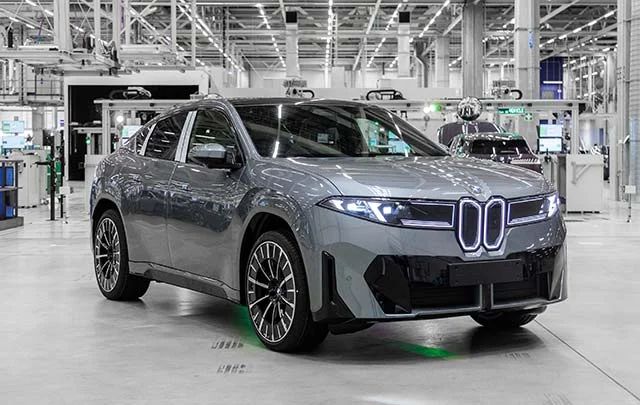
BMW has begun building the iX4 at Debrecen ahead of its March 2027 debut, with two all-wheel-drive versions and a third variant to follow.
Neue Klasse adds a second model in Debrecen
BMW’s Debrecen plant has begun series production of the all-electric iX4, putting the Hungarian factory at the centre of the company’s Neue Klasse rollout. The coupé-style electric SUV is due in showrooms from March 2027, with a third, higher-performance version planned shortly after launch. Starting production is a key step, though it doesn’t establish how quickly the model will reach customers or how much capacity BMW will assign to it.
The iX4 is the second Neue Klasse model built at Debrecen, following the iX3. That makes the plant a test of BMW’s ability to add models while carrying forward the production experience gained from its first launch. The two vehicles share a manufacturing site, but the source provides no detail about how much of their production process or equipment they share.
The iX3’s production ramp-up took eight months, which BMW describes as the fastest at a new BMW Group plant. The company says demand for the iX3 helped drive Debrecen’s move to three shifts in September 2026. Within a year of its world premiere, the SUV had drawn 100,000 orders across Europe, and it won the 2026 World Car of the Year award. Those figures show strong interest in the first Debrecen model; they don’t, on their own, tell us how many orders the iX4 will attract.
Two versions at launch
BMW will initially offer the iX4 in two all-wheel-drive configurations. The iX4 50 xDrive is rated for up to 828 kilometres of WLTP range, while the iX4 40 xDrive is listed at up to 638 kilometres. The range-topping iX4 M60 xDrive is set to join the lineup shortly after launch, and all three versions will be built in Debrecen. BMW hasn’t provided further details here on the M60’s output, range or pricing, so its place in the lineup is clear only in broad terms: it will sit above the two launch models.
Both launch models use BMW’s sixth-generation eDrive system, with newly developed electric motors, cylindrical battery cells and an 800-volt electrical architecture. These components are central to the company’s claims for the vehicle, but the available figures offer only part of the picture. Range and charging performance can matter greatly to buyers, yet real-world results depend on conditions and use; the stated WLTP figures are best read as a comparison point rather than a promise of what every driver will achieve.
The iX4 50 xDrive supports peak DC charging of up to 400 kW. In suitable conditions, BMW says a 10-minute charge can add enough energy for up to 387 kilometres of driving. That’s a striking headline figure, but the qualification matters: it describes performance in suitable conditions, and the source doesn’t specify those conditions or say whether the same charging claim applies to the 40 xDrive. Buyers will need more detail to judge what that peak rate means in routine use.
The technical package pairs a coupé-inspired shape with the proportions of an SUV. BMW says the new motors, battery cells and electrical system are intended to improve efficiency, range, charging speed and driving dynamics over its previous generation of electric vehicles. Those are broad aims, not a direct comparison with a named predecessor. The design also asks buyers to weigh the appeal of a sleeker profile against the practical needs that often draw people to an SUV, such as cabin and cargo space—details not included in the announcement.
Debrecen scales up
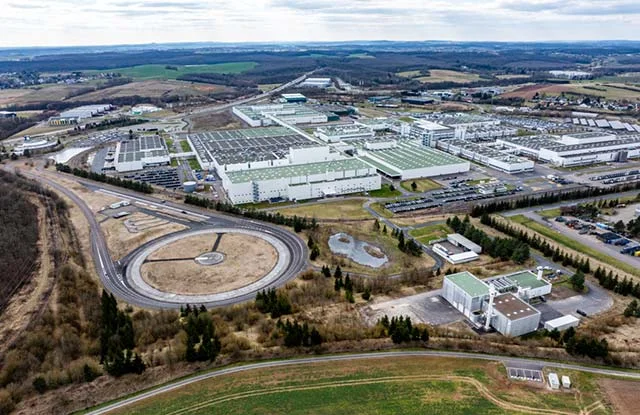
The iX4 launch comes less than two months after Debrecen introduced 24-hour production operations. More than 5,000 people work at the plant, where training and experience from the iX3 ramp-up are supporting the next production increase. Hans-Peter Kemser, the plant’s president and CEO, called the start of iX4 production a milestone for the factory and credited its workforce. That experience should help BMW manage the added complexity of a second model, though the announcement doesn’t say how production volumes will be divided between the iX3 and iX4.
BMW designed Debrecen around its iFACTORY principles: LEAN, SUSTAINABLE and DIGITAL. The approach combines flexible manufacturing and digital tools, including artificial intelligence and virtual production technologies. These systems can support planning and production in modern factories, but the company hasn’t described their specific role in building the iX4. For readers assessing the plant’s capabilities, the principles set out BMW’s direction; operational results will show how well that approach works at scale.
BMW says the plant runs on renewable electricity during normal production and uses no fossil fuels. An on-site solar installation supplies about 25% of its annual electricity needs. Excess solar energy is held in a thermal storage system with a capacity of 130 MWh and a volume of 1,800 cubic metres. That setup gives the factory a way to store energy from its own solar generation, while the company’s figures leave the remaining electricity supply outside the picture. The claim is specific to normal production, so it shouldn’t be stretched into a broader statement about every energy use at the site.
What the iX4 start will show
For BMW, the iX4’s production start tests whether the rapid iX3 ramp-up can be repeated as Debrecen adds another model. This is more significant than it looks: a factory can have strong demand for its first vehicle and still face a harder task when it must build several versions of a second one. If you’re working in this space, the practical question is how quickly BMW can balance product variety, workforce training and production growth without losing the pace it established with the iX3.
And yet, the production announcement is an early signal, not a verdict. The iX4’s arrival in showrooms is still scheduled for March 2027, and the M60 is due shortly after launch. How Debrecen handles those additions will shape the plant’s role in the Neue Klasse rollout. The proof will come on the factory floor—and in whether customers respond to the vehicle’s range and charging claims.
For now, the iX4 extends BMW’s electric SUV production at a site already moving to round-the-clock operations. A second model gives Debrecen a broader assignment. More to prove.
Discussion
Sign in to join the discussion.