New 80 kWh battery packs raise capacity by about 15%, with up to 100 km more range and an optional 15-year warranty.
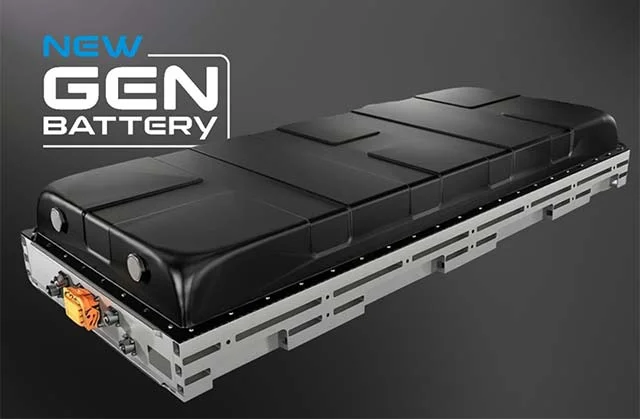
IVECO BUS’s next electric bus battery upgrade is aimed at fleet economics as much as range. The new NMC packs can add up to 100 kilometres per charge, and operators can opt for battery warranty coverage of up to 15 years. First customer deliveries are scheduled for the second quarter of 2027, so the announced benefits still have to be tested against the daily demands of operating fleets.
The batteries will be offered across the heavy-duty E-WAY and CROSSWAY ELEC families, including the CROSSWAY Low Entry ELEC. IVECO BUS has kept the existing pack dimensions while raising individual pack capacity from 69 kWh to 80 kWh, an increase of about 15% in energy density. Keeping the same dimensions gives the company a way to add stored energy within its existing battery format, while giving operators more capacity choices without changing the basic pack footprint.
That distinction matters in fleet planning. A bus needs enough energy to complete its assigned work, but carrying more battery than a route requires can add weight and take up space. Higher capacity per pack could give operators more room to balance those demands. The eventual value will depend on the routes, schedules and passenger loads each vehicle has to handle.
Configurations tailored to routes
Capacity remains configurable, allowing operators to match battery size to daily mileage and passenger demand. E-WAY city buses will support four to nine packs, with total capacity from 320 kWh to 720 kWh across midibus, standard and articulated versions. On 12-metre E-WAY models, the new generation can add up to 100 kilometres of range. That upper-end range claim describes a possible gain; it doesn't establish what every model will achieve on every route.
The CROSSWAY Low Entry ELEC will offer four to seven packs, spanning 320 kWh to 560 kWh, and can also gain up to 100 kilometres. The standard CROSSWAY ELEC will use three to six packs, for totals between 240 kWh and 480 kWh. These different pack ranges reflect the fact that the product families serve different vehicle types and operating needs, rather than pointing to one battery size suited to every bus.
That flexibility matters because the maximum battery size won’t suit every route. IVECO says some vehicles may meet their range requirements with one fewer pack, which could reduce weight and leave room for more passengers. For fleet planners, the practical question is whether the added energy density can support a leaner configuration while keeping daily schedules intact. A smaller pack count could also change how operators weigh passenger capacity against the energy margin they want for a shift.
Here's the thing: the headline range gain is only one part of the calculation. Operators will need to consider whether the bus can complete its planned work with the selected configuration and whether that configuration leaves enough room for passenger demand. The article doesn't specify the conditions behind the range estimates, so the figures are best read as potential gains rather than a promise for every duty cycle.
If you're working in this space, the useful comparison won't be battery capacity alone. It’ll be the match between pack count, route requirements and passenger capacity. The right answer may differ from one service to another. Less weight, potentially more seats.
Warranty and lifetime costs
The optional 15-year warranty extends the upgrade beyond vehicle range. Battery life and the prospect of a mid-life replacement factor into the cost of operating electric buses, so longer coverage could make those expenses more predictable. It also gives fleet buyers a longer period of stated coverage to consider when comparing the costs of different configurations, though the source doesn't detail the warranty’s terms or conditions.
IVECO BUS estimates that combining a reduced battery configuration with avoiding a mid-life battery replacement could lower the 15-year total cost of ownership of the GX 337 ELEC by up to 17%. That figure depends on the vehicle’s configuration and operating needs, but it points to a wider effect: pack efficiency can shape both capacity planning and the lifetime economics of a fleet.
The estimate combines two factors, so it shouldn't be treated as a saving attributable to the battery upgrade alone. A smaller configuration could reduce the amount of battery installed, while avoiding a replacement would affect costs later in the vehicle’s working life. The company’s figure is specific to the GX 337 ELEC and is presented as an upper bound; other models and routes may produce different results.
This is more significant than it looks. Range attracts attention because it’s easy to compare, but the possibility of meeting a route’s needs with fewer packs connects energy density to vehicle weight, passenger capacity and replacement costs. That said, the commercial case rests on whether those potential benefits carry through in actual fleet use, where route needs and operating patterns vary.
Safety systems and the road ahead
According to IVECO BUS, the new systems comply with UNECE Regulation R100.4 and add thermal runaway protections. The system can alert operators to a detected event while the vehicle is in standby, and each module has an integrated fire suppression system designed to release an extinguishing agent if a fire occurs. These features address safety at the battery system and module levels, according to the company’s description.
For operators, the standby alert is a specific addition: it means the system can notify them of a detected event even when a vehicle isn't in service. The source doesn't describe how alerts are delivered or how the protections perform in practice, so those details will matter when fleets assess how the systems fit their own maintenance and response procedures.
The new NMC generation preserves the company’s modular approach while increasing the energy available in each pack. Its value for operators will come down to how well the extra capacity, warranty option and potential for fewer packs fit the demands of individual routes when deliveries begin in 2027. Until then, the strongest case is a set of linked possibilities: more range per pack, a chance to configure some vehicles with fewer packs, and longer optional warranty coverage. Whether those advantages add up to the claimed lifetime savings will depend on how a given bus is configured and used.

Discussion
Sign in to join the discussion.