IONNA’s largest Rechargery opens in Westminster with 400 kW charging, while Tesla drivers gain app-configured Autocharge across the network.
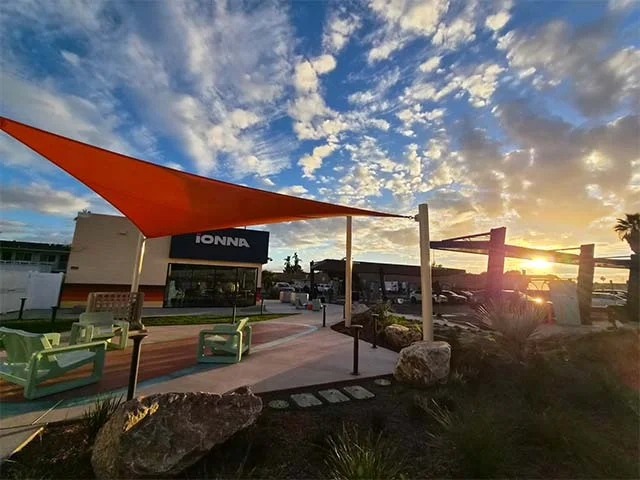
IONNA’s Westminster hub brings together two measures of network maturity: a high-capacity site built for busy travel corridors and automatic charging authentication for Tesla drivers across the company’s US network. The 22-bay Rechargery is the company’s largest to date, and its opening caps a series of cross-country EV trips spanning more than 40,000 miles. Those details point to a company trying to show that its network can work as both a collection of chargers and a usable travel service. The distinction matters: a large site can relieve pressure at a busy stop, but drivers also need to find it, connect, pay and get back on the road without unnecessary friction.
A 22-bay site near Interstate 405
At 6260 Westminster Boulevard in Southern California, the new location has 12 CCS connectors and 10 NACS connectors. Chargers can deliver up to 400 kW, backed by a 4 MW grid connection intended to serve multiple vehicles at high power. The mix of connectors is meant to accommodate drivers using different charging standards at the same site. And the power rating sets a ceiling for charging capability; actual speeds can vary with a vehicle’s limits, battery state and how many chargers are in use.
That caveat is central to evaluating any high-power site. A 22-bay layout offers more places to plug in, while the grid connection is intended to supply the site’s charging demand. Those are related but distinct measures of capacity. For drivers, the practical question is whether the location can sustain a useful charging experience when several vehicles arrive together, something the headline specifications alone can’t answer.
The site pairs charging equipment with indoor and outdoor lounge areas, dedicated restrooms and a convenience store using Amazon’s Just Walk Out technology. IONNA calls its larger facilities “Rechargeries,” reflecting a design that treats the charging stop as a customer destination as well as an infrastructure site. That can make a longer stop more comfortable, especially when a vehicle needs time to charge. It also raises the bar: amenities matter only if they’re open, accessible and easy to use when drivers arrive. The company describes that approach alongside its cross-country road trips.
Tesla joins network-wide Autocharge
Tesla owners can now set up automatic authentication through the Presto app by linking their vehicle and payment details. After setup, connecting to an IONNA charger starts a session without opening the app or presenting a payment card. IONNA classifies the feature as Autocharge, though it’s often discussed alongside Plug & Charge. The value is plain: fewer steps at the charger, particularly for drivers who use more than one network and don’t want to repeat a payment routine at every stop.
Automatic authentication depends on the vehicle, account and charger recognizing one another correctly, so the feature’s promise rests on a setup process that works reliably. It can reduce friction once configured, but it doesn’t answer questions about charger availability, charging speed or the quality of a particular visit. Here’s the thing: simplifying payment is a meaningful improvement, but it’s only one part of making public charging predictable.
The capability is available throughout IONNA’s network. Supported automakers also include BMW, General Motors, Hyundai, Kia, Mercedes-Benz, Toyota, Rivian, Ford, Porsche and Volvo. IONNA estimates that automatic charging covers about two-thirds of EVs currently on US roads. That estimate suggests broad reach across brands, though it doesn’t mean every vehicle or driver will have the feature ready without setup. If you’re working in this space, compatibility is useful only when customers can understand which steps apply to their car.
Eligible battery-electric vehicles from Stellantis brands Jeep, Dodge, Ram and Fiat are scheduled to gain support in December 2026. At the same time, their owners are due to receive a 10% charging discount at IONNA Rechargeries. Customers with an eligible connected-services subscription can qualify for another 15% off, for a total discount of 25%. The offer links network use to vehicle and service eligibility, which may encourage repeat charging among those customers. For everyone else, the immediate change is the broader authentication support.
Road trips tested the network’s reach
More than 20 EVs set out from cities including Miami, New York, Chicago, Houston, Minneapolis, Phoenix, Portland and Salt Lake City. Together, they covered over 40,000 miles and charged at roughly 30% of IONNA’s locations before finishing at Westminster. The routes provide a practical demonstration that drivers used the network across multiple regions, rather than relying on a single urban cluster. But a company-organized trip can show that a route is possible without establishing how consistently an ordinary customer will find open, working chargers along it.
The trips put the network to use across different regions and weather conditions, offering a practical measure of its reach beyond individual metro areas. IONNA says it now has more than 220 locations, less than two years after opening its first charging site. That footprint gives the company a base for testing how its sites serve longer journeys, but the total location count doesn’t reveal how evenly those sites are distributed or how much capacity each provides. The miles matter. The day-to-day experience will matter more.
Expansion across 12 states
IONNA has 16 full Rechargeries open or under construction across Arizona, California, Colorado, Connecticut, Georgia, Maryland, Michigan, North Carolina, Ohio, Oregon, Texas and Utah. The larger sites add canopies, lighting, accessibility features, customer spaces and retail amenities. These features can shape whether a charging stop feels manageable, particularly for drivers who need a restroom or a place to wait. Yet the announced site count combines locations that are already open with those still under construction, so it describes the buildout as well as the current experience.
Founded by eight automakers, IONNA is building its network around high-power charging, support for multiple connector types and simpler payment. The Westminster hub makes that strategy tangible at one location; the next test is whether new sites can deliver the same combination of capacity and convenience across the expanding network. This is more significant than it looks: charging networks compete through the whole stop, not just the number printed on a charger. And yet, a flagship location can’t stand in for every site.
What the Westminster opening signals
Westminster brings several parts of IONNA’s pitch together: a large charging site, multiple connector types, customer amenities and automatic authentication that now includes Tesla drivers. Taken together, those features show how the company wants drivers to judge its network: by the ease of completing a trip as well as the presence of chargers along the way. That’s a sensible standard, but it also makes execution visible. A spacious lounge won’t compensate for a charger that’s unavailable, and automatic payment won’t make a poorly placed site more convenient.
For drivers, the near-term implication is straightforward: more IONNA locations support automatic charging, and the Westminster site offers a larger place to stop in Southern California. For the company, the harder work is repeating the experience across its stated 12-state expansion while keeping the service useful at different scales. What this means for you depends on your route and vehicle. Check connector compatibility and account setup before relying on a new charging stop, then judge the network by what happens when you arrive.
A promising flagship. The proof will be consistency across the network.
Discussion
Sign in to join the discussion.