MB.DRIVE ASSIST PRO can assist across urban roads and motorways. Germany rollout is planned for 2027, with customer trials starting in December 2026.
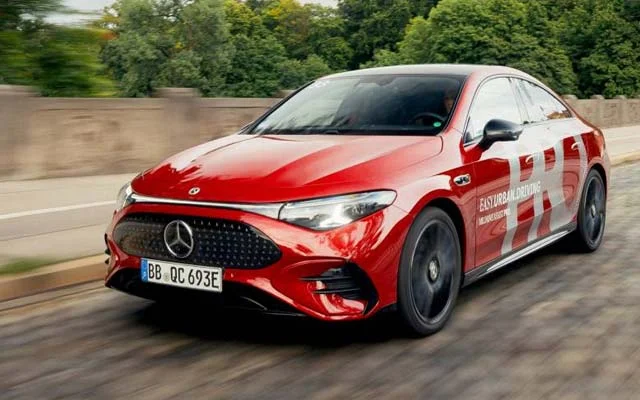
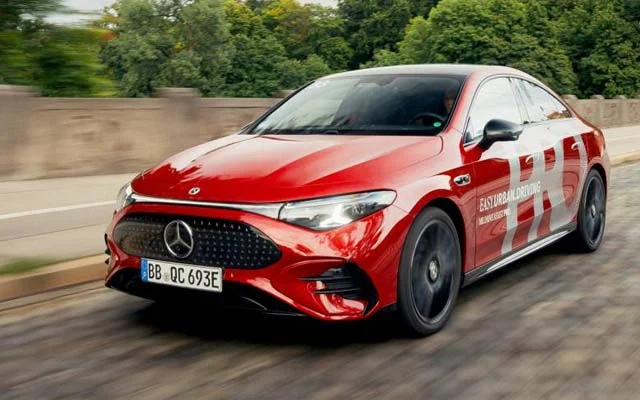
Mercedes-Benz has received German approval for an SAE Level 2 driver assistance system intended to support drivers from the start to the end of a navigated journey. Called MB.DRIVE ASSIST PRO, it extends assistance into city streets, where lane choices, junctions and traffic lights demand more frequent decisions than steady motorway travel. That broader reach is the system’s main proposition: help with more parts of a trip while leaving the person behind the wheel responsible for supervision.
The distinction between assistance and automated driving can get blurred in product announcements, especially when a system is described as handling a journey from beginning to end. Here, the SAE Level 2 classification sets a clear boundary. The driver must continue watching the road and be ready to take control, even when the car is helping with steering or other driving tasks.
Assistance across the route
With navigation active, drivers can switch on the system using a steering wheel button. It can help change lanes, choose an appropriate lane, merge into traffic, turn at junctions, and stop and move off at traffic lights. It can also assist on country roads and motorways, giving the system a stated scope that spans several common road types rather than concentrating on highway travel alone.
Those tasks vary considerably in how much judgment they require. A lane change on a clear road is different from selecting a lane before a junction, where the route and surrounding traffic both matter. Traffic lights add another layer: the system may assist with stopping and starting, but the driver still needs to monitor what’s happening around the vehicle and intervene if conditions call for it.
That’s where the Level 2 limitation matters in practice. The system can take on more driving tasks, but it doesn’t take over the driver’s duty to supervise. This is more significant than it looks: widening the range of situations in which assistance can operate may make a system feel more capable, while the responsibility at the wheel remains with the human driver.
If you're working in this space, the key question isn’t just how many tasks a system can perform. It’s whether drivers understand when assistance is active, what it can handle, and when they need to act. A longer list of supported maneuvers doesn’t by itself answer that question.
German launch planned for 2027
Mercedes-Benz plans to begin introducing MB.DRIVE ASSIST PRO in Germany in the first half of 2027. The company expects a gradual rollout across passenger cars and vans with different powertrains, suggesting that availability will arrive in stages rather than across the full range at once. Selected customers in Stuttgart and Munich are expected to try the system through an Early Access Programme starting in December 2026.
That early access phase should provide an initial view of how the system performs in everyday use, although the announcement doesn’t describe its scope or how feedback will affect the rollout. City driving can present a changing mix of road layouts, traffic and signals. The trial locations give Mercedes-Benz a way to introduce the system in urban settings before the planned broader launch.
Eligible existing vehicles will receive the functions through an over-the-air software update. That approach can add features to vehicles already on the road, but eligibility will determine how many owners can benefit. Mercedes-Benz hasn’t named the qualifying models or announced pricing; details are expected before each market launch. For customers, those missing details are practical ones: they’ll need to know whether their vehicle qualifies and what, if anything, the functions will cost.
Approval under a shared framework
Germany’s Federal Motor Transport Authority, the Kraftfahrt-Bundesamt, approved MB.DRIVE ASSIST PRO after testing against UN Regulation No. 171. The regulation sets requirements for Driver Control Assistance Systems, placing the system within a defined approval framework. For a technology operating across several types of roads, that kind of common standard provides a basis for assessing its capabilities and the driver’s role.
The harmonised framework is scheduled to take effect in January 2027 and could support launches in other markets that adopt it. That possibility is conditional: the announcement doesn’t say where Mercedes-Benz plans to launch next, or when. Approval in Germany establishes a path for the planned domestic introduction, while expansion elsewhere will depend on market decisions and the framework’s adoption.
“From busy urban traffic to country roads and motorways, our intelligent assistance makes driving more comfortable and less demanding,” said Jörg Burzer, Mercedes-Benz Group AG board member and chief technology officer for development and procurement.
What the rollout will show
Mercedes-Benz’s announcement makes a clear case for broader route coverage, but the value of that reach will depend on how drivers experience the system in real conditions. Assistance at junctions and traffic lights could make a trip feel less demanding; it also places a premium on drivers staying attentive as the system handles more of the routine work. And this is the part most people overlook: adding capability doesn’t remove the need to understand the system’s limits.
The first customer trials in Stuttgart and Munich will be an early test of whether point-to-point assistance can extend beyond motorway use in a way drivers find useful and manageable. The fragment that captures the challenge: more support, with supervision still required.
What this means for you depends on whether your vehicle is eligible, how the system behaves on the routes you drive, and what Mercedes-Benz announces about pricing and availability. The rollout will show how far the company can extend assistance across a journey while keeping drivers engaged. That said, the Level 2 boundary remains central to interpreting the promise: the system assists, and the driver must stay ready to take control.
Discussion
Sign in to join the discussion.